


Electrolytes are charged ions that play a fundamental role in maintaining homeostasis within the body's fluids. These ions are categorized as cations (positively charged, such as , $K^+$, , and ) or anions (negatively charged, such as $Cl^-$, , and ). Because these electrolytes are present in both intracellular (ICF) and extracellular (ECF) fluids, any imbalance can significantly disrupt physiological processes like nerve conduction, muscle contraction, and cardiac function.
For nursing students, understanding the specific clinical manifestations of calcium and magnesium imbalances is critical, as these two electrolytes often present with overlapping neuromuscular symptoms.
Hypocalcemia: The "Twitchy Skelly"
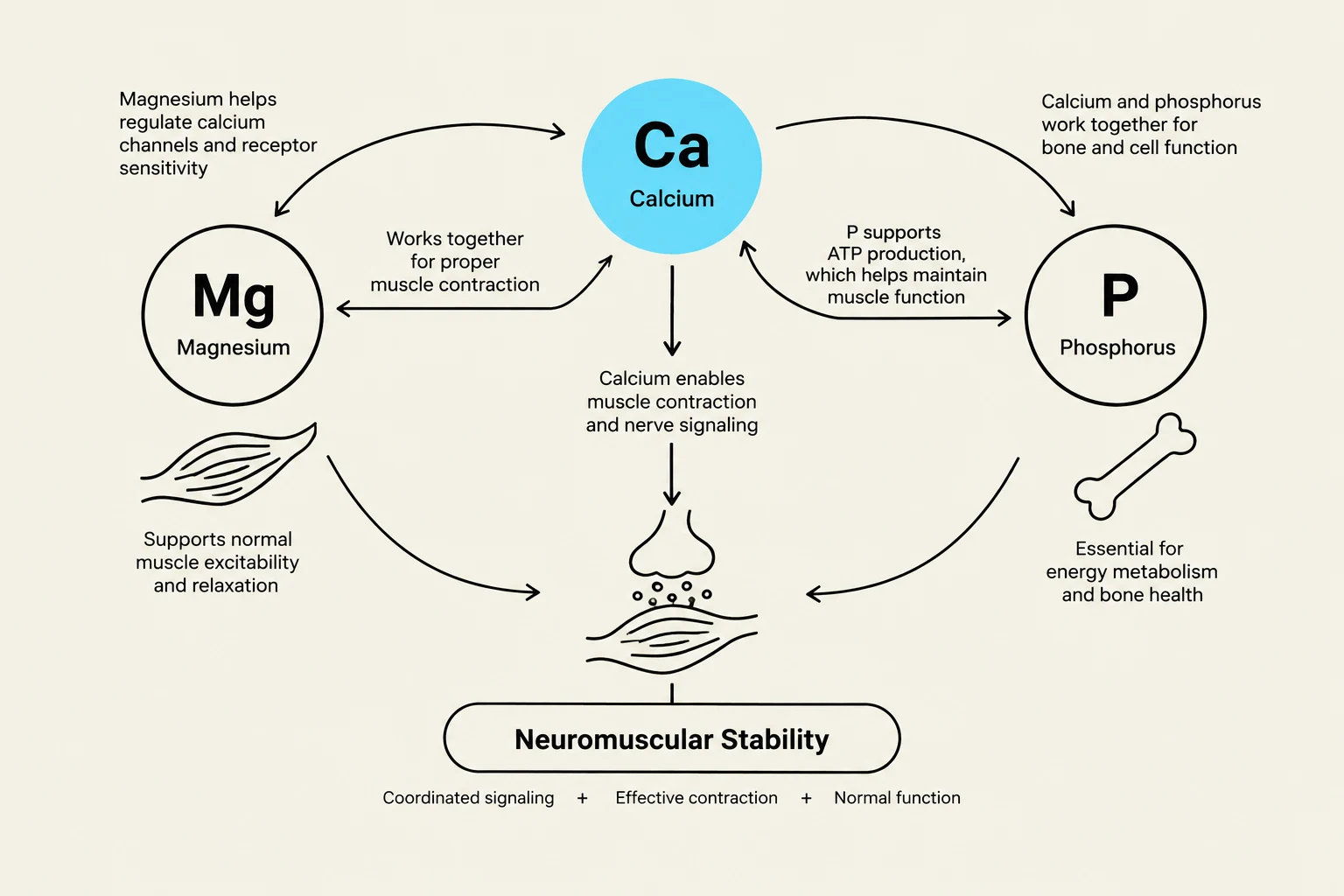
Calcium () is essential for bone formation, blood clotting, and muscle contractions. When serum calcium levels drop below the expected range of , the client enters a state of hypocalcemia.
The hallmark of hypocalcemia is neuromuscular irritability. Because calcium helps stabilize nerve cell membranes, a deficiency causes the nerves to become hyper-excitable, leading to spontaneous firing. This manifests as:
- Paresthesia: Often described as tingling in the fingers, toes, or around the mouth.
- Muscle Twitching: Involuntary contractions and spasms.
- Tetany: Severe, painful muscle spasms.
To remember the clinical manifestations of hypocalcemia, use the mnemonic CATS GO NUMB:
- Convulsions
- Arrhythmias
- Tetany
- Spasms
- Goes
- O
- Numbness (face, fingers, limbs)
- U
- M
- B


Keep reading for free.
Create an account to finish this reading and make it part of your study routine.
Continue reading freeAlready have an account? Log in
Updated