Explore the body's natural defenses against pathogens, including the integumentary system, mucous membranes, teeth, and nails. Learn about essential hygiene practices for infection prevention, such as handwashing and maintaining skin integrity, and understand client-specific considerations in healthcare settings.
Hygiene is defined as the actions and practices used to decrease the spread or transmission of pathogens—such as bacteria, viruses, fungi, and parasites—thereby lessening the occurrence of illness. For healthcare providers, understanding the relationship between hygiene and the body's natural defenses is essential for effective patient care and infection prevention.
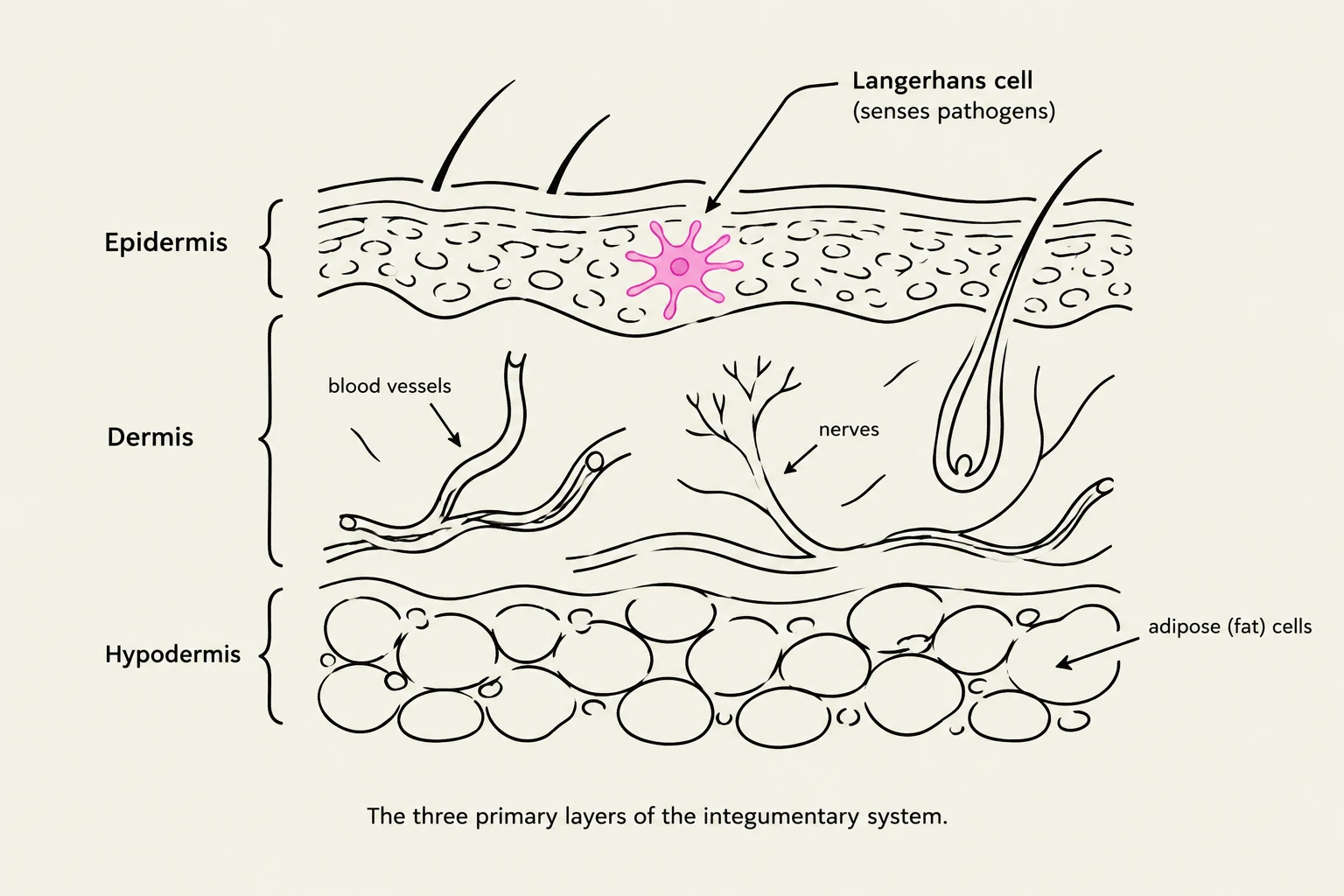
Diagram illustrating the three primary layers of the integumentary system: epidermis, dermis, and hypodermis, with labels for key structures like Langerhans cells, blood vessels, nerves, and adipose cells.
The Body's First Line of Defense
The human body employs several physical barriers to prevent pathogens from entering the immune system. These barriers act as a "first line of defense" to block organisms from the outside environment.
The Integumentary System
The integumentary system is a complex defensive network consisting of the skin, hair, nails, and sebaceous and sweat glands. The skin is the body's largest organ and serves two primary roles: acting as a physical barrier and housing Langerhans cells, which sense and kill pathogens attempting to penetrate the body.
The skin is composed of three distinct layers:
Epidermis: The superficial, outermost layer made of squamous epithelial cells. It is avascular, meaning it lacks blood vessels, and receives its nutrition from the underlying dermis.
Dermis: Located beneath the epidermis, this layer contains connective tissue, nervous tissue, blood, and blood vessels. It provides the skin with its essential strength and elasticity.
Hypodermis (Subcutaneous layer): The deepest layer, which separates the dermis from underlying organs. It contains adipose (fat) tissue, which provides insulation, fat storage, and cushioning against physical trauma.
Mucous Membranes
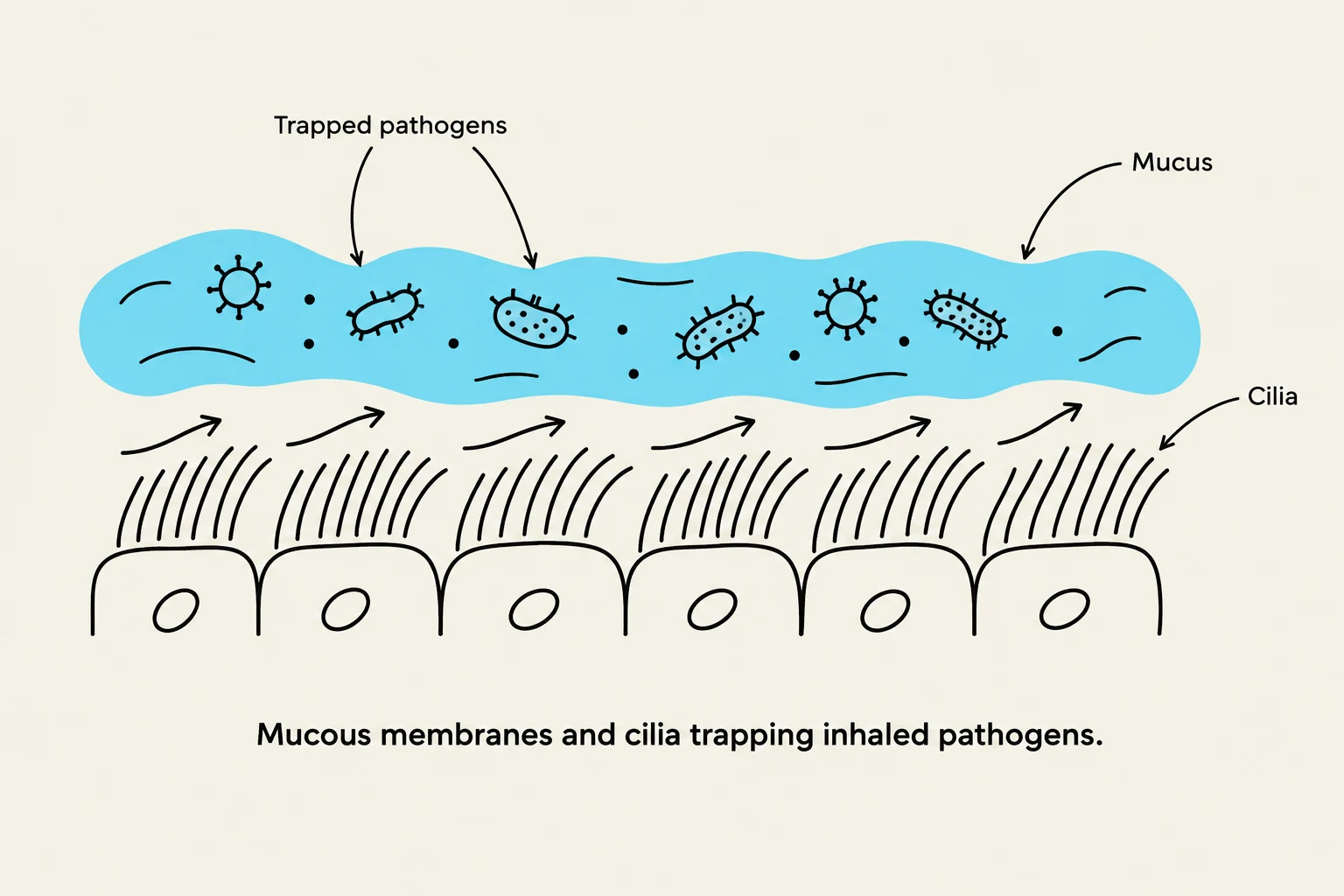
Mucous membranes and cilia trapping inhaled pathogens.
Mucous membranes line body passages that are open to the exterior, including the respiratory, gastrointestinal, and urinary tracts. These membranes secrete mucus, a viscous liquid that entraps pathogens and small particles. In the nose, specialized structures called cilia (tiny hair-like projections) trap inhaled particles and push them toward the front of the nose or the back of the throat to be expelled via coughing or sneezing.
Teeth and Nails
Even the teeth and nails serve as protective barriers. The enamel is the hardest material in the human body and acts as a coating to protect teeth from plaque and pathogens. Beneath the enamel lies the dentin, which protects the pulp (the area containing nerves and blood vessels).
Nails are composed of layers of keratin that protect the distal ends of fingers and toes from injury. The cuticle and hyponychium provide additional barriers to prevent infection of the underlying tissue.
Clinical Note on Nail Care: Longer nail length can conceal a greater number of germs compared to shorter nails and is often linked to ineffective hand hygiene.
Hygiene Practices and Infection Prevention
Effective hygiene is a cornerstone of health promotion—the process of enabling people to increase control over and improve their general health.
Hand Hygiene and HAIs
One of the most critical nursing interventions is effective handwashing. This is a low-cost, efficient method to prevent health care-associated infections (HAIs)—infections that are acquired while a client is in a healthcare facility and were not present upon admission.
Nurses must use alcohol-based hand sanitizer (containing at least 60% alcohol) in most situations, such as before touching a client or after contact with body fluids. However, soap and water must be used when hands are visibly soiled, after caring for a client with infectious diarrhea, or after exposure to bacteria-produced spores like Clostridioides difficile.
Maintaining Skin Integrity
Skin integrity refers to the state of the skin being intact and healthy. A breach in the skin, such as a cut or tear, allows bacteria to enter, which can lead to infection, loss of limbs, or even death. Regular washing with mild soap helps remove oil, dead skin cells, and bacteria that might cause breakdown.
Incontinence (urine or fecal) is a major cause of skin breakdown, particularly around the hips, genitals, buttocks, and perineum. In these cases, using a pH-balanced cleanser can help decrease irritation and dryness.
Client-Specific Hygiene Considerations
Nurses must apply the nursing process—assessment, analysis, planning, implementation, and evaluation (for RNs) or data collection, planning, implementation, and evaluation (for PNs)—to tailor hygiene care to individual needs.
Bariatric Clients
Clients with a high Body Mass Index (BMI) often face challenges with skin integrity due to deep skin folds (areas where skin folds onto itself), particularly in the abdominal region. These folds can trap moisture and heat, leading to rashes and infections. Nurses should wash these areas with pH-balanced soap and gently dab them dry.
Cognitive and Physical Impairments
Dementia: Difficulty performing personal hygiene activities may be one of the first clinical signs of dementia.
Stroke: Clients with a stroke may experience hemiparesis (weakness on one side) or hemiplegia (paralysis on one side). Poor oral hygiene in stroke clients is a significant risk factor for aspiration pneumonia.
Visual Impairment: These clients may struggle with tasks like shaving or grooming. Nurses can foster independence by teaching them to use their hands as guides or by providing adaptive equipment.
Specialized Care Tasks
Perineal Care: Performed to prevent infection, odor, and irritation. When cleaning a female client, always wash from anterior to posterior (front to back) to prevent moving bacteria toward the urethra.
Foot Care: Clients with diabetes require diligent monitoring because they are at higher risk for infections and may have impaired sensation to temperature.
Bed Baths: A complete bed bath is administered entirely by the healthcare provider for clients unable to move, whereas a partial bed bath allows the client to complete part of the process themselves.
Exam Tip: When assisting a client with a stroke to dress, remember the "unaffected side first" rule: use the unaffected arm to put clothing on the affected side, and remove clothing from the unaffected side first when undressing.
Keep reading for free.
Create an account to finish this reading and make it part of your study routine.