


When we think about "being healthy," we often focus on the absence of disease or the presence of physical fitness. However, health is not merely a static state; it is a dynamic outcome heavily influenced by the choices we make every day. These choices are categorized as health behaviours. By understanding the distinction between behaviours that jeopardize our well-being and those that safeguard it, we can better understand the mechanisms of disease prevention and health promotion.
The Spectrum of Health Behaviours
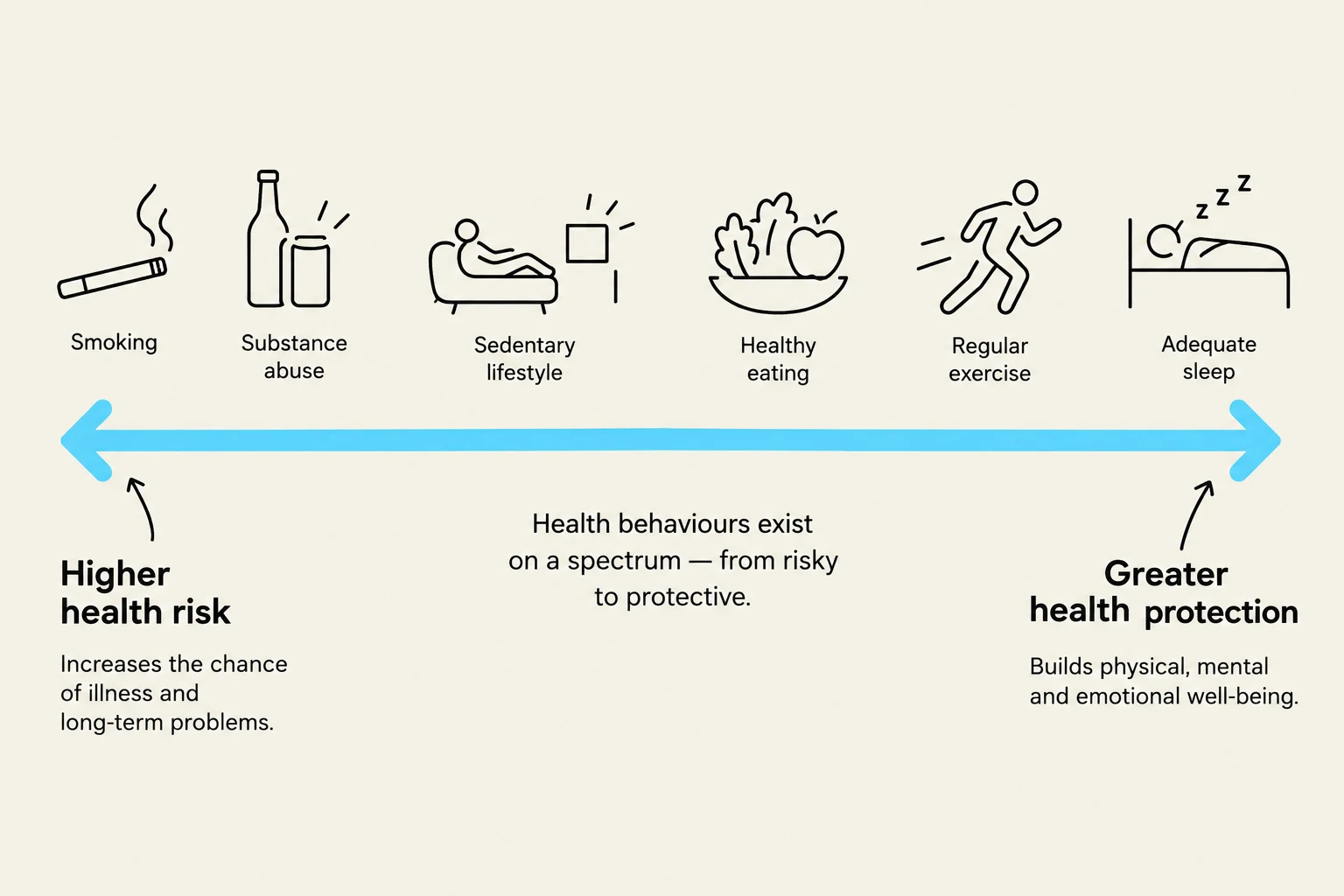
Health behaviours are not a monolith. They exist on a spectrum ranging from actions that actively increase the likelihood of illness to those that build resilience and prevent physiological decline. In public health, we primarily categorize these into two distinct groups: health-risk behaviours and health-protective behaviours.
The distinction is crucial because it dictates how health professionals approach intervention. For instance, treating a smoker requires a different psychological and medical strategy than encouraging a sedentary individual to start walking.
Health-Risk Behaviours
Health-risk behaviours are actions or patterns of conduct that increase an individual's vulnerability to disease, injury, or premature death. These behaviours often provide immediate gratification or serve as coping mechanisms, even though their long-term physiological costs are high.
Common examples include:
- Substance Use: Smoking tobacco, excessive alcohol consumption, or illicit drug use.
- Dietary Risks: High intake of processed sugars, trans fats, and excessive sodium.
- Sedentary Lifestyle: A lack of physical movement, which contributes to metabolic dysfunction.
- Unsafe Practices: Reckless driving or unprotected sexual activity.

Keep reading for free.
Create an account to finish this reading and make it part of your study routine.
Continue reading freeAlready have an account? Log in
Updated