Understanding Glucose, Insulin, and Diabetes Mellitus
This content explains the roles of glucose and insulin in the body's energy balance, the mechanisms of Type 1 and Type 2 diabetes, and the differences between hypoglycemia and hyperglycemia.
The human body is a complex machine that requires a constant, reliable supply of fuel to function. This fuel is primarily provided by a simple sugar called glucose. While the process of converting food into energy seems straightforward, it relies on a delicate hormonal balance. When this balance is disrupted, the results can range from mild fatigue to life-threatening medical emergencies. Understanding the relationship between glucose, the pancreas, and insulin is fundamental to understanding metabolic health and the complexities of diabetes mellitus.
The Role of Glucose and the Digestive System
Glucose is a fundamental form of sugar that serves as the body's primary source of energy. It is essential for the survival of body cells, providing the fuel necessary to perform biological functions.
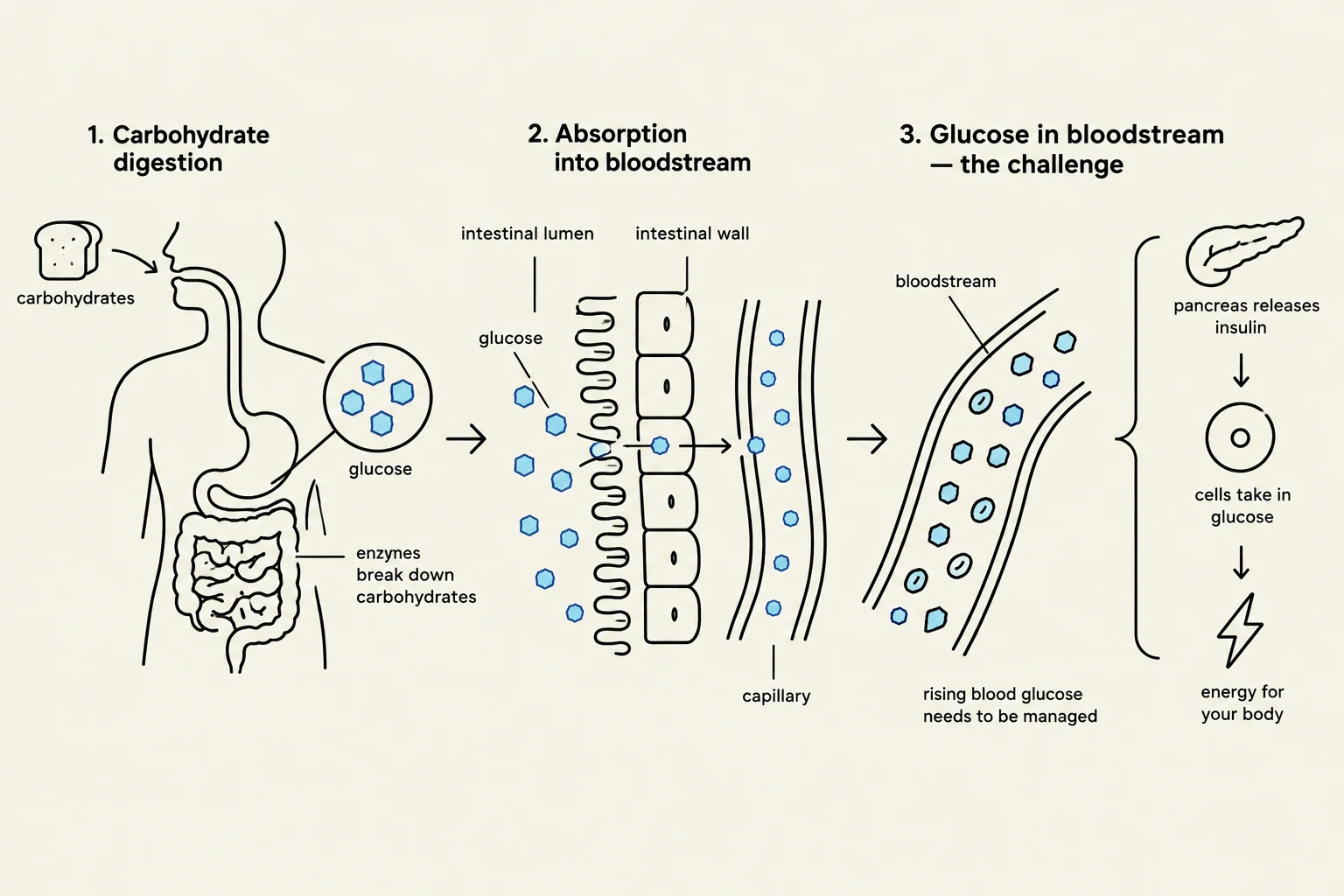
The process begins with the ingestion of carbohydrates. As the body digests these carbohydrates, they are converted into glucose and subsequently absorbed into the bloodstream. However, glucose molecules are relatively large, which presents a physiological challenge: they cannot pass through the cell membrane independently to reach the interior of the cell.
This diagram illustrates the process of carbohydrate digestion, absorption into the bloodstream, and the role of glucose and insulin in providing energy for the body.
Maintaining stable blood glucose levels is particularly critical for the brain. The Reticular Activating System (RAS), which regulates consciousness, staying awake, and attention, requires a steady supply of glucose to nourish brain tissue. Consequently, fluctuations in blood sugar can lead to rapid changes in mental status.
The Pancreas and the "Key" Mechanism
To solve the problem of glucose entering the cell, the body utilizes a specialized organ called the pancreas. Within the pancreas, there are clusters of cells known as the Islets of Langerhans, which are responsible for secreting the hormone insulin.
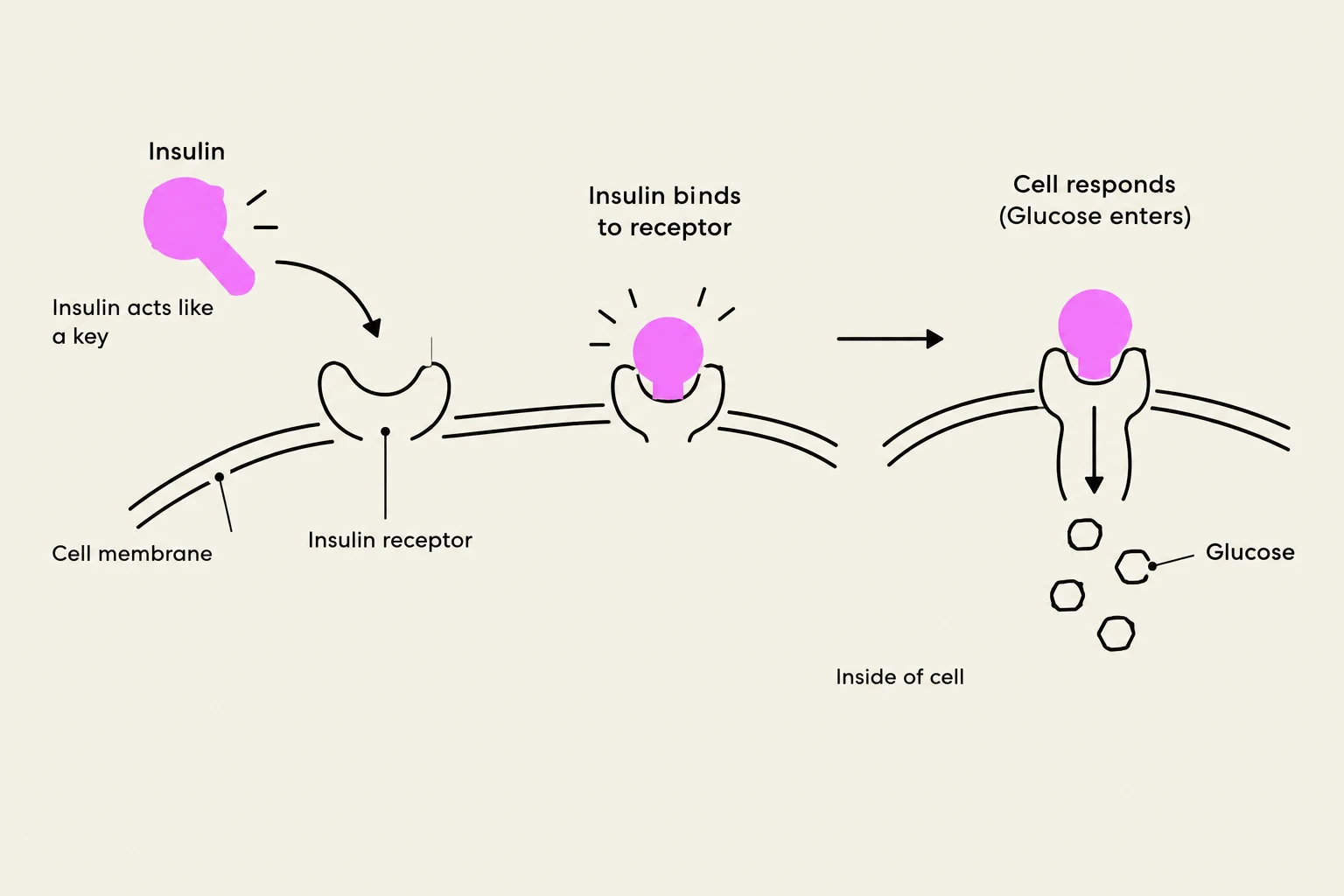
The regulation of blood sugar follows a specific physiological trigger: when blood glucose levels exceed approximately 90 mg/dL, the pancreas releases insulin into the bloodstream. Insulin functions much like a "key." It travels through the blood and binds to specific receptor sites on the cell membrane. This binding "unlocks" the cell, allowing the large glucose molecules to pass from the blood into the cell to be used for energy.
When the intake of sugar and the production of insulin are in balance, the body effectively utilizes glucose as an energy source.
Diagram illustrating how insulin binds to a cell receptor, allowing glucose to enter the cell.
Understanding Diabetes Mellitus
Diabetes mellitus is a metabolic disorder that occurs when this delicate balance is broken. It results from either an underproduction of insulin or the body's inability to use the insulin it produces effectively. This disruption prevents glucose from entering the cells, leading to abnormal blood sugar levels.
There are two primary classifications of the disorder:
Type 1 Diabetes
Formerly known as insulin-dependent diabetes, Type 1 occurs when the pancreatic cells do not function properly. In this condition, insulin is not secreted normally, meaning there is insufficient insulin to transfer circulating glucose into the cells. Because the body cannot produce its own "keys," patients typically require synthetic insulin supplements to survive.
Type 2 Diabetes
Formerly known as non-insulin-dependent diabetes, Type 2 is characterized by a different failure in the system. In this form, the pancreas may actually be secreting enough insulin, but the body's cells fail to utilize it properly. This state is often referred to as insulin resistance. Management of Type 2 diabetes often involves dietary changes, oral antidiabetic medications, and sometimes insulin therapy.
Exam Tip: When distinguishing between the two types, remember that Type 1 is a problem of production (the pancreas fails), while Type 2 is a problem of utilization (the cells resist the insulin).
Diabetic Emergencies: Hypoglycemia vs. Hyperglycemia
When diabetes is not managed effectively, patients may experience acute emergencies involving blood sugar levels that are either too low or too high.
Hypoglycemia (Low Blood Sugar)
Hypoglycemia occurs when there is too much insulin, too little sugar intake, or excessive physical exertion. When blood sugar drops, the brain and body cells begin to "starve".
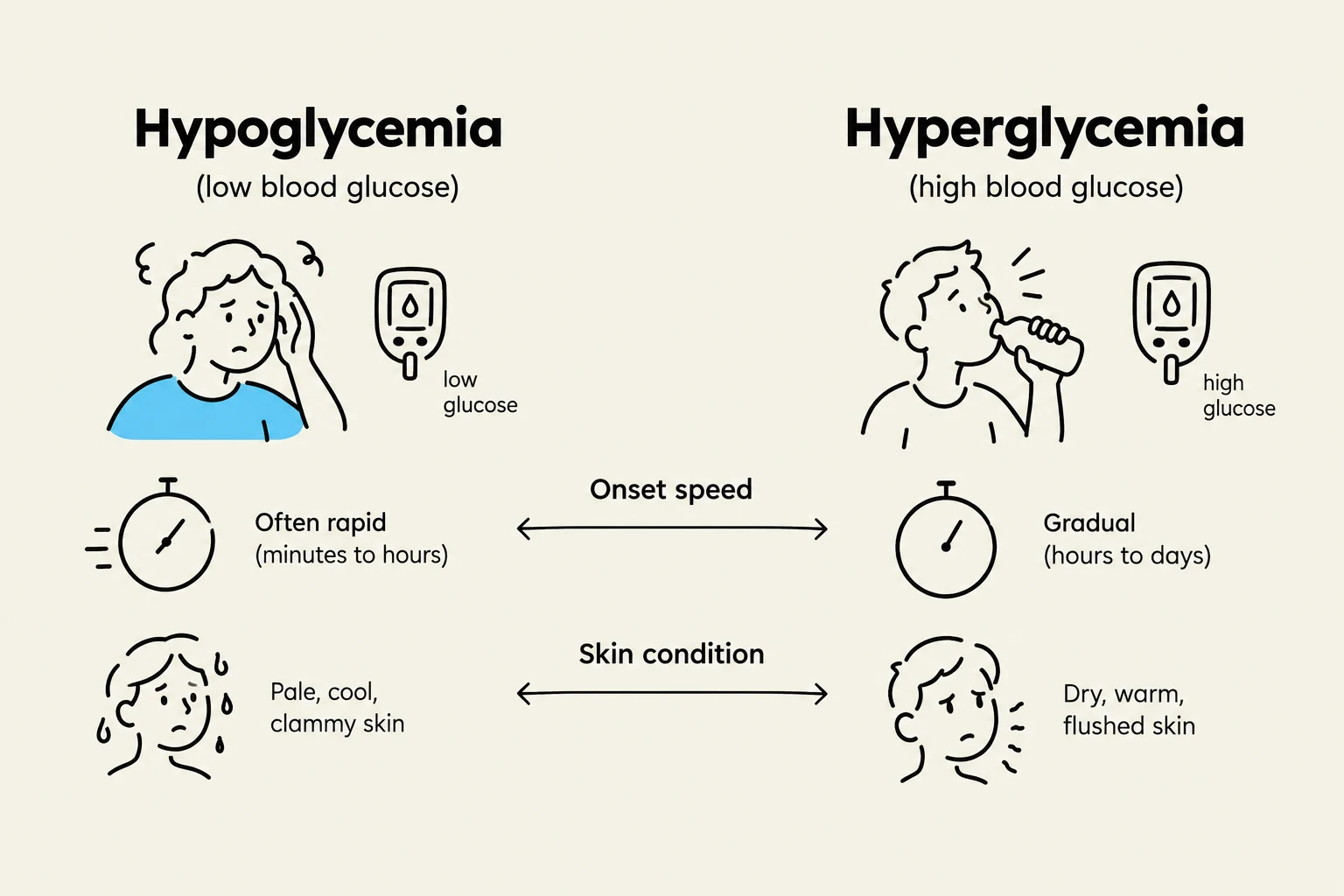
Hypoglycemia is characterized by a rapid onset. Common signs include:
Altered mental status (often mimicking a drunken stupor)
Pale, sweaty (clammy) skin
Tachycardia (rapid heart rate) and rapid breathing
Seizures or unconsciousness
In clinical settings, a blood glucose reading of less than 60 mg/dL in a symptomatic patient indicates hypoglycemia, and a reading below 50 mg/dL can cause significant alterations in mental status or unconsciousness.
Hyperglycemia (High Blood Sugar)
Hyperglycemia is caused by an insulin deficiency, which may result from the body being unable to produce insulin or from missed insulin injections. Unlike hypoglycemia, hyperglycemia typically develops slowly over days or weeks.
Common signs include:
Chronic thirst and hunger
Increased urination
Nausea and dehydration
Warm, red, dry skin
If hyperglycemia is prolonged, the body may begin to burn fats and proteins for energy, producing excessive wastes. This can lead to Diabetic Ketoacidosis (DKA), a serious condition marked by an acetone (fruity) odor on the breath, rapid breathing, and profound altered mental status.
This illustration compares hypoglycemia (low blood glucose) and hyperglycemia (high blood glucose), detailing differences in onset speed and skin condition.
Feature
Hypoglycemia
Hyperglycemia
Onset
Rapid/Sudden
Slow/Gradual
Skin
Cold, clammy/sweaty
Warm, red, dry
Breath
Normal
Acetone/Fruity odor
Mental Status
Rapidly altered
Slowly altered
Clinical Note: In emergency situations where the patient is conscious and able to swallow, administering oral glucose is often recommended for any suspected diabetic emergency. While it is vital for the hypoglycemic patient, it will not harm a hyperglycemic patient.
Keep reading for free.
Create an account to finish this reading and make it part of your study routine.