


The kidneys are sophisticated filtration systems that receive approximately 20-25% of the total cardiac output. This high level of perfusion makes them vital for maintaining homeostasis but also leaves them exceptionally vulnerable to injury when blood flow or pressure fluctuates. Understanding kidney health requires a clear distinction between damage to the microscopic filters (the glomeruli) and the broader clinical syndromes that arise when these filters fail.
Glomerular Disorders: Nephrotic vs. Nephritic Syndromes
The glomerulus is the functional unit of the kidney responsible for filtering blood. When these structures are damaged, the clinical presentation typically falls into one of two categories: nephrotic or nephritic syndromes.
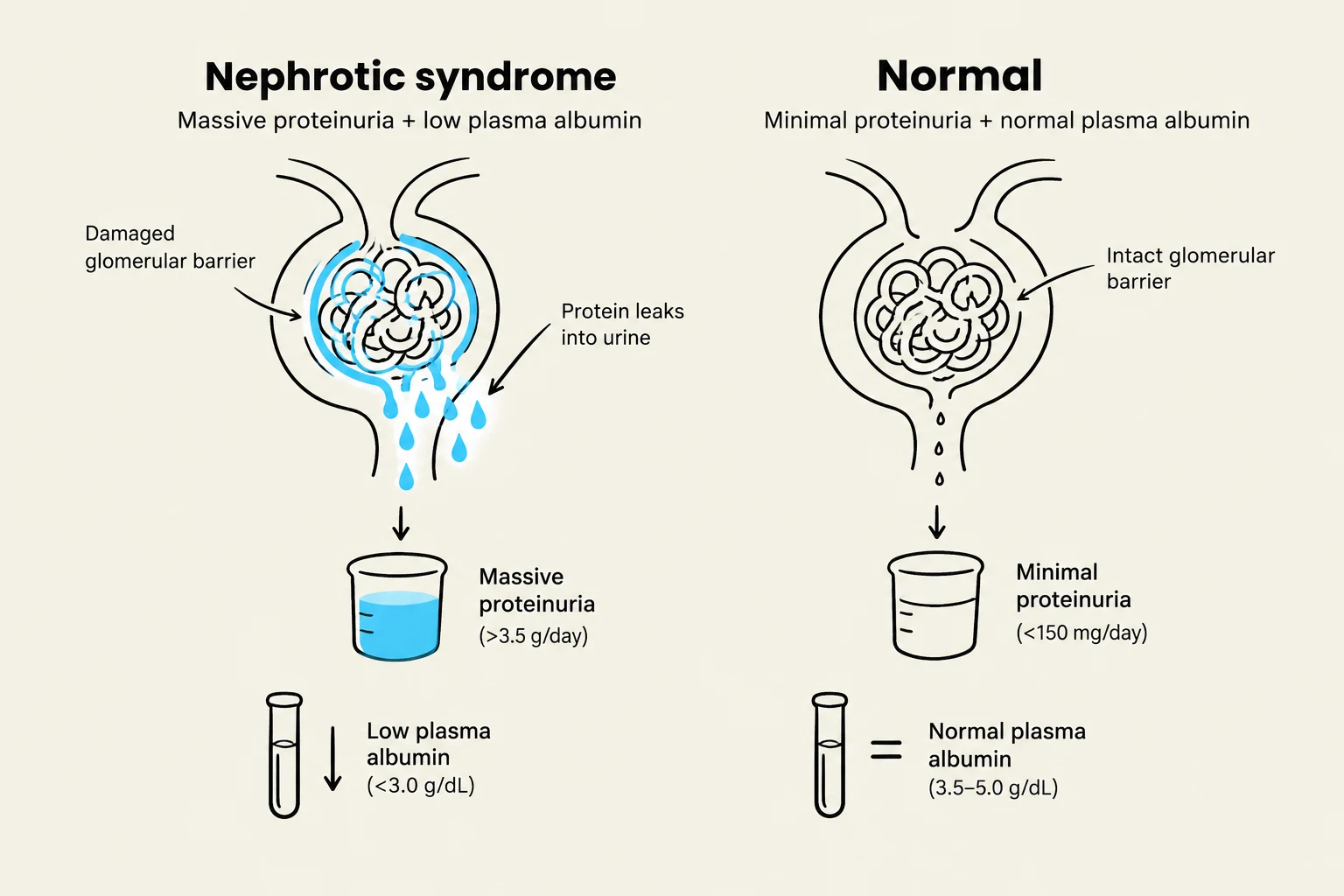
Nephrotic Syndrome
Nephrotic syndrome is characterized by massive protein loss. It occurs when the glomerular filtration of plasma proteins, specifically albumin, exceeds the ability of the renal tubules to reabsorb them. This leads to the excretion of of protein in the urine per day. Because albumin is the primary driver of plasma oncotic pressure—the force that "pulls" water back into the capillaries—a loss of albumin leads to decreased oncotic pressure and subsequent edema.
Nephritic Syndrome
While nephrotic syndrome focuses on protein leakage, nephritic syndrome is characterized by inflammation of the glomerulus (glomerulonephritis). This inflammation can be primary, caused by direct insults like infections, toxins, or immune responses, or secondary, resulting from systemic diseases such as diabetes mellitus, hypertension, or systemic lupus erythematosus.
Acute Kidney Injury (AKI)
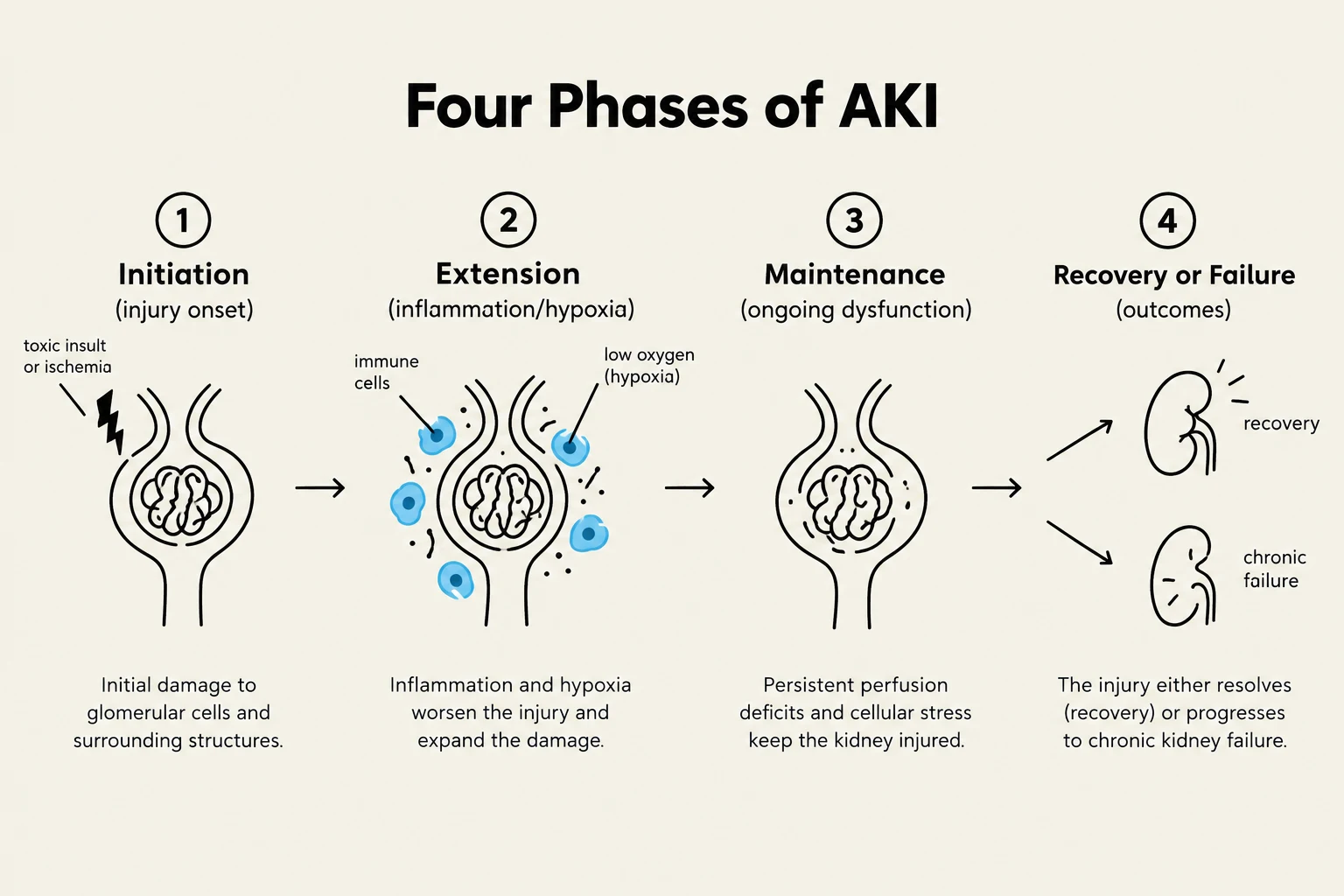
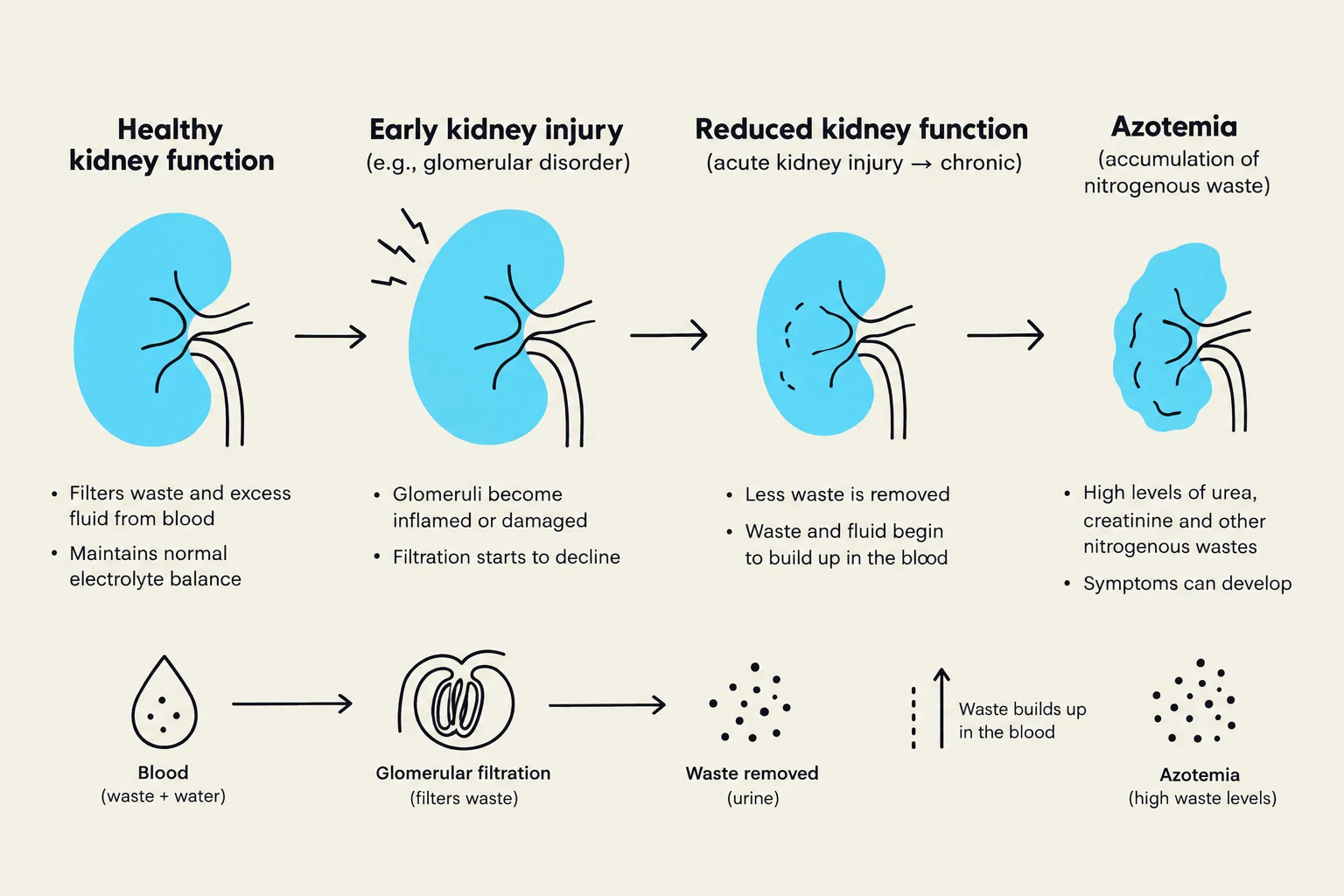
Acute Kidney Injury (AKI) is a rapid, potentially reversible decline in kidney function. It is marked by a decreased Glomerular Filtration Rate (GFR) and an inability to maintain fluid, electrolyte, and acid-base balance.
Keep reading for free.
Create an account to finish this reading and make it part of your study routine.
Continue reading freeAlready have an account? Log in
Updated