


Why are some nations incredibly wealthy while others struggle with persistent poverty? This question lies at the heart of development economics. Global inequality refers to the vast disparities in economic development and living standards observed between different countries and regions. To explain these gaps, scholars have proposed several competing hypotheses, ranging from the physical environment to the deep-seated values of a population, and even the technical competence of political leaders.
In this article, we will examine three primary frameworks: the Geography Hypothesis, the Culture Hypothesis, and the Ignorance Hypothesis, evaluating the strengths and weaknesses of each.
The Geography Hypothesis
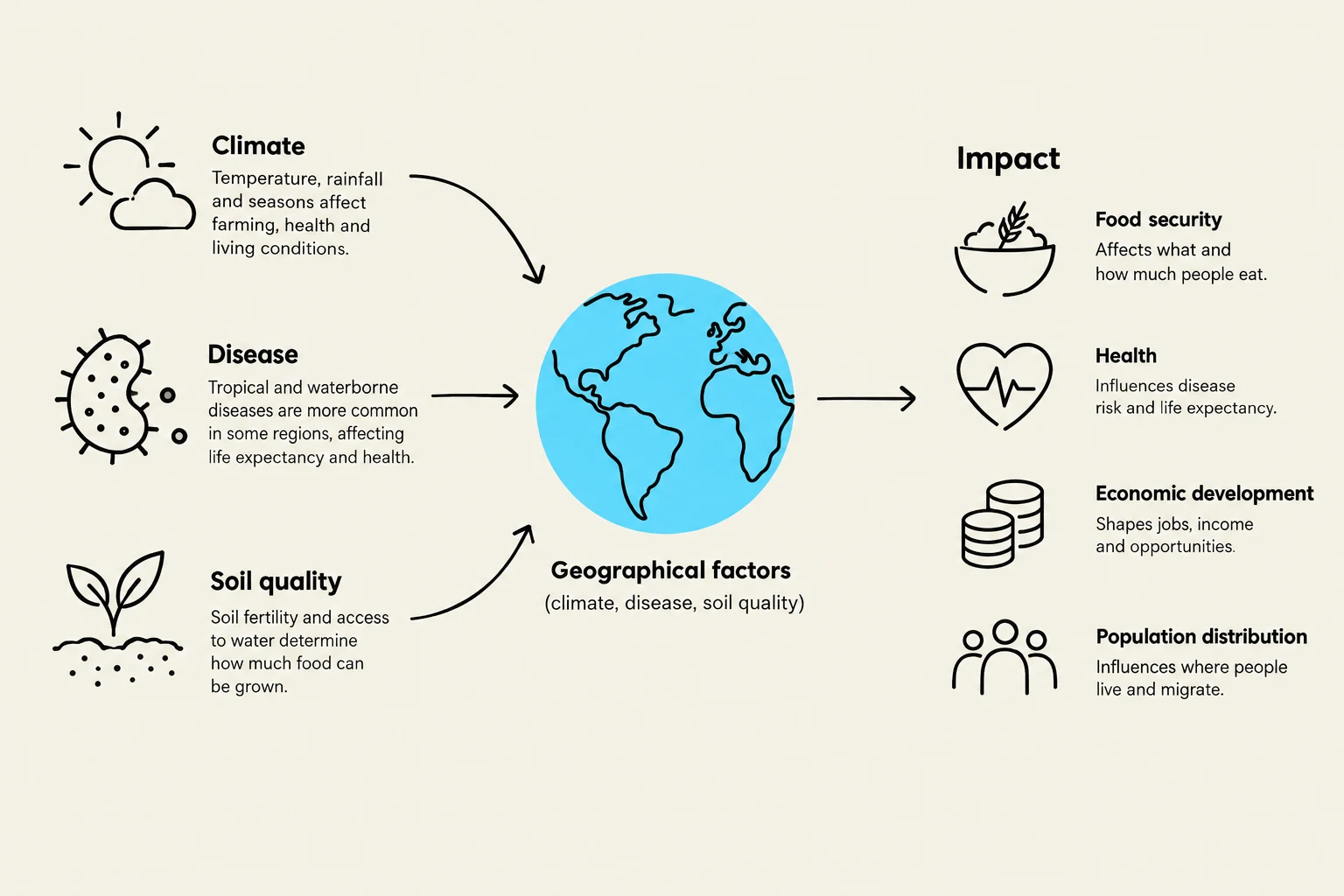
The geography hypothesis suggests that a nation's physical environment is a primary determinant of its economic destiny. Proponents of this view argue that factors such as climate, soil quality, and the availability of natural resources dictate how easily a society can develop.
Key arguments within this hypothesis include:
- Disease and Productivity: Tropical climates may harbor diseases that reduce human productivity and labor capacity.
- Agricultural Viability: Differences in soil quality and climate can make it harder for certain regions to sustain large-scale agriculture.
- Resource Availability: The presence (or absence) of domesticable species and specific natural resources can influence a region's ability to adopt and spread new technologies.
Despite its intuitive appeal, the geography hypothesis faces significant criticism because it cannot account for modern economic divergence in similar environments. For example, consider the cities of Nogales, Arizona, and Nogales, Sonora; they share nearly identical geographical settings, yet they operate under vastly different economic and institutional systems. Similarly, the stark economic divide between North Korea and South Korea cannot be explained by climate alone. While geography provides the stage, it does not explain why certain societies successfully exploit economic opportunities while others do not.

Keep reading for free.
Create an account to finish this reading and make it part of your study routine.
Continue reading freeAlready have an account? Log in
Updated