Understanding Gender Dysphoria: DSM-5-TR and its Controversies
This content explains the clinical definition of Gender Dysphoria in the DSM-5-TR, distinguishing it from gender identity itself. It details the shift in terminology from "Gender Identity Disorder," discusses common comorbidities, and explores the ongoing controversy surrounding its inclusion in diagnostic manuals, cov
In the field of clinical psychology and psychiatry, the way we categorize identity and distress is constantly evolving. One of the most significant and debated shifts in recent decades involves the transition from "Gender Identity Disorder" to "Gender Dysphoria" in the Diagnostic and Statistical Manual of Mental Disorders (DSM). This shift represents a fundamental change in how clinicians view the relationship between a person's internal sense of gender and their mental health.
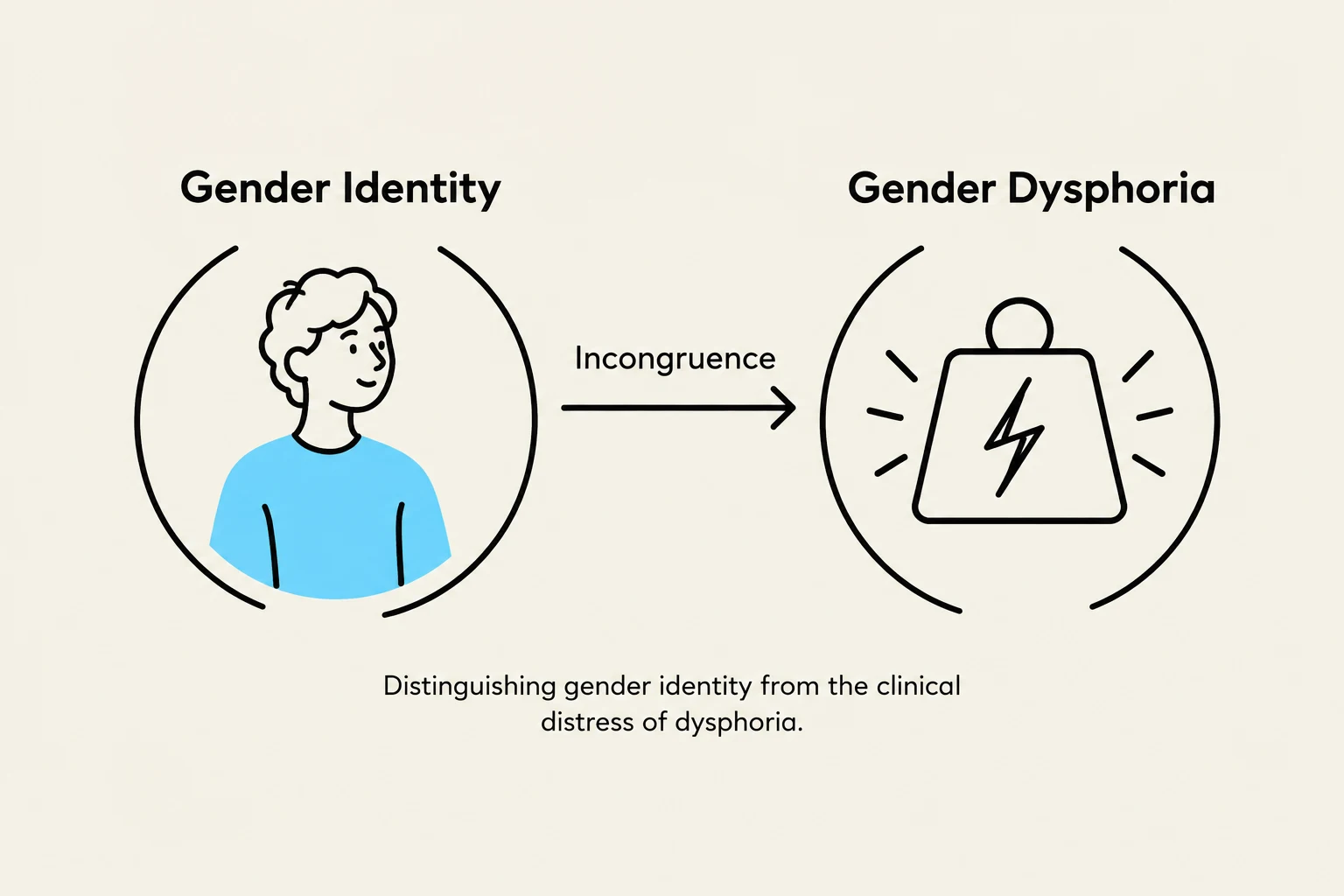
This diagram illustrates the distinction between gender identity and gender dysphoria, highlighting incongruence as a factor in the latter.
Understanding Gender Dysphoria requires a careful distinction between a person's identity and the psychological distress that may arise from a mismatch between that identity and their assigned sex at birth.
Defining Gender Dysphoria
The DSM-5-TR (Text Revision) defines Gender Dysphoria not as the identity itself, but as the clinically significant distress caused by the incongruence between one's experienced gender and one's assigned sex. This is a crucial distinction for clinicians: being transgender is not, in itself, a mental disorder. Rather, the disorder lies in the distress, anxiety, or impairment that results from the incongruence.
To meet the diagnostic criteria, an individual must experience a marked incongruence between their experienced gender and assigned sex, manifested by at least two of the following (depending on age):
A strong desire to be rid of one's primary or secondary sex characteristics.
A strong desire to be rid of the sex characteristics of one's assigned sex.
A strong desire to be of the gender of another person.
A strong desire to be treated as a gender different from one's assigned sex.
A strong conviction that one has the typical feelings and reactions of a gender different from one's assigned sex.
Exam Tip: When analyzing a clinical case, look for the presence of distress or impairment. If a patient identifies as a different gender but is functioning well and experiencing no significant distress regarding their body or social role, they may not meet the technical criteria for Gender Dysphoria.
The Shift from "Disorder" to "Dysphoria"
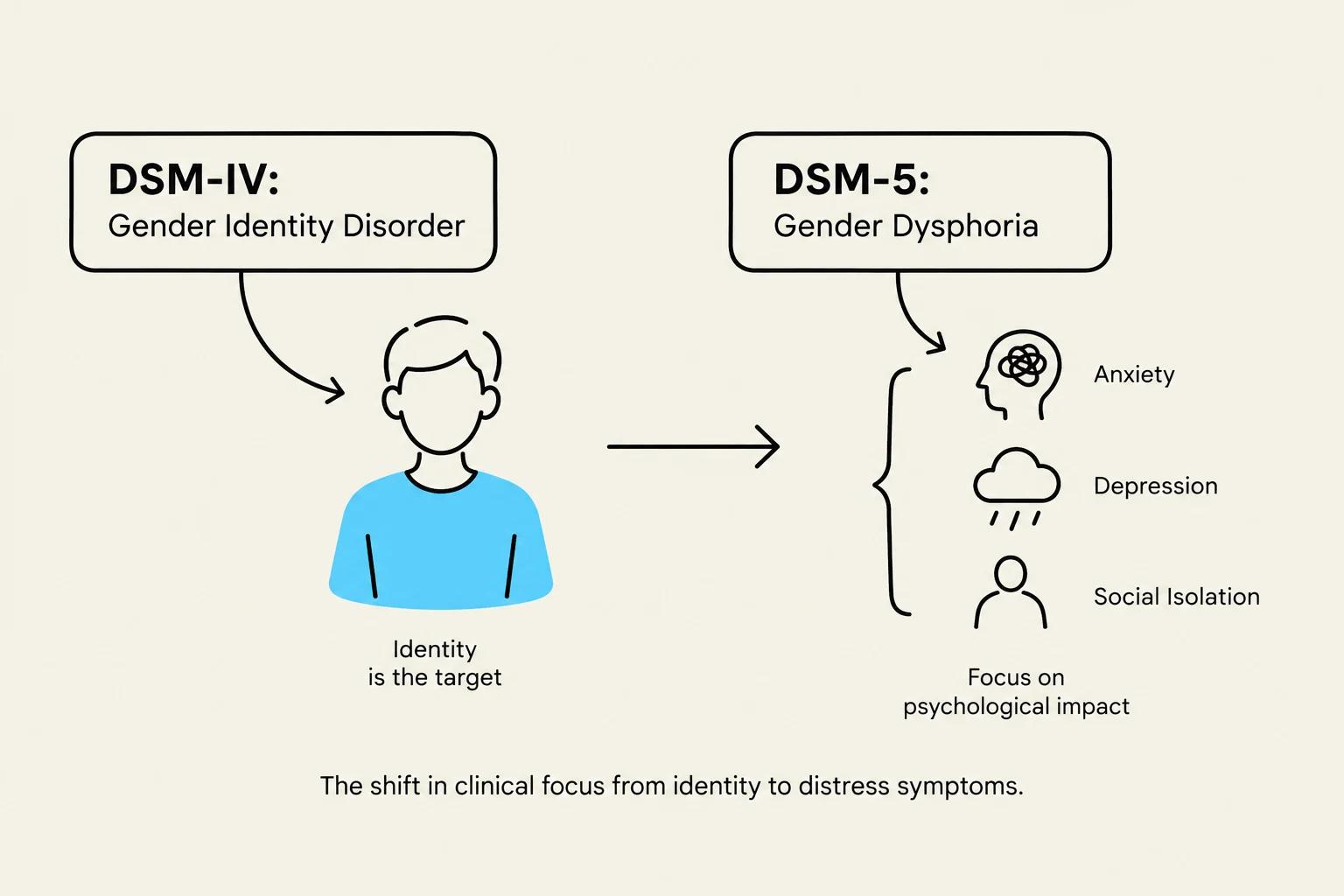
This diagram illustrates the shift in clinical focus from Gender Identity Disorder in DSM-IV to Gender Dysphoria in DSM-5, highlighting the emphasis on psychological impacts such as anxiety, depression, and social isolation.
The evolution from the DSM-IV's "Gender Identity Disorder" to the DSM-5's "Gender Dysphoria" was intended to reduce stigma. In previous iterations, the "disorder" label implied that the person's identity was the problem. By reframing the diagnosis as "dysphoria," the clinical focus shifted toward the symptoms of distress (such as depression, anxiety, or social isolation) rather than the identity itself.
This change aligns with a broader movement in the medical community to de-pathologize diverse sexual orientations and gender identities, recognizing that the psychological struggle often stems from societal pressures, lack of affirmation, or physical incongruence rather than an inherent "brokenness" of the individual.
Clinical Presentation and Comorbidities
Gender Dysphoria often presents alongside other psychological challenges. Because individuals experiencing dysphoria may face significant social stigma, discrimination, or barriers to accessing gender-affirming care, they are at a higher risk for comorbid conditions.
Commonly observed comorbidities include:
Depressive Disorders: Feelings of hopelessness or persistent low mood related to social misalignment.
Anxiety Disorders: Social anxiety stemming from fear of misgendering or discrimination.
Eating Disorders: In some cases, individuals may attempt to use restrictive eating to alter their body shape to better align with their gender identity.
The Controversy: Clinical vs. Social Perspectives
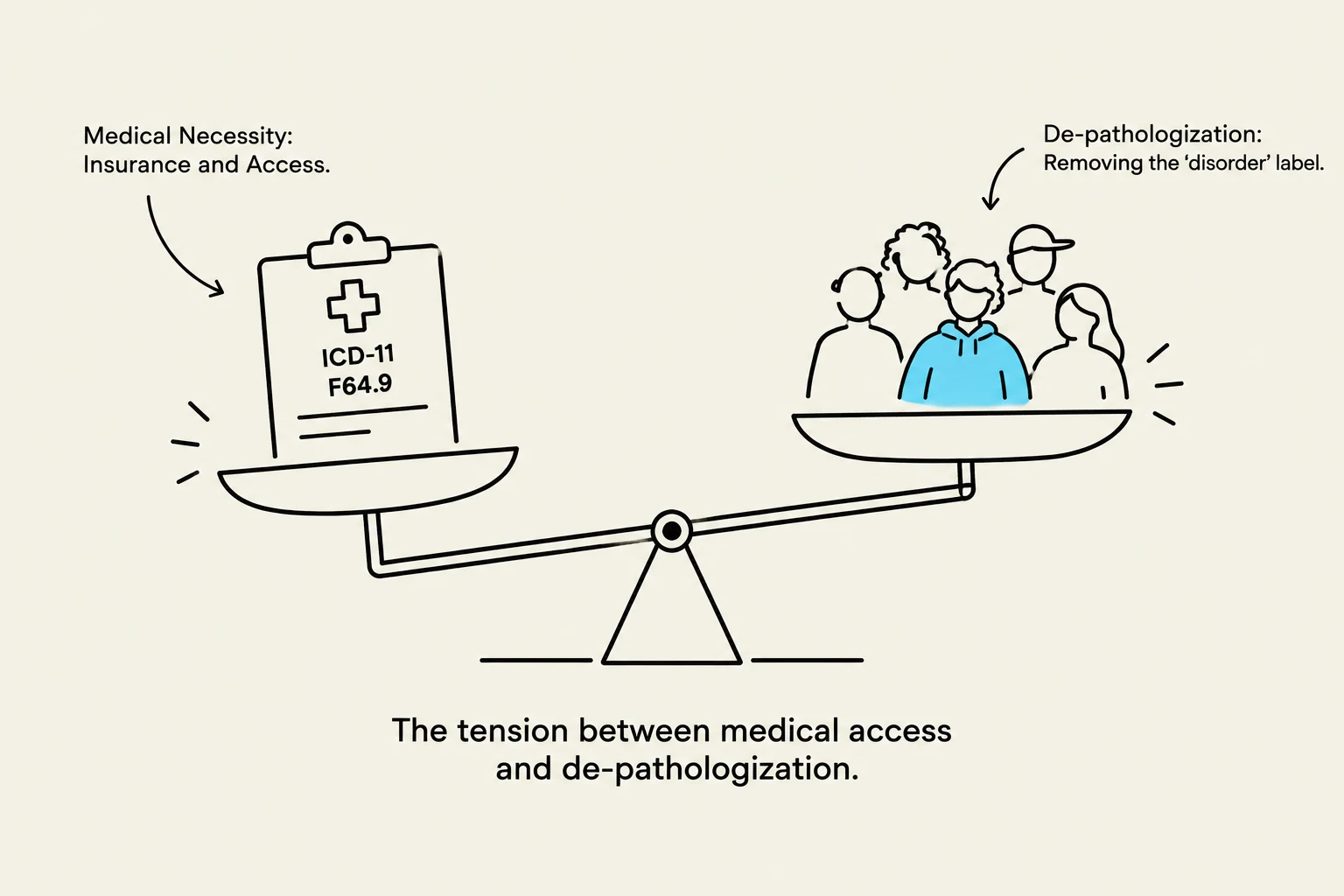
A diagram illustrating the tension between medical access, represented by an ICD-11 code on a scale, and de-pathologization, represented by a group of people.
Despite the intentional shift toward a less stigmatizing language, the inclusion of Gender Dysphoria in the DSM remains a point of intense controversy. The debate generally falls into two camps:
The Medical Necessity Argument
Proponents of the diagnosis argue that having a formal DSM code is essential for practical reasons. Without a diagnosis, many individuals cannot access:
Insurance Coverage: Most insurance providers require a DSM code to authorize gender-affirming medical interventions (such as hormone therapy or surgery).
Legal Protections: A clinical diagnosis can sometimes assist in navigating legal and institutional frameworks.
The De-pathologization Argument
Critics, including many activists and some mental health professionals, argue that any inclusion of gender identity in a manual of "mental disorders" is inherently harmful. They argue that:
It reinforces the idea that being transgender is a medical condition.
It places the "problem" within the individual rather than within a society that refuses to accommodate gender diversity.
It can be used as a tool for gatekeeping, where clinicians hold undue power over an individual's ability to access care.
Summary Table: DSM-IV vs. DSM-5-TR
Feature
DSM-IV (Gender Identity Disorder)
DSM-5-TR (Gender Dysphoria)
Primary Focus
The identity itself is viewed as the disorder.
The distress caused by the incongruence is the disorder.
Stigma Level
High; implies identity is pathological.
Lower; focuses on clinical symptoms/distress.
Clinical Goal
To treat the identity.
To alleviate the distress and incongruence.
Clinical Note: Practitioners must remain culturally competent and aware of the distinction between gender identity (who a person is) and gender dysphoria (the distress they feel). The goal of treatment is typically to reduce the dysphoria, often through social transition, hormone therapy, or surgery, rather than attempting to change the person's identity.
Keep reading for free.
Create an account to finish this reading and make it part of your study routine.