


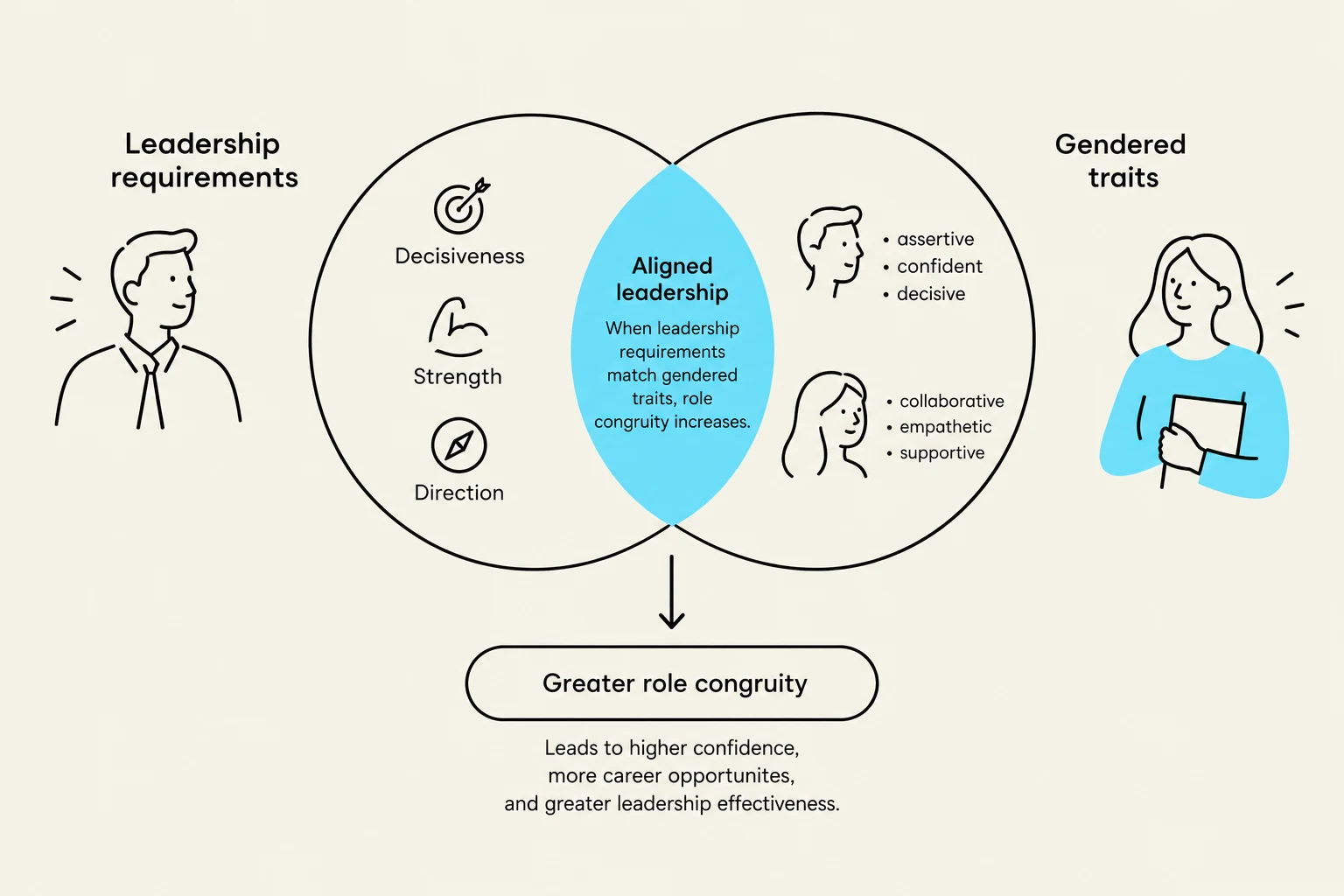
Leadership is often described as a slippery and complex concept. Whether defined as the capacity to translate vision into reality or as the simple ability to influence others, leadership requires a specific set of behaviors and traits. However, as we attempt to identify who makes an effective leader, we often encounter social biases that influence our perceptions. One of the most significant frameworks for understanding these biases is Role Congruity Theory, which explores how societal expectations regarding gender interact with the perceived requirements of leadership roles.
The Building Blocks: Gender Roles and Traits
To understand Role Congruity Theory, we must first examine how society categorizes human behavior through the lens of gender. Gender roles are the sets of social expectations regarding how men and women "should" act, both in their actual behavior and in their ideal versions of themselves.
Psychological research often divides these gendered expectations into two distinct categories of personality traits:
- Communal Traits: These are behaviors typically associated with women in social stereotypes. They include being nurturing, helpful, sympathetic, and sensitive to the needs of others.
- Agentic Traits: These are behaviors typically associated with men. They include being ambitious, dominant, independent, and assertive.
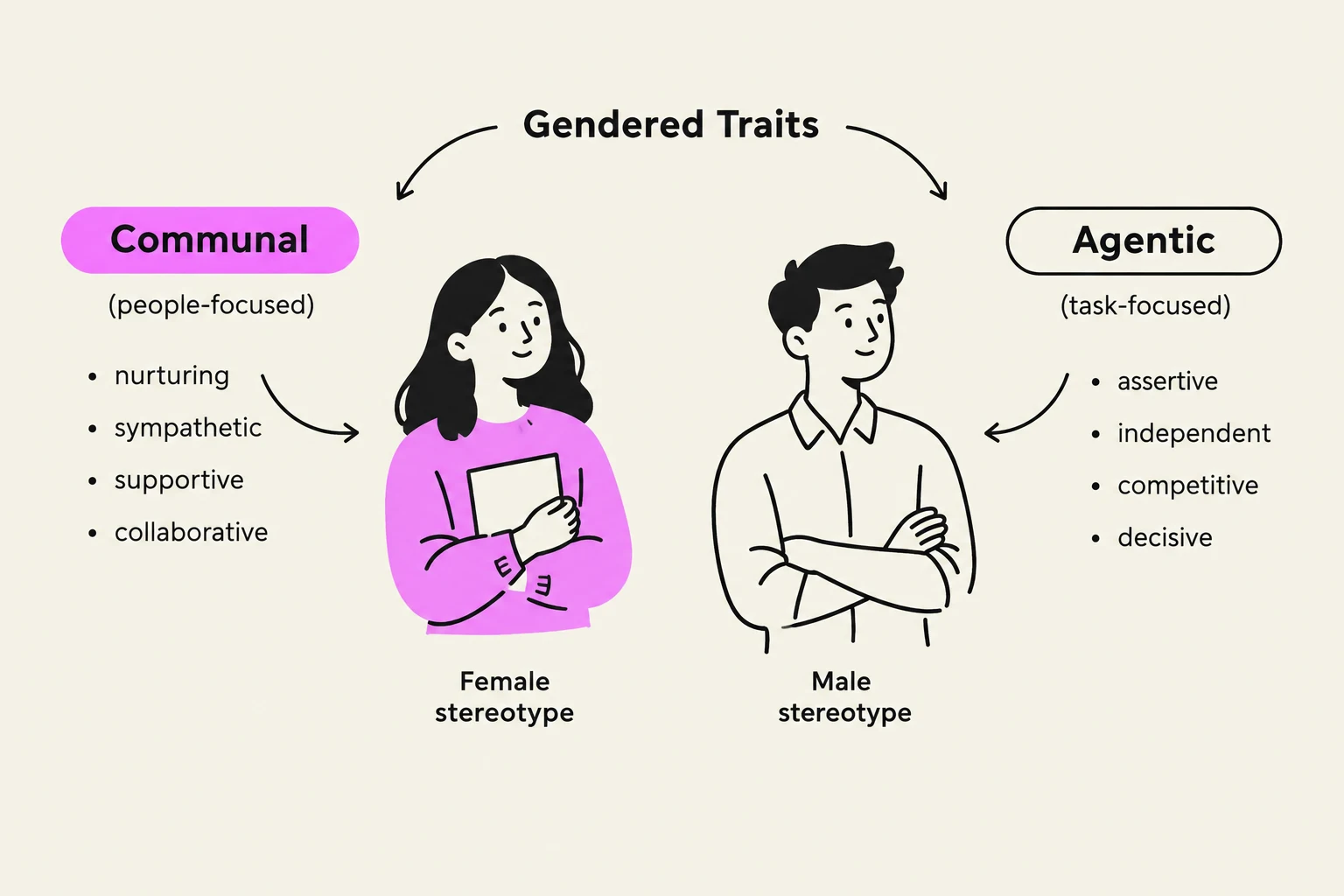
Study Tip: When preparing for exams, remember that "Communal" does not mean "lacking skill"; it refers to a specific social category of interpersonal behavior. Similarly, "Agentic" refers to task-oriented and self-directed behavior.
Keep reading for free.
Create an account to finish this reading and make it part of your study routine.
Continue reading freeAlready have an account? Log in
Updated