


Effective gas exchange is the cornerstone of respiratory health. It is the physiological process of transporting oxygen () from the air into the blood while simultaneously removing carbon dioxide () from the blood. When this process is compromised—whether due to airway obstruction, lung disease, or reduced perfusion—patients face significant risks, including hypoxemia and hypoxia. To combat these issues, healthcare providers utilize a variety of instructional methods and therapeutic interventions designed to promote lung expansion, improve pulmonary ventilation, and facilitate the clearance of secretions.
Promoting Lung Expansion: Incentive Spirometry
One of the most common tools used to improve pulmonary ventilation is the Incentive Spirometer (IS). Pulmonary ventilation refers to the movement of air into and out of the lungs, a process coordinated by the brainstem and executed by the diaphragm and intercostal muscles.
The primary physiological goal of using an IS is to expand collapsed alveoli, a condition known as atelectasis. This is particularly critical for patients recovering from surgery, as anesthesia and postoperative pain can lead to hypoventilation and alveolar collapse.
How to perform Incentive Spirometry:
- Sit in an upright position.
- Exhale normally.
- Place the mouthpiece in your mouth and maintain a tight seal with your lips.
- Perform a slow, deep inhalation to raise the indicator on the device.
- Exhale slowly, cough to loosen secretions, and repeat.
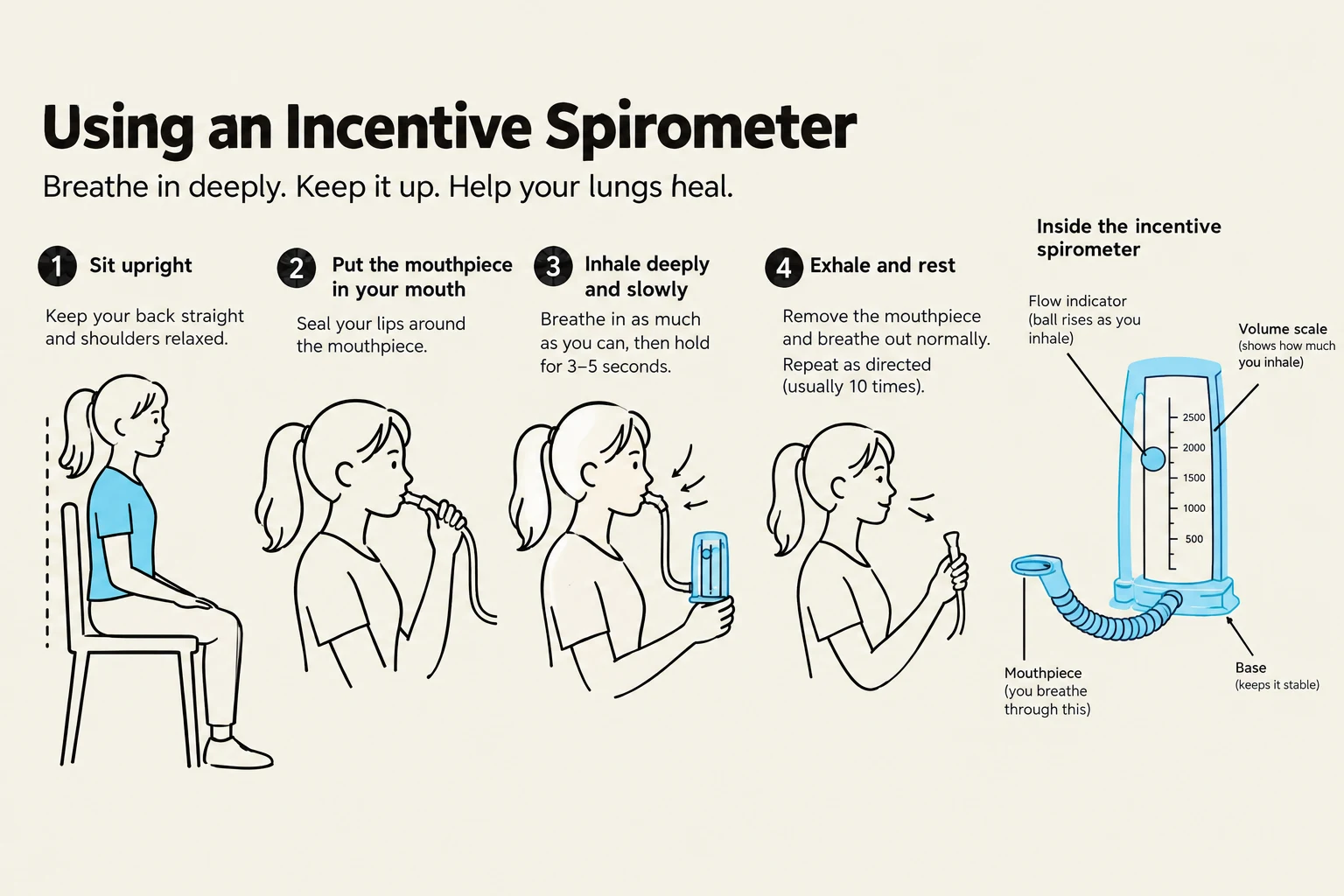
Clinical Tip: The goal of IS is to encourage frequent, deep breaths to counteract the effects of anesthesia or hypoventilation.
Keep reading for free.
Create an account to finish this reading and make it part of your study routine.
Continue reading freeAlready have an account? Log in
Updated