Direction: Inflows vs. Outflows
The perspective of the observer changes the terminology used:
- FDI Inflow: Investment entering a country from foreign investors. From the perspective of the receiving "host country," this is an inflow.
- FDI Outflow: Investment leaving a country as its domestic firms invest directly abroad. This is viewed from the perspective of the "home country".
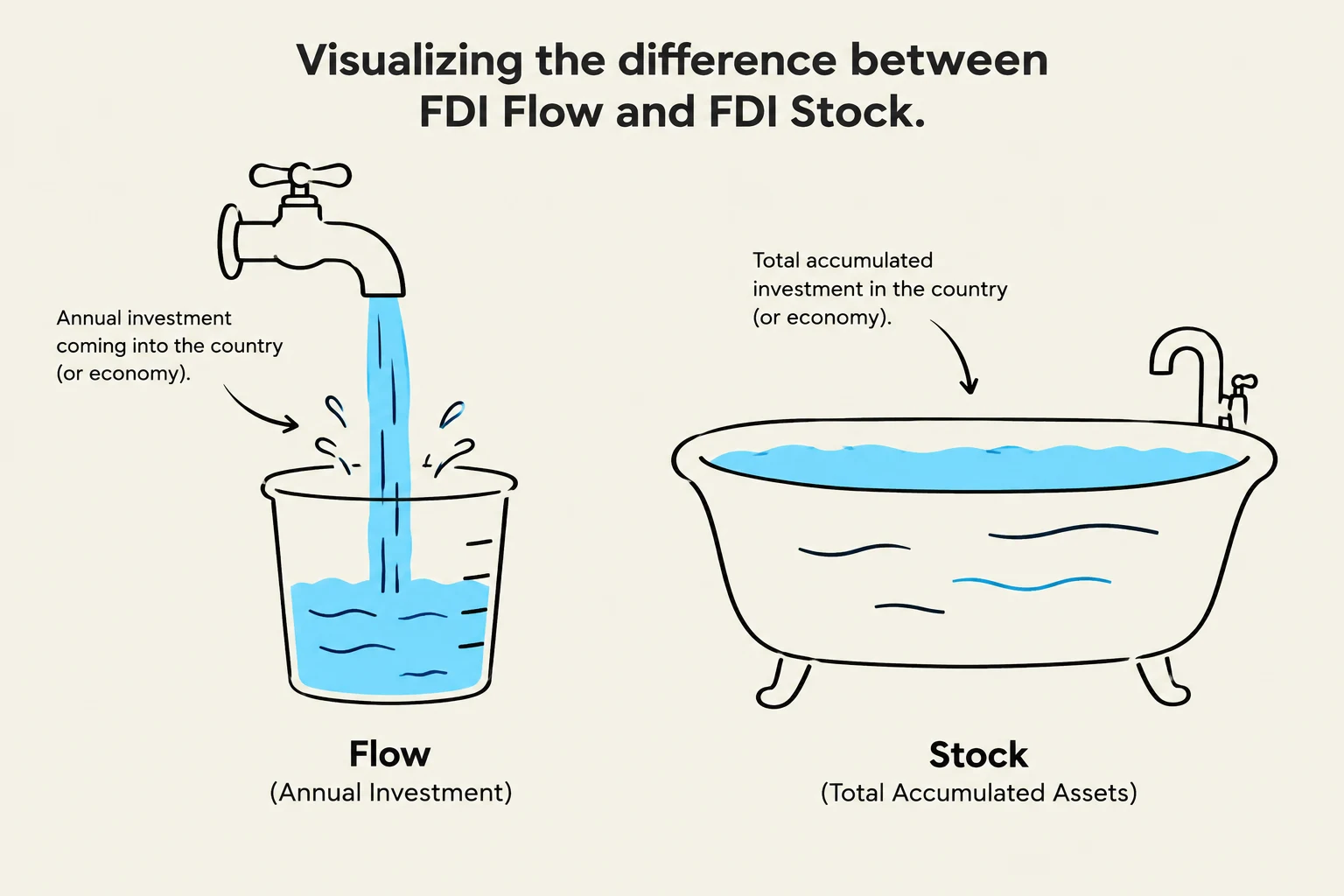
Exam Tip: If a question asks about the "direction" of investment, look for Inflow/Outflow. If it asks about "measurement over time," look for Flow/Stock.
How Companies Enter Foreign Markets
When an MNE decides to engage in FDI, it generally chooses one of two primary entry strategies:
- Greenfield Investment: This involves establishing a brand-new operation in a foreign country by building or starting a new facility from the ground up.
- Acquisitions and Mergers: Rather than building from scratch, a firm invests by purchasing or joining with an existing company already operating in the foreign country.
The Economic Impact of FDI
FDI is a "double-edged sword." It creates significant advantages, but it also introduces risks and costs for both the country receiving the money (the Host Country) and the country where the investing firm is based (the Home Country).
1. Effects on the Host Country
For a developing or growing economy, FDI can be a powerful engine for modernization.
The Benefits:
- Resource-Transfer Effects: FDI supplies essential capital, technology, and management expertise that might otherwise be unavailable, boosting the host country's economic growth rate.
- Employment Effects: FDI creates jobs both directly (hiring local citizens) and indirectly (creating demand for local suppliers).
- Balance-of-Payments Effects: The initial influx of capital and the potential for the foreign subsidiary to export goods can improve the host country's balance of payments.
The Costs:
- Competition Effects: Large MNEs often have vastly more resources than local firms, which can stifle local competition and reduce market dynamism.
- Balance-of-Payments Risks: While the initial inflow is positive, long-term costs include profits being sent back to the home country and increased imports by the foreign subsidiary.
- National Sovereignty and Autonomy: There is often political concern that important economic decisions are being made by a foreign parent company rather than local authorities.
2. Effects on the Home Country
The country sending the investment also experiences a shift in its economic landscape.
The Benefits:
- Learning and Skills: The home-country MNE can gain valuable knowledge and management skills from its foreign operations.
- Reverse Resource-Transfer Effect: The knowledge and skills gained abroad can eventually be transferred back to the home country.
- Employment Effects: Home-country employment can benefit when foreign operations create a higher demand for goods and services produced in the home country.
The Costs:
- Balance-of-Payments Effects: Outward FDI requires an initial outflow of capital, and there is a risk that profits earned abroad will never return home.
- Employment Effects: If a company moves its production facilities to a foreign country to save costs, it may result in job losses in the home country.
Government Policy and International Regulation
Because FDI can significantly alter a nation's economy, governments use various policy instruments to manage it. These policies can be designed to either encourage inward FDI (to gain technology and jobs) or restrict outward FDI (to prevent capital flight and job losses).
Historically, FDI was governed by a patchwork of national laws. However, this changed significantly with the establishment of the World Trade Organization (WTO) in 1995. Since then, international institutions have worked to liberalize FDI, particularly in critical sectors like telecommunications and financial services, making it easier for capital to flow across borders.
Summary Table: FDI Impact Comparison
| Perspective | Primary Benefits | Primary Costs |
|---|
| Host Country | Resource transfer, Jobs, Growth | Reduced local competition, Sovereignty concerns |
| Home Country | Skill acquisition, Reverse resource transfer | Capital outflow, Potential job losses |