


In the study of biology and the natural world, we often encounter ideas that sound scientific but do not actually meet the rigorous criteria required to be classified as such. To distinguish between a personal belief system and a scientific theory, we must understand a fundamental concept: falsifiability. While the term might sound like it means "being false," it actually refers to the capacity of a statement to be proven wrong through observation or experimentation.
Scientific Statements vs. Belief Systems
To understand why falsifiability matters, we must first distinguish between scientific theories and belief systems.
A belief system—which can include religion, personal philosophies, or moral codes—is a set of principles that people often take on faith. These systems are not intended to be tested; people do not typically go out into the world to find evidence that might force them to change their core values. For example, the belief that "murder is wrong" or that "universal human rights should exist" is a moral stance, not a scientific hypothesis.
In contrast, scientific statements are ideas or hypotheses that require testing. In common language, people often use the word "theory" to mean a "hunch" or a "half-baked idea," but in science, a theory is a well-supported set of hypotheses that explains facts about the natural world.
Exam Tip: If a question asks you to distinguish between a scientific theory and a belief system, look for whether the idea can be tested or if it relies on faith/untestable principles.
The Core Concept: Falsifiability
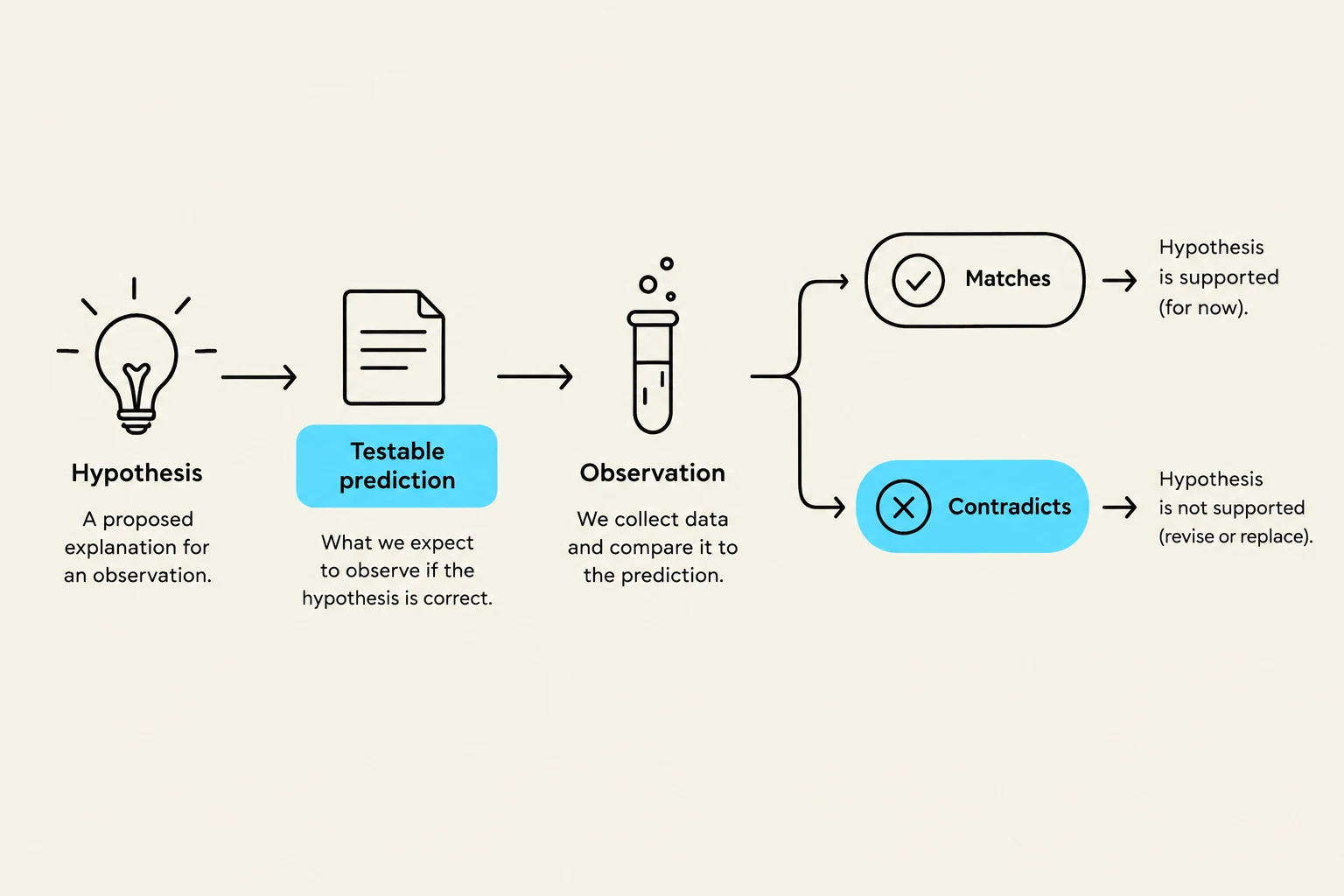
A scientific theory is only considered scientific if it is falsifiable. Falsifiability means that if a statement or idea is incorrect, there must be a real or hypothetical experimental outcome or observation that could demonstrate its error.

Keep reading for free.
Create an account to finish this reading and make it part of your study routine.
Continue reading freeAlready have an account? Log in
Updated