


In a perfect market, the price of a good reflects all the costs and benefits associated with its production and consumption. However, real-world markets often fail to achieve efficiency because of "spillovers"—impacts that affect people who are not part of the transaction. These impacts are known as externalities. When these spillovers occur, the market equilibrium fails to reach the socially optimal quantity, leading to market failure.
Understanding Externalities and Social Costs
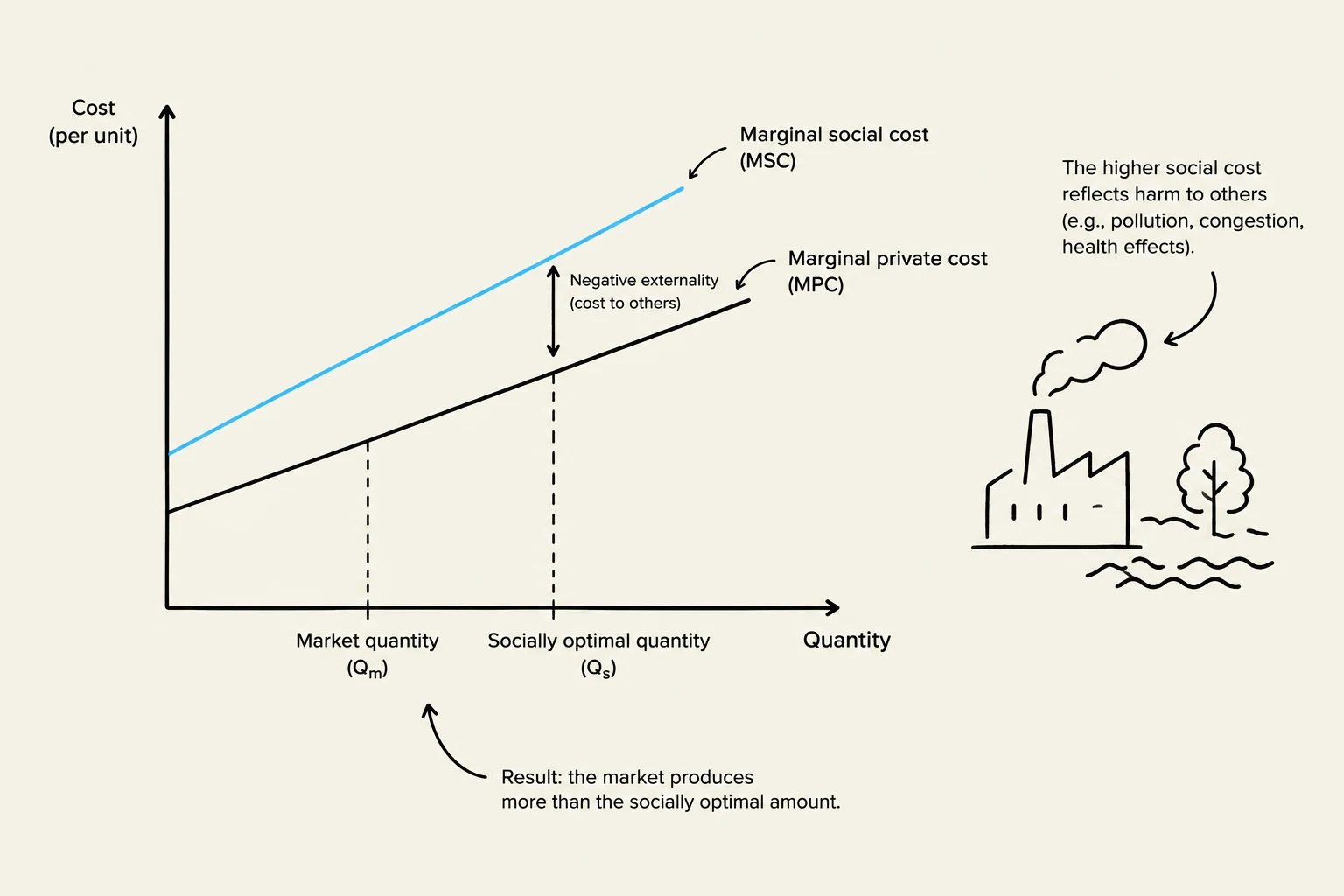
To understand why markets fail, we must distinguish between private costs/benefits and social costs/benefits. A negative externality occurs when a transaction imposes an external cost on a third party. For example, if a factory pollutes a river, the people living downstream suffer a cost that the factory does not pay for.
In these cases, the marginal social cost (MSC)—the total cost to society for one additional unit of an activity—is higher than the marginal private cost incurred by the producer. Because the producer ignores the external cost, they will produce more of the good than is socially desirable, leading to overconsumption or overproduction.
Exam Tip: When you see a negative externality, remember that: This gap represents the external cost imposed on society.
Positive Externalities and the Socially Optimal Quantity
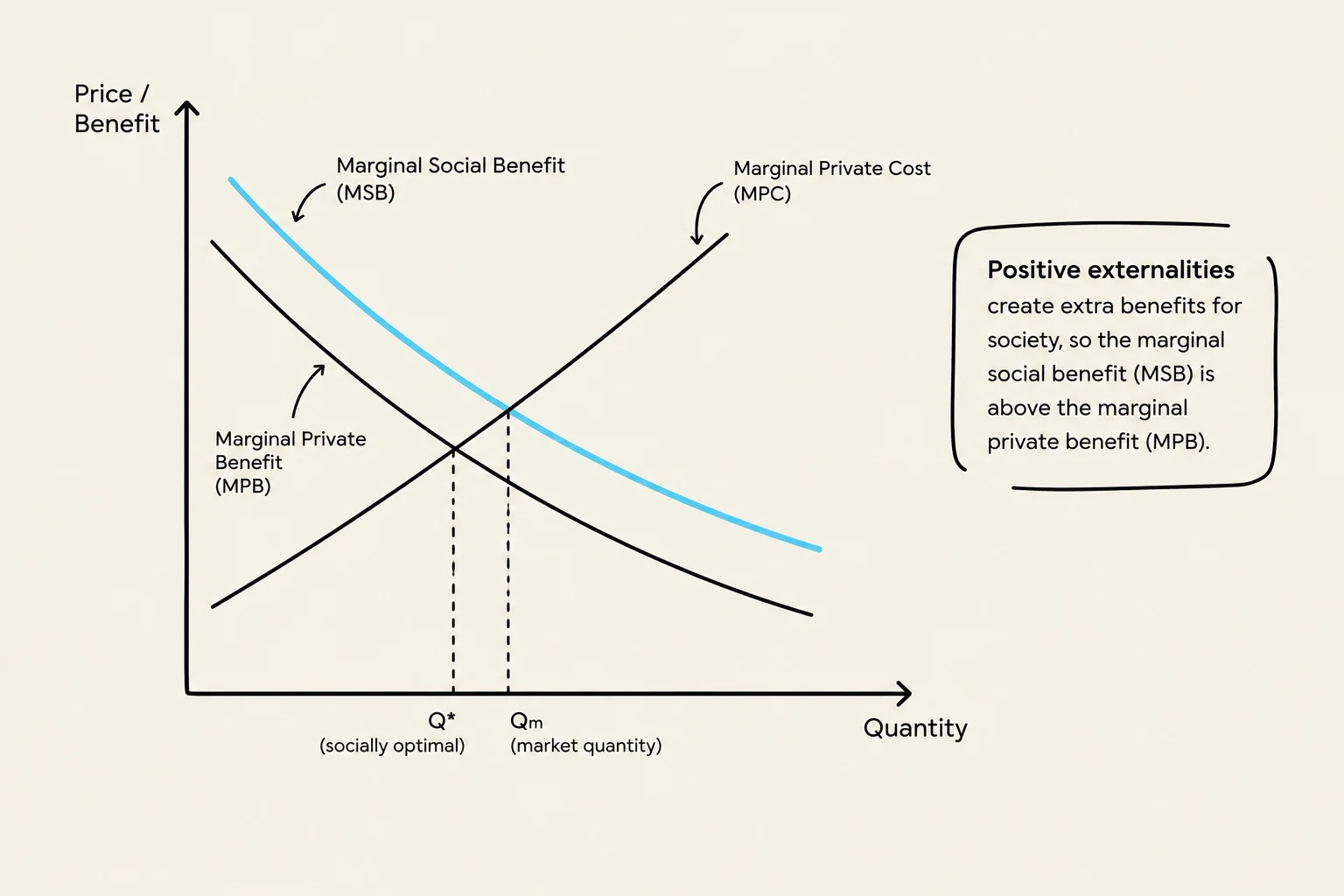
A positive externality occurs when a transaction provides an external benefit to bystanders. A classic example is education: while a student gains personal skills, society benefits from a more productive and informed citizenry. Another example is a neighbor planting beautiful flowers, which increases the aesthetic value of the entire street for everyone else.
Keep reading for free.
Create an account to finish this reading and make it part of your study routine.
Continue reading freeAlready have an account? Log in
Updated