


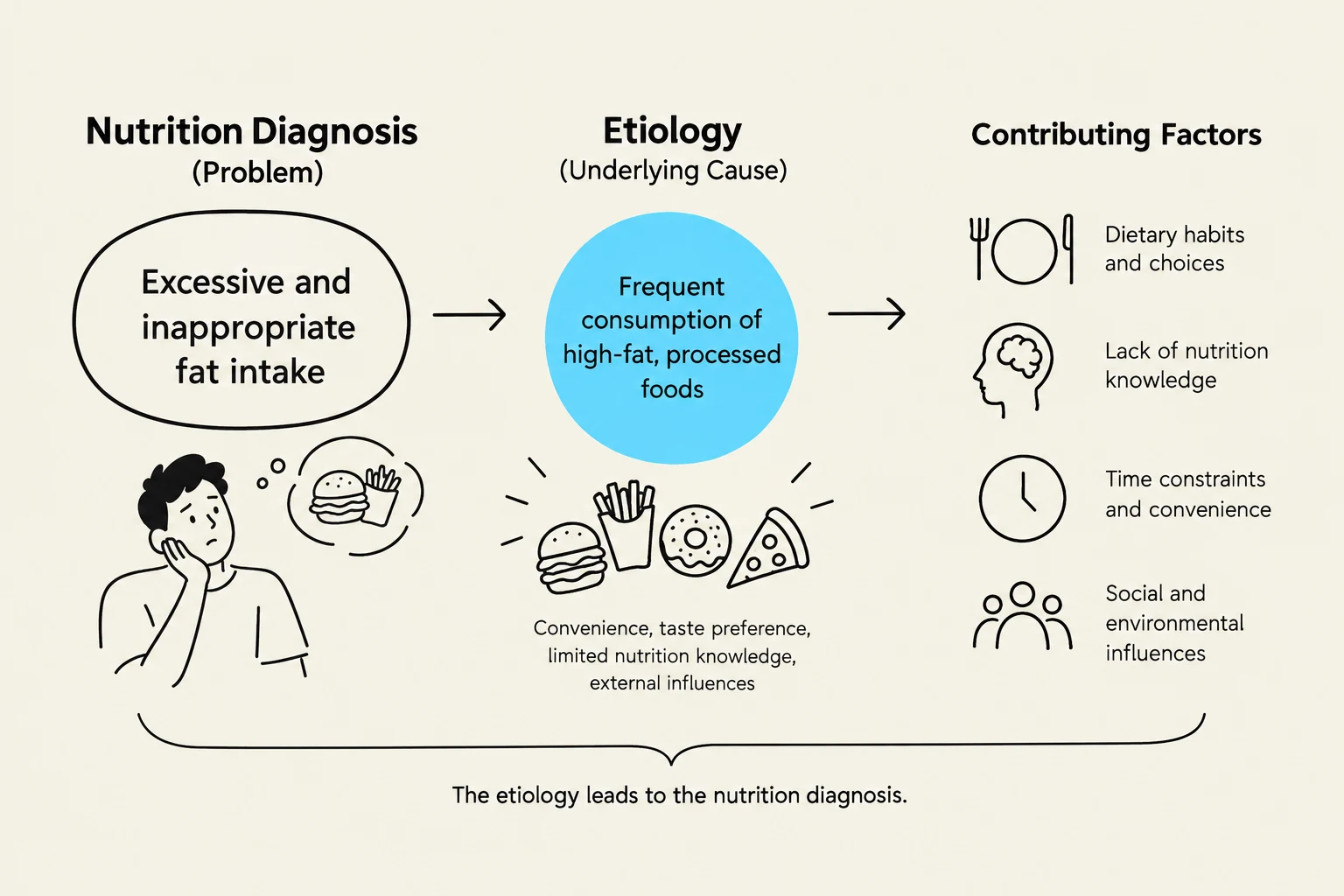
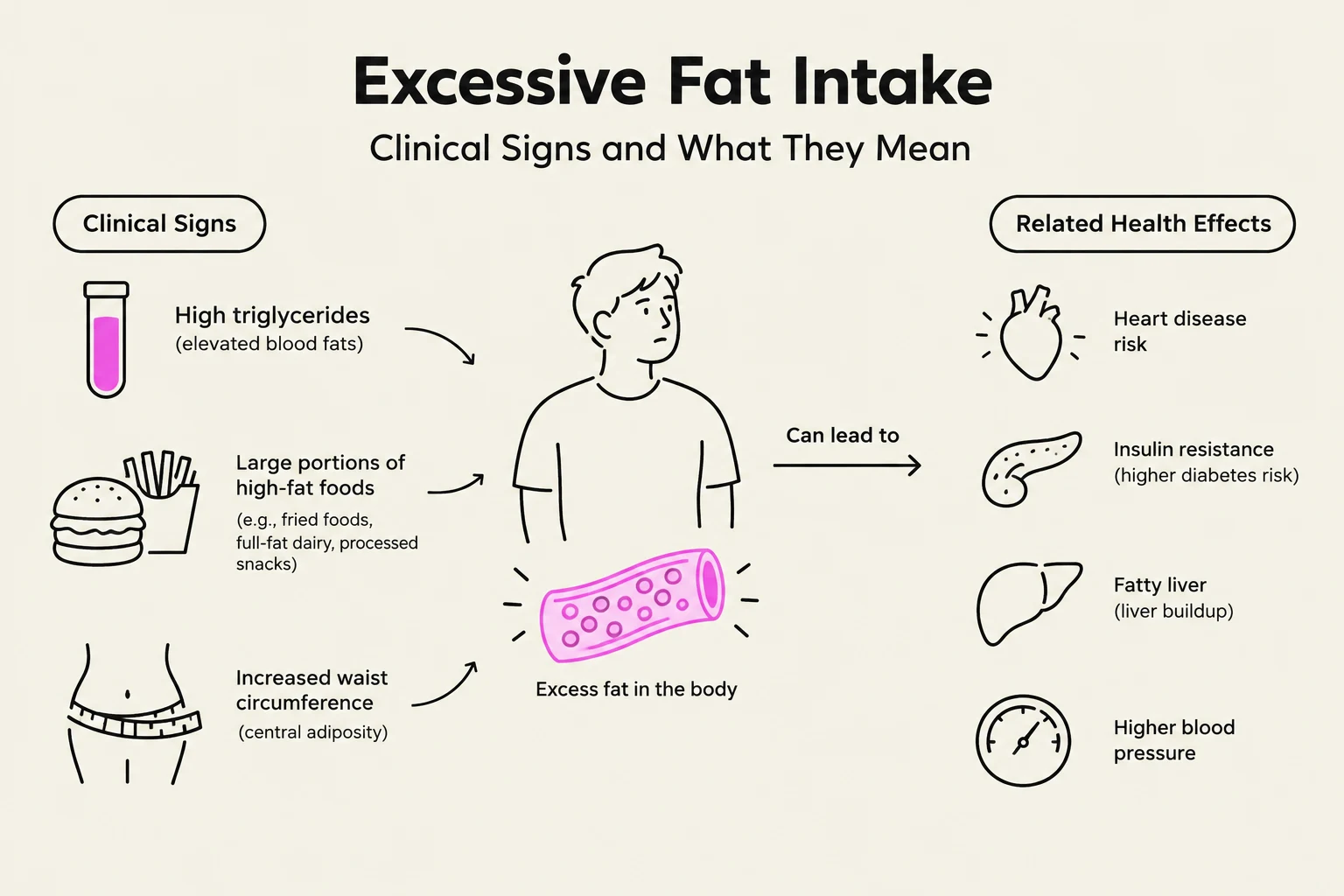
In the Nutrition Care Process (NCP), formulating a precise nutrition diagnosis is critical for developing an effective intervention. When a patient presents with concerns regarding lipid profiles or dietary habits, the clinician must distinguish between the quantity of fat being consumed and the quality of the fats being selected. This guide focuses on the nuances of the Nutrition Diagnosis (ND) for fat intake, specifically looking at the relationship between etiology (the cause) and signs and symptoms (the evidence).
Understanding the Nutrition Diagnostic Statement
A complete nutrition diagnosis is structured as a PES statement: Problem (the nutrition diagnosis), Etiology (the cause or contributing factors), and Signs/Symptoms (the defining characteristics).
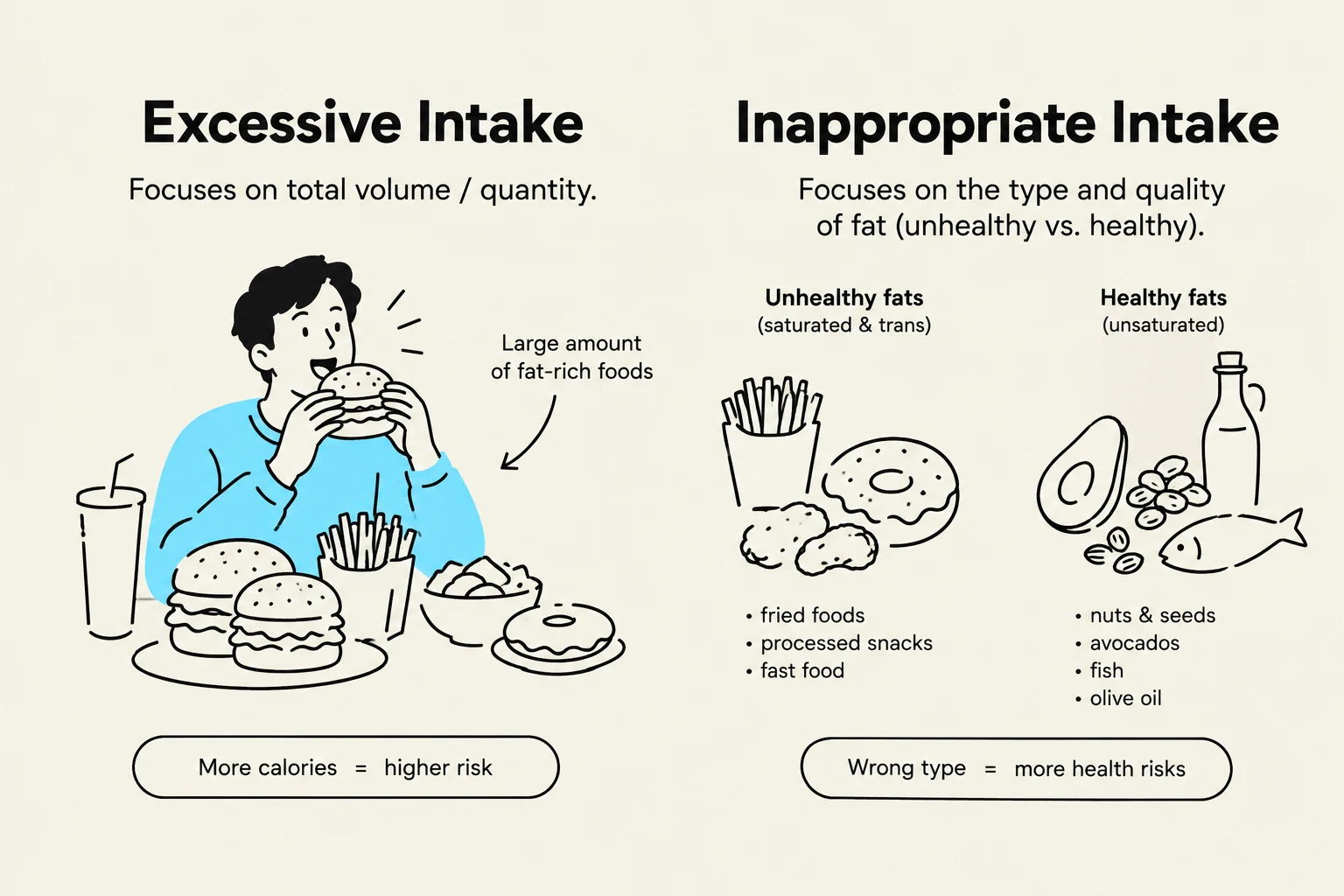
To write an effective statement for fat-related issues, you must correctly categorize the problem into one of two primary domains:
- NI-5.6.2 Excessive Fat Intake: This refers to a higher intake of fat compared to established reference standards or physiological needs.
- NI-5.6.3 Inappropriate Intake of Fats: This refers to the intake of the wrong type or quality of fats, regardless of whether the total amount is excessive.
Exam Tip: If a patient is eating a moderate amount of fat but most of it comes from trans fats or saturated fats, use Inappropriate Intake of Fats. If they are eating a massive amount of all types of fat, use Excessive Fat Intake.
Etiology: Identifying the "Why"
The etiology is the "root cause" that the nutrition intervention aims to address. For fat-related diagnoses, etiologies generally fall into several categories:
- Food- and nutrition-related knowledge deficit: The patient lacks understanding regarding appropriate fat amounts or the difference between healthy and unhealthy fats.
- Access and Environment: A lack of access to healthful food choices (e.g., due to economic constraints or food insecurity).
- Psychological and Behavioral Factors: Harmful beliefs or attitudes about food, or a lack of value placed on behavior change.
- Physiological/Medical Factors: While less common for "excessive" intake, changes in taste, appetite, or specific medical conditions can influence dietary patterns.
Keep reading for free.
Create an account to finish this reading and make it part of your study routine.
Continue reading freeAlready have an account? Log in
Updated