


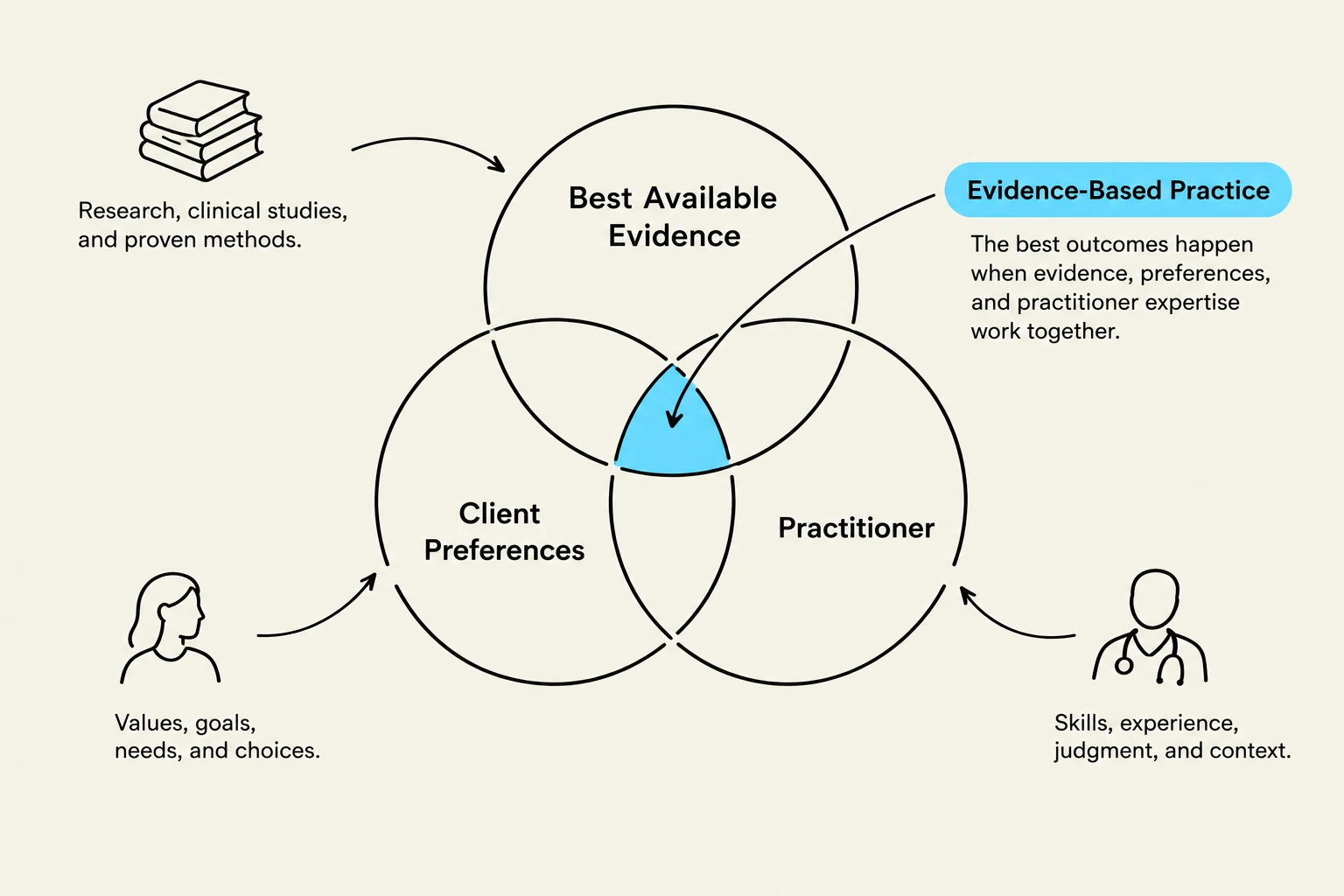
In the field of human services, practitioners are increasingly expected to utilize methods that are backed by rigorous research rather than relying solely on intuition or tradition. This shift toward scientific accountability is encapsulated in the concept of Evidence-Based Practice (EBP). At its core, EBP is not just about following a manual; it is a sophisticated decision-making process that integrates the best available scientific evidence with the unique preferences of the client and the clinical expertise of the practitioner.
Understanding Evidence and EBP
To understand EBP, one must first define "evidence." In a scientific context, evidence refers to the systematic collection and analysis of data using the principles and practices of scientific inquiry. When we apply this to practice, we are looking for patterns and results that have been tested and verified through research.
Evidence-Based Practice is a multi-dimensional approach. It requires the "judicious use" of information, meaning a practitioner must weigh different factors carefully before deciding on a course of action. The goal is to answer a fundamental question: What contributes to a good client outcome?.
Key Concept: EBP is the intersection of three pillars:
- Best Available Evidence (Research findings)
- Client Preferences (The individual's values and wishes)
- Therapist Expertise (The practitioner's skills and competence)
The Hierarchy of Evidence
Not all evidence is created equal. In research, some methods provide more certainty than others. When searching for information to guide your practice, it is helpful to understand the "levels of evidence" to determine how much weight to give a specific finding.

Keep reading for free.
Create an account to finish this reading and make it part of your study routine.
Continue reading freeAlready have an account? Log in
Updated