Understanding Energy Balance and Weight Management
This guide explains the principle of energy balance, its role in weight management, and factors influencing body weight. It covers BMI, health implications of weight status, and methods for assessing body composition.
Managing weight is a lifelong process that involves navigating a complex intersection of biological, environmental, and behavioral factors. Whether the goal is to lose weight, gain muscle, or simply maintain a current status, understanding the underlying mechanisms of how our bodies process energy is essential for long-term success.
The Principle of Energy Balance
At its most fundamental level, weight management is governed by the principle of energy balance. This is the relationship between the energy you consume and the energy your body uses.
Energy Intake: This refers to the calories obtained through the food and drinks you consume.
Energy Expenditure: This is the total amount of energy your body uses. It is composed of several components, including physical activity, the energy used for digestion (Thermic Effect of Food), and your resting metabolism.
The dynamics of this balance dictate changes in your body mass:
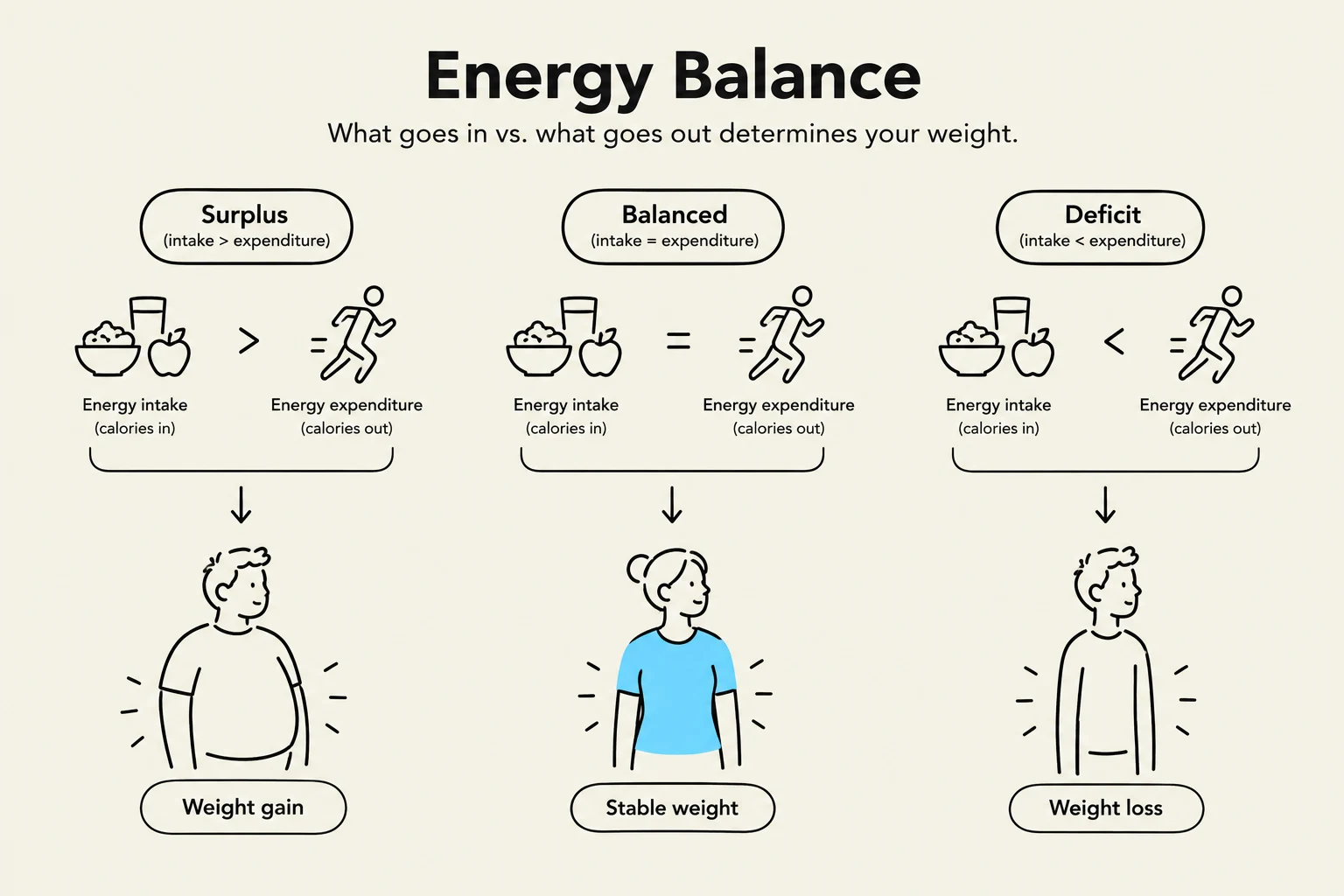
Weight Gain: Occurs when energy intake is higher than energy expenditure, causing the body to store the excess energy as fat.
Weight Loss: Occurs when energy expenditure exceeds energy intake, forcing the body to utilize stored fat for energy.
Weight Maintenance: Occurs when energy intake and energy needs are equal.
Mathematical Note: A useful rule of thumb in nutrition is that approximately 3,500 calories is equivalent to about 0.5 kg (or 1 pound) of body fat. Therefore, a consistent surplus of 3,500 calories will result in roughly 0.5 kg of weight gain.
This diagram illustrates the concept of energy balance in relation to weight management. It shows that a surplus of energy intake over expenditure leads to weight gain, a balanced intake and expenditure results in stable weight, and a deficit in energy intake compared to expenditure causes weight loss.
Understanding Weight Status and BMI
Weight status is a way to categorize an individual's weight relative to their height. A common, though imperfect, method used globally is the Body Mass Index (BMI). BMI is calculated using the following formula:
BMI=height (m)2weight (kg)
Based on standard cutoffs, weight status is generally classified into four categories:
Underweight: BMI < 18.5. This is more common in women and individuals under age 24.
Healthy Weight: BMI between 18.5 and 24.9.
Overweight: BMI between 25 and 29.9.
Obesity: BMI ≥ 30. This is characterized by excess body fat specifically associated with increased health risks.
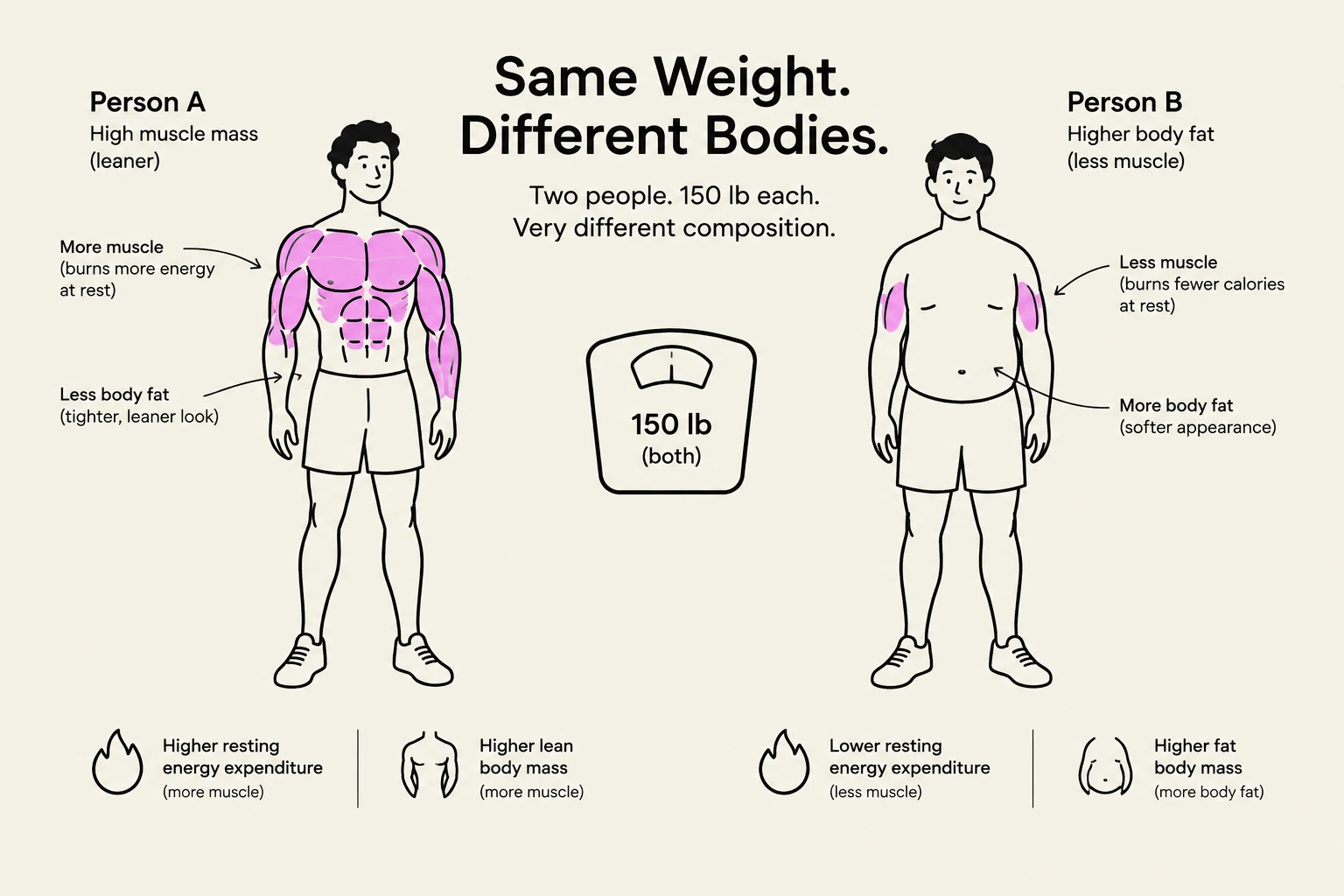
Exam Tip: Be aware of the limitations of BMI! Because BMI only uses height and weight, it does not account for body composition (the ratio of fat to muscle). For example, a muscular athlete might be classified as "overweight" due to high muscle mass, even if they have very low body fat.
Health Implications of Weight Status
Maintaining a healthy weight is critical because being overweight or obese—particularly when carrying excess fat around the waist—significantly increases the risk of chronic health conditions.
Key risks include:
Type 2 Diabetes: Nearly 90% of people with type 2 diabetes are overweight or obese.
Hypertension (High Blood Pressure): Larger body sizes require the heart to pump harder, and excess fat can damage the kidneys that regulate blood pressure.
Metabolic Syndrome: A cluster of conditions including large waist size, high triglycerides, high blood pressure, high fasting glucose, and low HDL cholesterol.
Sleep Apnea: Excess fat around the neck can narrow the airway, leading to irregular breathing during sleep.
Cancer: Increased risks for colon and rectal cancer in men, and breast and uterine cancer in women.
Factors Influencing Body Weight
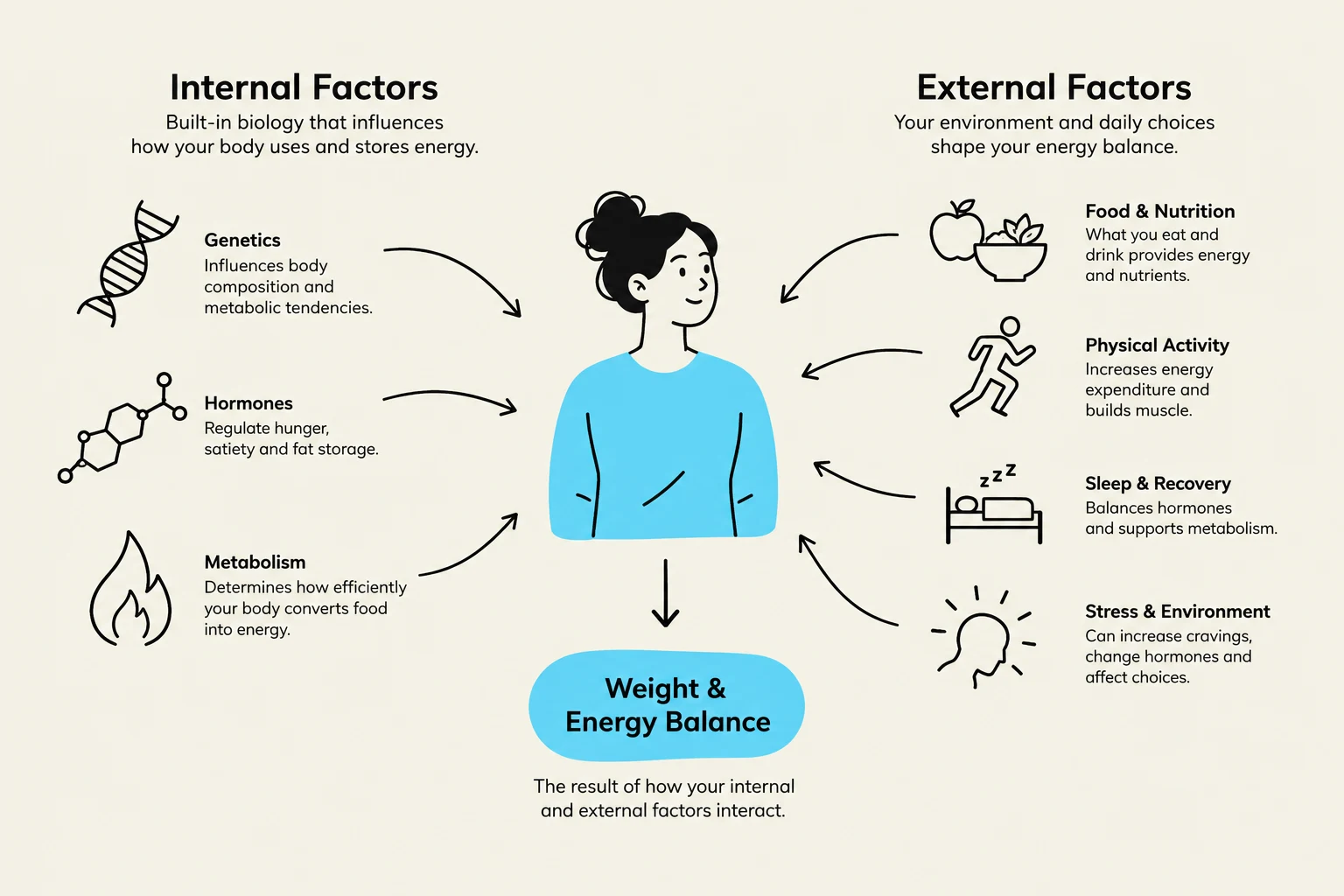
Weight is not determined by a single factor; it is influenced by a combination of internal (biological) and external (environmental) forces.
Internal Factors
Genetics: While genes play a role (estimated at 30-50% of individual differences), they do not "cause" obesity on their own.
Hormones: Two key hormones regulate appetite. Ghrelin stimulates hunger (telling you to eat), while Leptin promotes satiation (telling you to stop). Sleep deprivation can disrupt this balance by increasing ghrelin and decreasing leptin.
Metabolism: This includes your Basal Metabolic Rate (BMR) (energy for vital functions), Resting Metabolic Rate (RMR) (BMR plus daily activities), and the Thermic Effect of Food (TEF) (energy used for digestion).
External Factors
Physical Activity: Increasing the frequency, intensity, or duration of activity raises your Exercise Metabolic Rate (EMR).
Nutrition and Environment: The availability of "energy-dense" foods (high calorie, low nutrient) and increasing portion sizes contribute to weight gain.
Food Insecurity: Inadequate access to food due to financial constraints can lead to both under-nutrition and obesity, as low-income individuals may rely on cheaper, highly processed, calorie-dense foods.
This diagram illustrates the internal and external factors that influence a person's weight and energy balance, including genetics, hormones, metabolism, food and nutrition, physical activity, sleep, and stress.
Assessing Body Fat Content
Because weight alone does not tell the whole story, professionals use various methods to assess body composition—the ratio of fat mass to fat-free mass (muscle, bone, organs).
Method
Description
Pros/Cons
Waist Circumference
Measuring the waist with a tape.
Simple; identifies abdominal fat risk.
Skinfold Calipers
Measuring subcutaneous fat at specific sites.
Common; requires high skill to avoid error.
Hydrostatic Weighing
Measuring water displacement.
Very accurate; requires being submerged in water.
ADP (Bod Pod)
Measuring air displacement.
Comfortable and non-invasive.
DEXA Scan
Using low-level X-rays.
Often considered the "gold standard"; expensive.
BIA
Sending a weak electrical current through the body.
Convenient and low cost; sensitive to hydration levels.
Understanding these measurements allows for a more nuanced view of health, moving beyond the scale to look at how weight is distributed and what it is composed of.
This illustration compares two individuals of the same weight (150 lb) but with different body compositions, highlighting the impact of muscle mass versus body fat on appearance and metabolic rate.
Keep reading for free.
Create an account to finish this reading and make it part of your study routine.