


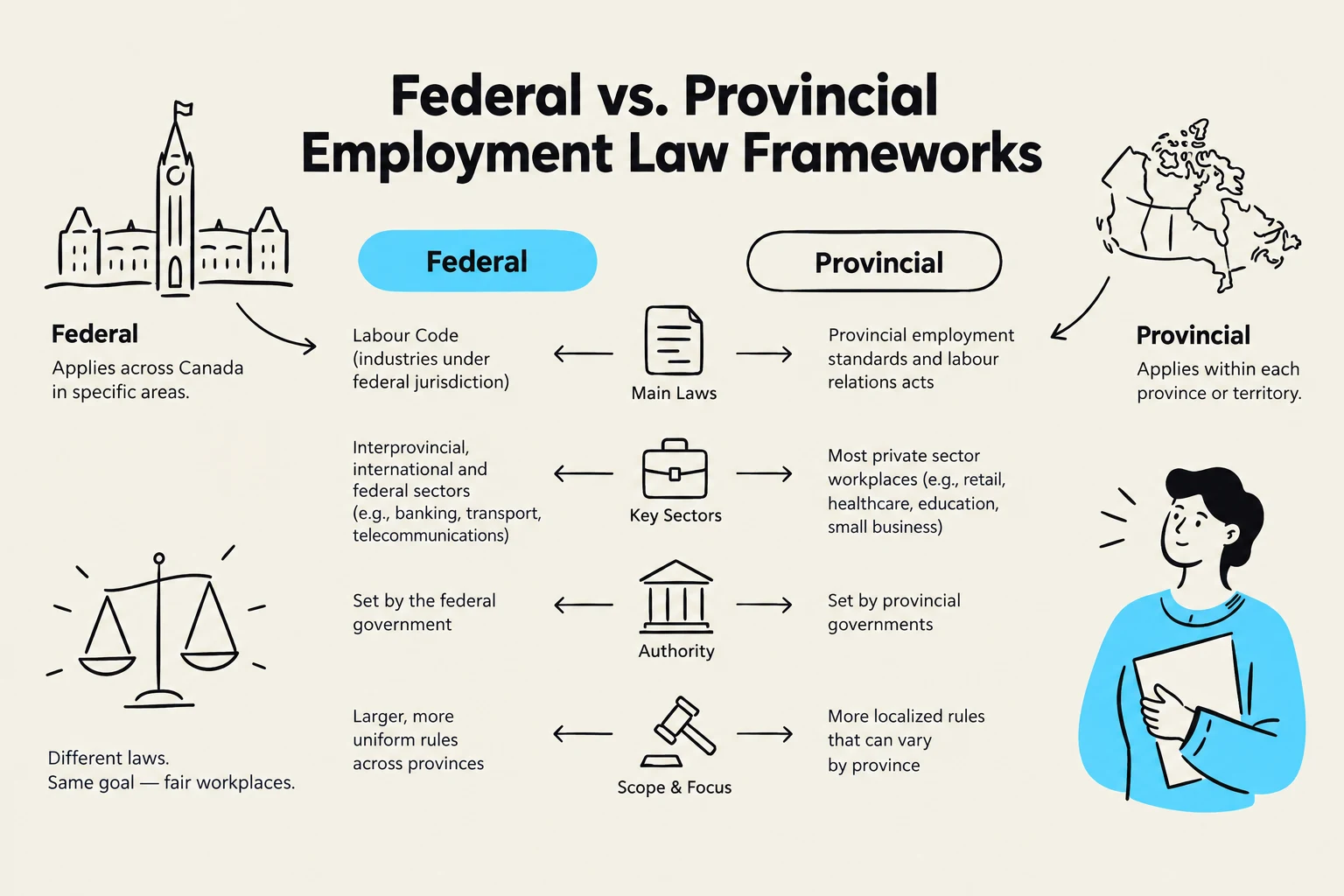
For employers and HR professionals, understanding "which law applies" is the fundamental first step in compliance. In Canada, employment law is not a single, unified system. Instead, it is a complex web of different rules divided between two primary levels of government: federal and provincial. Determining the correct legal framework—known as jurisdiction—is essential because applying the wrong set of statutes can lead to significant legal liabilities, incorrect payroll deductions, or improper termination procedures.
Understanding Statutory Law
Before diving into the division of powers, it is important to define what we mean by statutory law. In the context of employment, statutory law refers to the written laws (statutes) passed by legislative bodies, such as Parliament or provincial legislatures. These statutes set the minimum standards for the workplace, including:
- Minimum wage requirements.
- Overtime pay and rest periods.
- Vacation entitlements.
- Notice of termination and severance pay.
- Occupational health and safety standards.
Unlike common law, which is developed through court decisions and precedents, statutory law is codified. This means the rules are explicitly written down in specific acts (e.g., the Employment Standards Act). When a statute is in place, it provides a "floor" of rights that an employer cannot contract out of; even if an employee signs a contract agreeing to less than the statutory minimum, that portion of the contract is generally void and unenforceable.
The Concept of Jurisdiction
Jurisdiction refers to the legal authority of a specific government body to make laws and enforce them within a certain scope. In Canada, the Constitution Act divides legislative powers between the federal government and the provincial governments.


Keep reading for free.
Create an account to finish this reading and make it part of your study routine.
Continue reading freeAlready have an account? Log in
Updated