


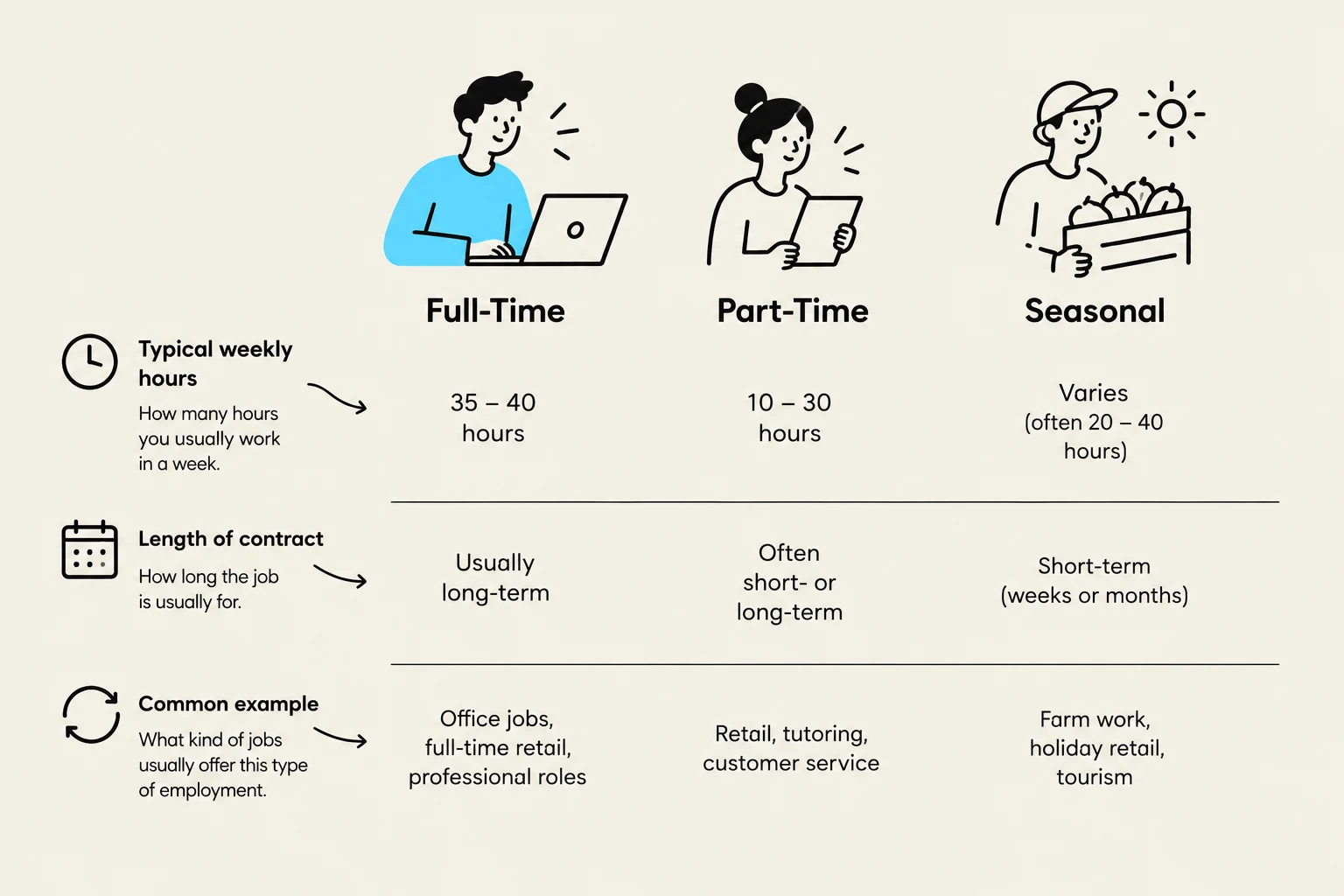
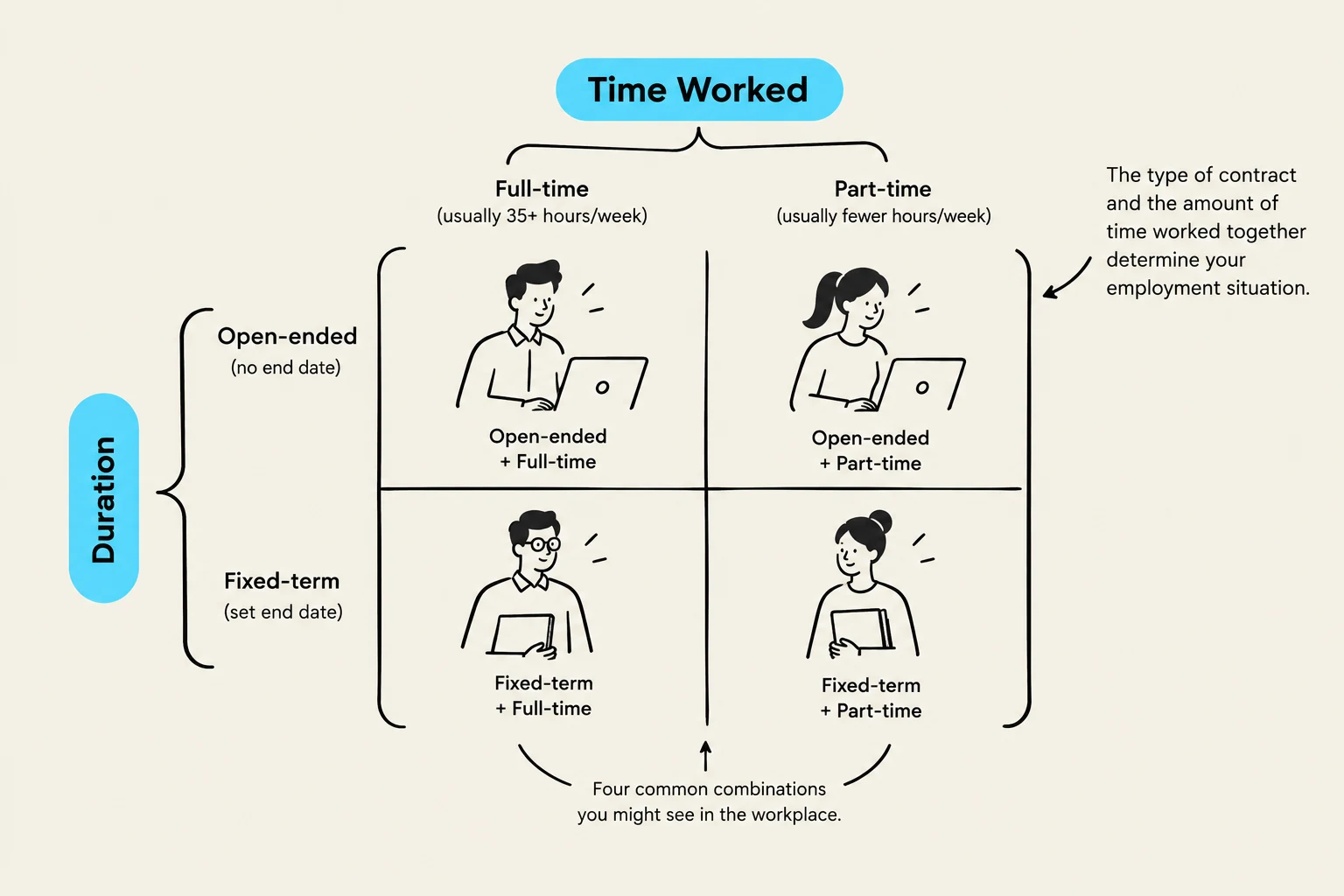
When an individual enters the workforce, the legal framework governing their relationship with an employer is defined by the employment contract. This agreement is not merely a formality; it is a legal instrument that outlines working conditions, rights, and obligations within the limits of labor law. While many people assume all jobs are "standard," the law distinguishes between various types of employment based on two primary dimensions: how long the contract lasts (duration) and how much time the employee spends working (time worked).
Understanding these distinctions is crucial for both employers and employees to ensure compliance with legal standards and to avoid the legal presumption of certain contract types.
The Importance of Form and Presumptions
Before diving into specific types, it is vital to understand how a contract is established. While many employment relations are formalized through written documents, the law provides a "safety net" for workers in the absence of paperwork.
Generally, contracts are written to prove the specific working conditions agreed upon. However, for certain types of employment—such as part-time or fixed-term contracts—writing is often compulsory. If an employer and employee fail to produce a written contract, the law applies a legal presumption: the relationship is assumed to be an open-ended, full-time contract.
Exam Tip: If a question asks about the legal status of an undocumented worker, remember the "default" setting: without a written contract, the law presumes the most stable and standard form of employment (open-ended and full-time).
Classification by Duration of Employment
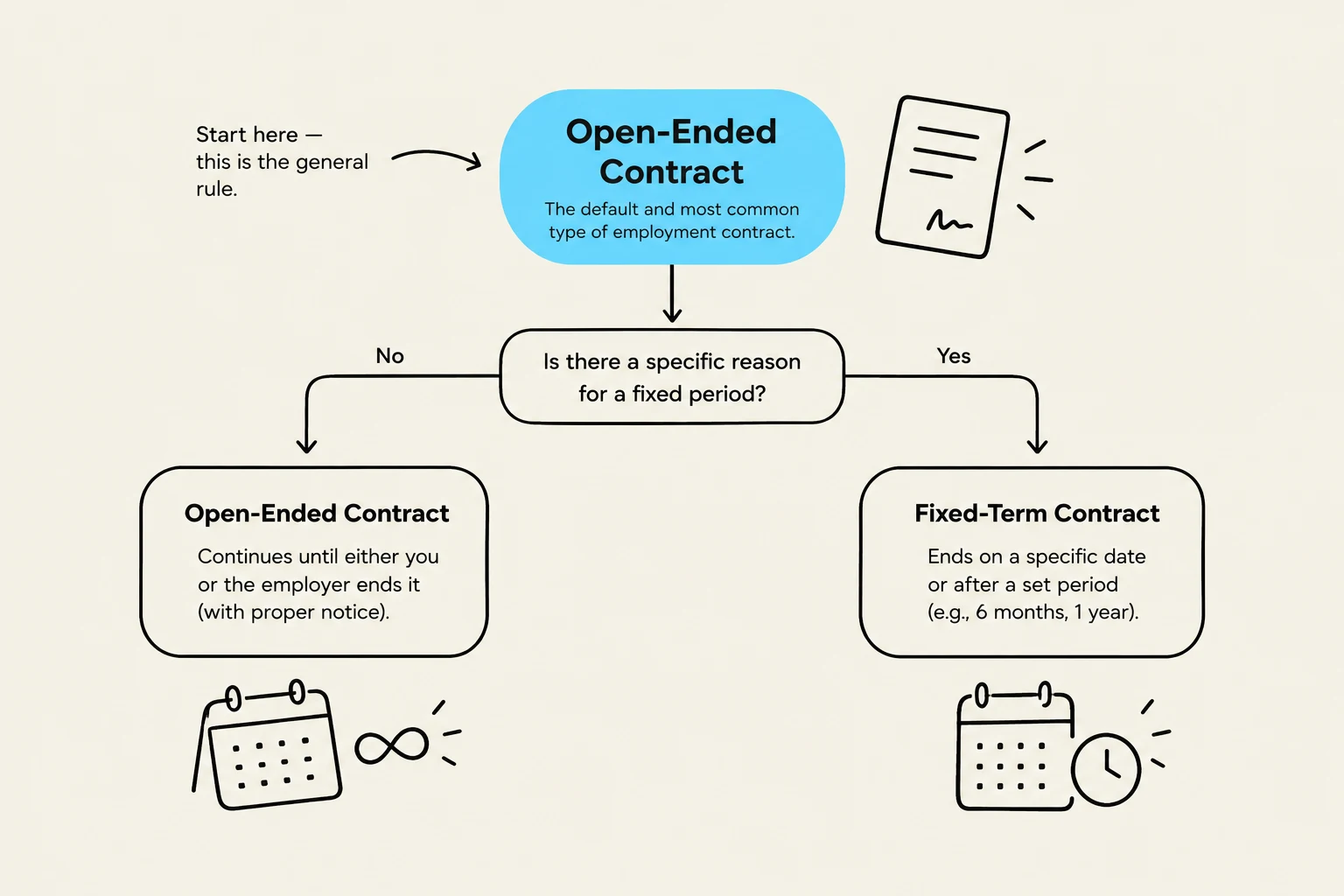
The duration of a contract refers to the temporal lifespan of the employment relationship. This is categorized into two main branches: open-ended and fixed-term contracts.
Keep reading for free.
Create an account to finish this reading and make it part of your study routine.
Continue reading freeAlready have an account? Log in
Updated