Understanding Emotional and Motivational Symptoms of Depression
This content explains the complex emotional and motivational symptoms of depression, including sadness, anhedonia, avolition, and the risk of suicidality. It distinguishes clinical depression from everyday sadness and provides a summary table of symptom categories.
When we think of depression, we often picture a person crying or appearing visibly sad. While sadness is a core component, the clinical reality of unipolar depression is far more complex. It involves a profound disruption of the systems that allow us to feel pleasure, find meaning, and initiate action. These emotional and motivational symptoms can be just as debilitating as physical pain, often creating a cycle of withdrawal and despair that is difficult to break.
This illustration contrasts the mood trajectories of normal sadness and clinical depression over time, highlighting how normal sadness typically resolves while clinical depression persists and impairs functioning.
The Spectrum of Sadness and Affect
At the heart of many depressive episodes is a pervasive sense of sadness. However, in a clinical context, this is not merely "feeling blue" after a bad day. It is often described as a persistent, heavy, or empty mood that does not easily lift, even when external circumstances improve.
This sadness can manifest in several ways:
Dysphoria: A general state of unease, dissatisfaction, or anxiety.
Emptiness: A feeling that one is "hollow" inside, rather than actively feeling a specific emotion.
Irritability: In some individuals, particularly men and adolescents, depression may present more as anger or low frustration tolerance rather than tearfulness.
Study Tip: When distinguishing between "normal sadness" and "clinical depression," look for persistence and impairment. Clinical sadness is characterized by its duration and its ability to interfere with daily functioning, such as work, school, or social relationships.
Anhedonia: The Loss of Pleasure
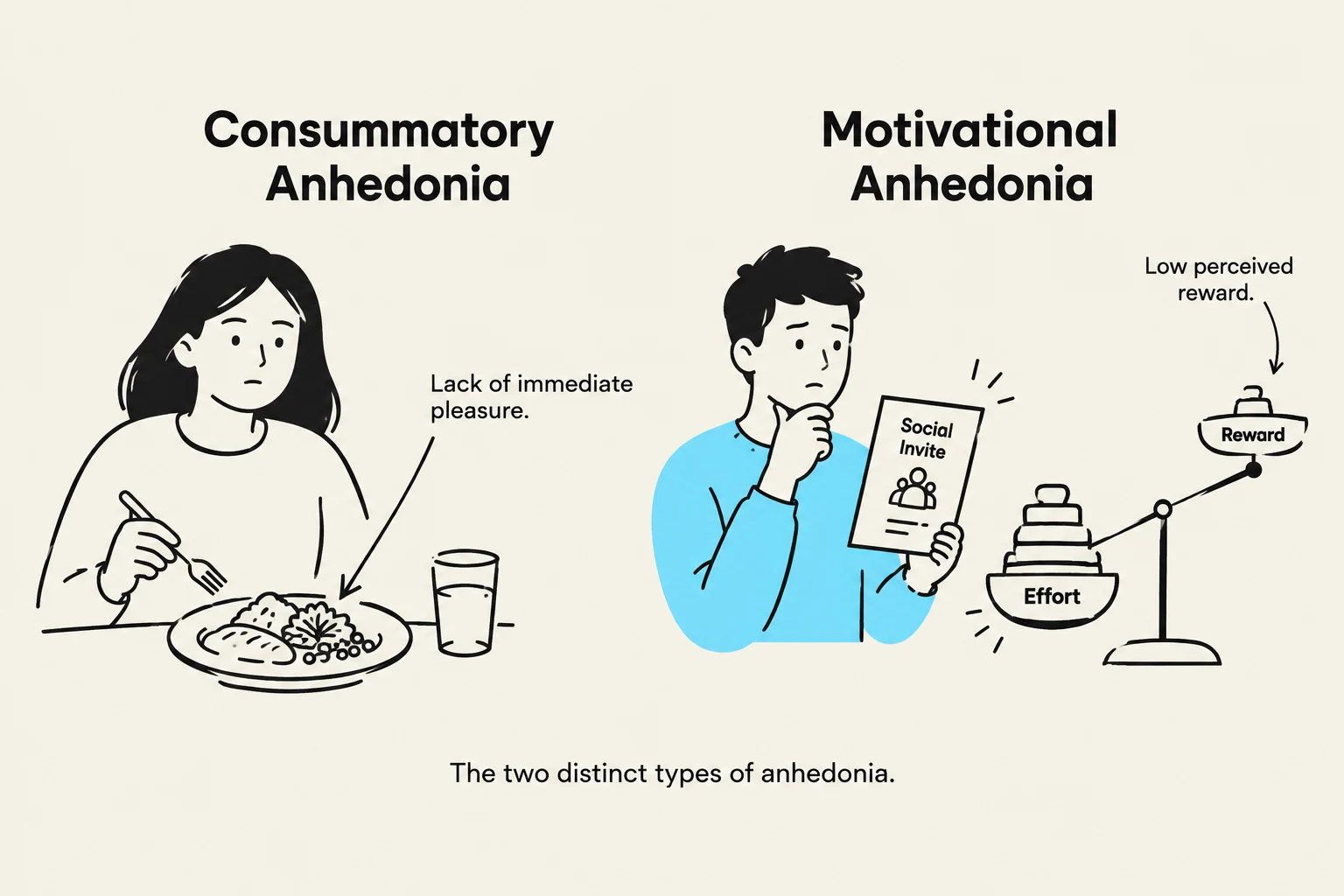
The image illustrates two types of anhedonia: consummatory anhedonia, characterized by a lack of immediate pleasure from activities like eating, and motivational anhedonia, where the perceived reward is low relative to the effort required, as depicted by a social invite scenario.
One of the most distinct and diagnostic symptoms of depression is anhedonia. While sadness is an excess of negative affect, anhedonia is a deficit in positive affect.
Anhedonia is generally categorized into two types:
Consummatory Anhedonia: The inability to enjoy a stimulus in the moment (e.g., eating a favorite meal but finding it tasteless).
Motivational Anhedonia: The lack of desire to seek out rewards or activities (e.g., not wanting to go to a party because the "effort" of going doesn't seem worth the potential reward).
This symptom is particularly devastating because it strips away the "rewards" of life, making the world feel grey and unstimulating.
Motivational Deficits and Loss of Drive
Closely linked to anhedonia is the loss of motivation, often referred to as avolition. This is not a sign of laziness or a lack of willpower; rather, it is a neurobiological failure in the brain's reward and initiation circuits.
Patients experiencing a loss of drive often struggle with:
Executive Dysfunction: Difficulty planning, organizing, and completing even simple tasks like brushing teeth or answering an email.
Psychomotor Retardation: A visible slowing of physical movement and thought processes.
Decision Fatigue: The overwhelming feeling that even small choices (like what to wear) require an impossible amount of mental energy.
Worked Example: The "Task Initiation" Barrier
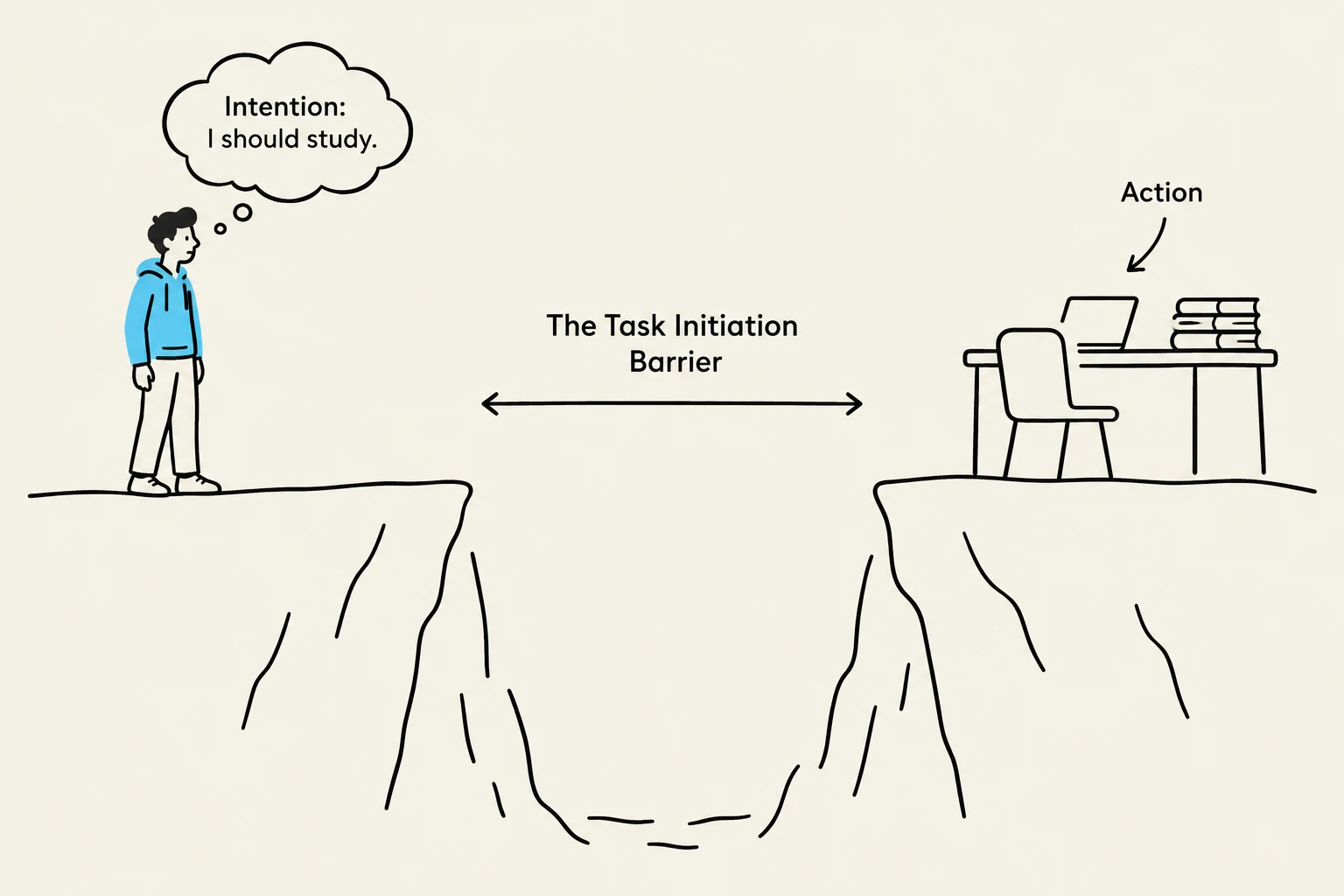
A diagram illustrating the concept of the task initiation barrier, showing a person with the intention to study on one side of a chasm, and a desk with a laptop and books on the other side, representing the action.
Imagine a student, Alex, who has a term paper due. A healthy student might feel stress but can eventually sit down and write. A student experiencing depressive motivational symptoms might feel a profound "heaviness." They may want to do the work, but the brain fails to send the signal to start. The gap between the intention ("I should study") and the action ("I am studying") becomes an unbridgeable chasm.
The Extreme Risk: Suicidality
The most critical and life-threatening aspect of emotional and motivational symptoms is the risk of suicide. When sadness, anhedonia, and a loss of drive converge, they can create a psychological state of "entrapment".
The transition from depressive symptoms to suicidal ideation often involves several factors:
Hopelessness: The belief that the current state is permanent and that no future holds improvement. This is often a stronger predictor of suicide than the severity of sadness alone.
Agitated Depression: In some cases, a person may have the low mood of depression combined with high levels of agitation or energy, which can provide the "drive" necessary to act on suicidal thoughts.
Cognitive Constriction: A "tunnel vision" effect where the individual can no longer see alternative solutions to their emotional pain.
Clinical Warning: If you or someone you know is experiencing these symptoms, especially thoughts of self-harm, seek professional help immediately. Suicidality is a medical emergency.
Summary Table: Emotional vs. Motivational Symptoms
Symptom Category
Primary Feature
Clinical Term
Impact on Life
Emotional
Excessive negative affect
Dysphoria / Sadness
Emotional instability, crying, irritability
Affective Deficit
Lack of positive affect
Anhedonia
Loss of interest in hobbies, food, or social life
Motivational
Lack of goal-directed behavior
Avolition
Inability to work, study, or maintain hygiene
Understanding these symptoms is the first step in recognizing that depression is not just a "mood," but a complex disruption of the very mechanisms that drive human experience.
Keep reading for free.
Create an account to finish this reading and make it part of your study routine.