


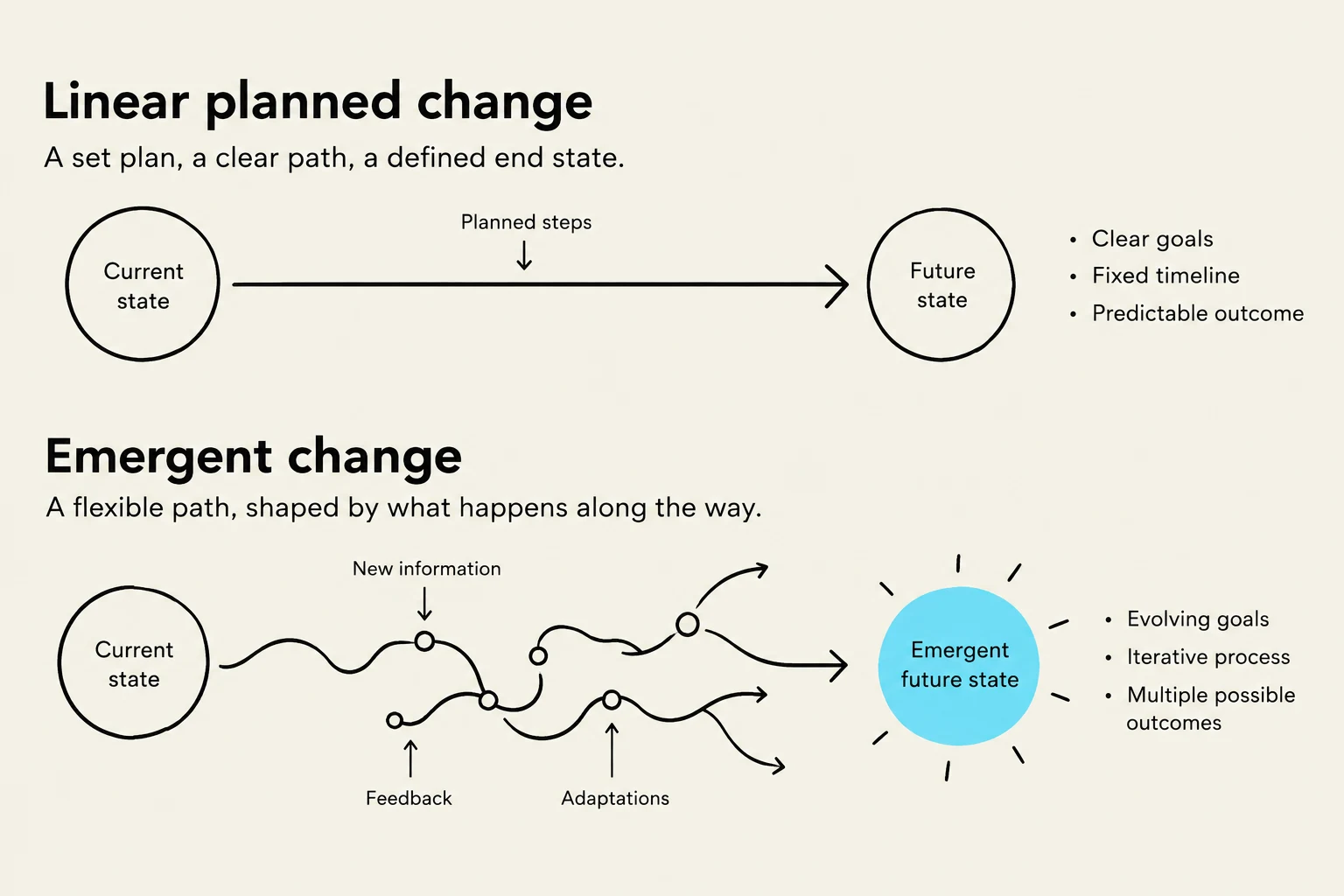
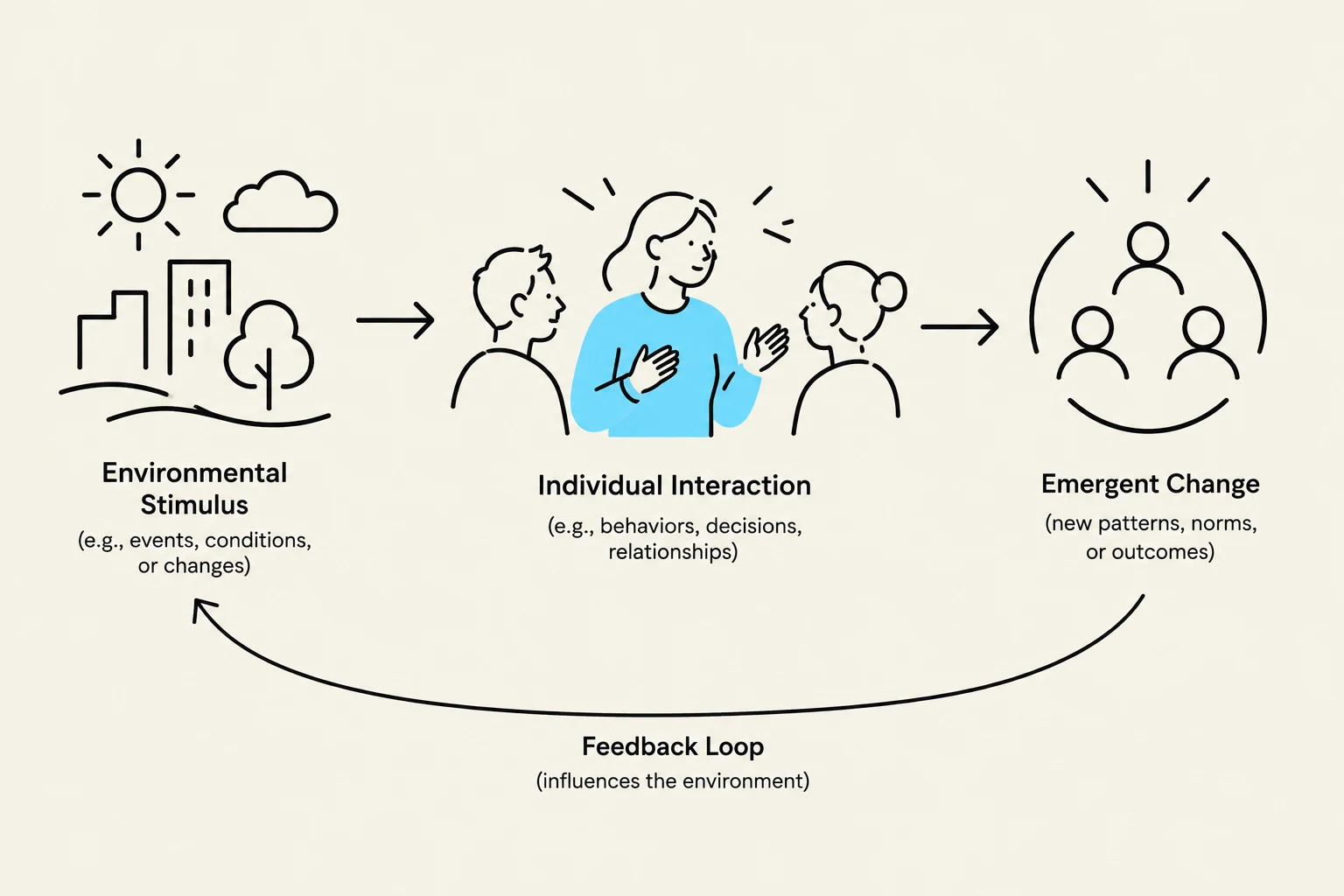
In traditional management theory, change is often viewed as a linear, controlled process: a leader identifies a problem, designs a solution, and implements it through a series of predictable steps. However, this "top-down" view often fails to account for the messy, unpredictable reality of modern organizations. Emergent Change Dynamics shifts this perspective, viewing change not as a discrete event to be managed, but as an ongoing, continuous process driven by the complex interactions between people, technology, and environment.
Instead of a straight line from Point A to Point B, emergent change looks more like a shifting landscape where patterns arise unexpectedly from the bottom up.
From Planned to Emergent Change
To understand emergent change, we must first contrast it with the more traditional "Planned Change" models. Planned change assumes that an organization is a stable system that can be "repaired" or "upgraded" through deliberate intervention. In this view, change is a project with a clear beginning, middle, and end.
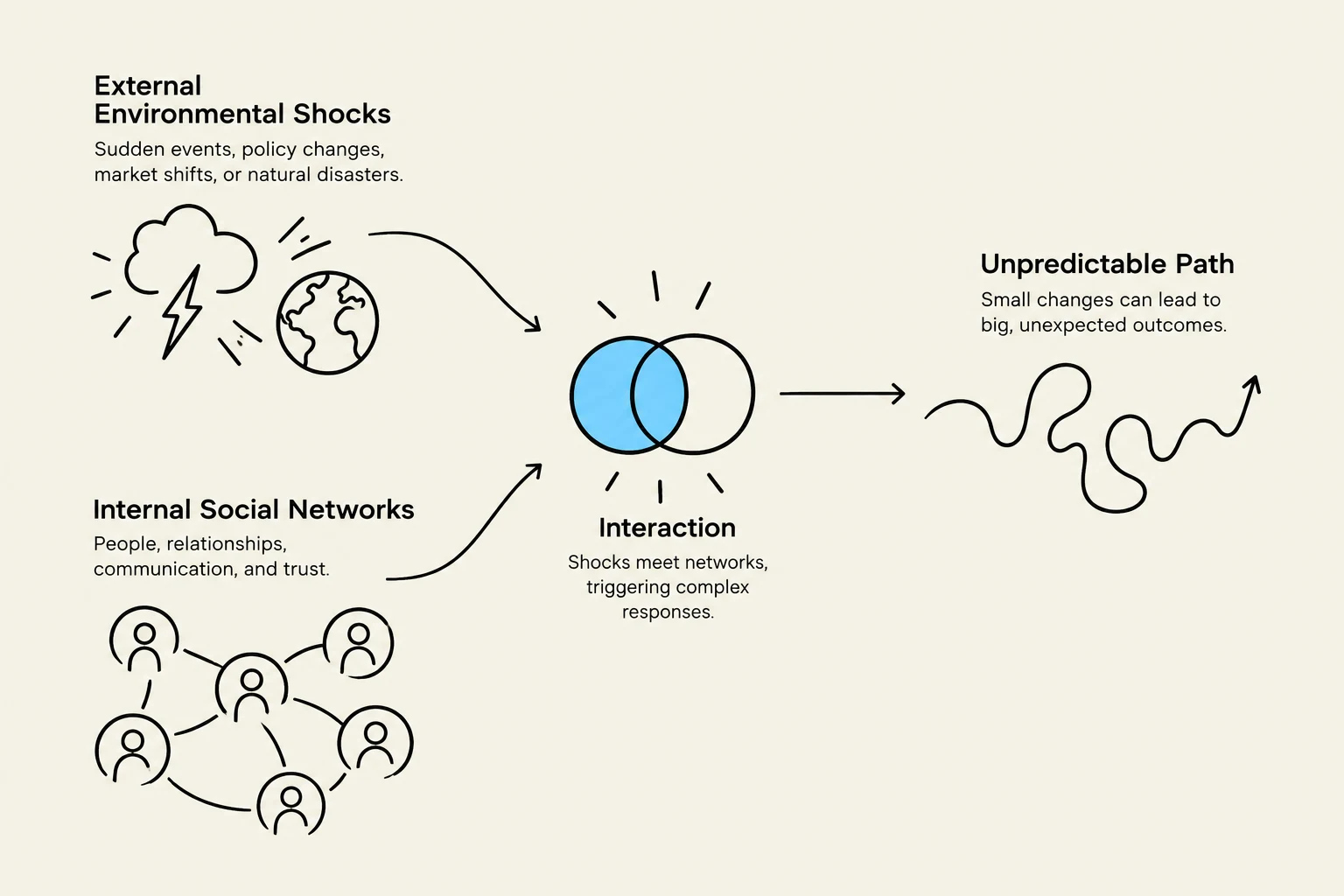
Emergent change, by contrast, recognizes that organizations are Complex Adaptive Systems (CAS). In a CAS, the behavior of the whole system cannot be predicted simply by looking at its individual parts. Because employees are constantly interacting, sharing information, and reacting to external market pressures, change "emerges" from these daily micro-interactions.
Exam Tip: If a question asks about the difference between "Planned" and "Emergent" change, look for keywords. Planned change focuses on control, predictability, and linearity. Emergent change focuses on adaptation, complexity, and non-linearity.
Keep reading for free.
Create an account to finish this reading and make it part of your study routine.
Continue reading freeAlready have an account? Log in
Updated