


In the realm of tort law, a "tort" is defined as a civil wrong that causes someone to suffer loss or harm. Unlike criminal law, which addresses harm to society as a whole, tort law is a private law system designed to assign blame and shift the cost of injuries from the victim to the person responsible. One of the most critical, yet complex, hurdles in a negligence claim is establishing a duty of care. Without a legally recognized duty, a defendant cannot be held liable, regardless of how careless their conduct may have been.
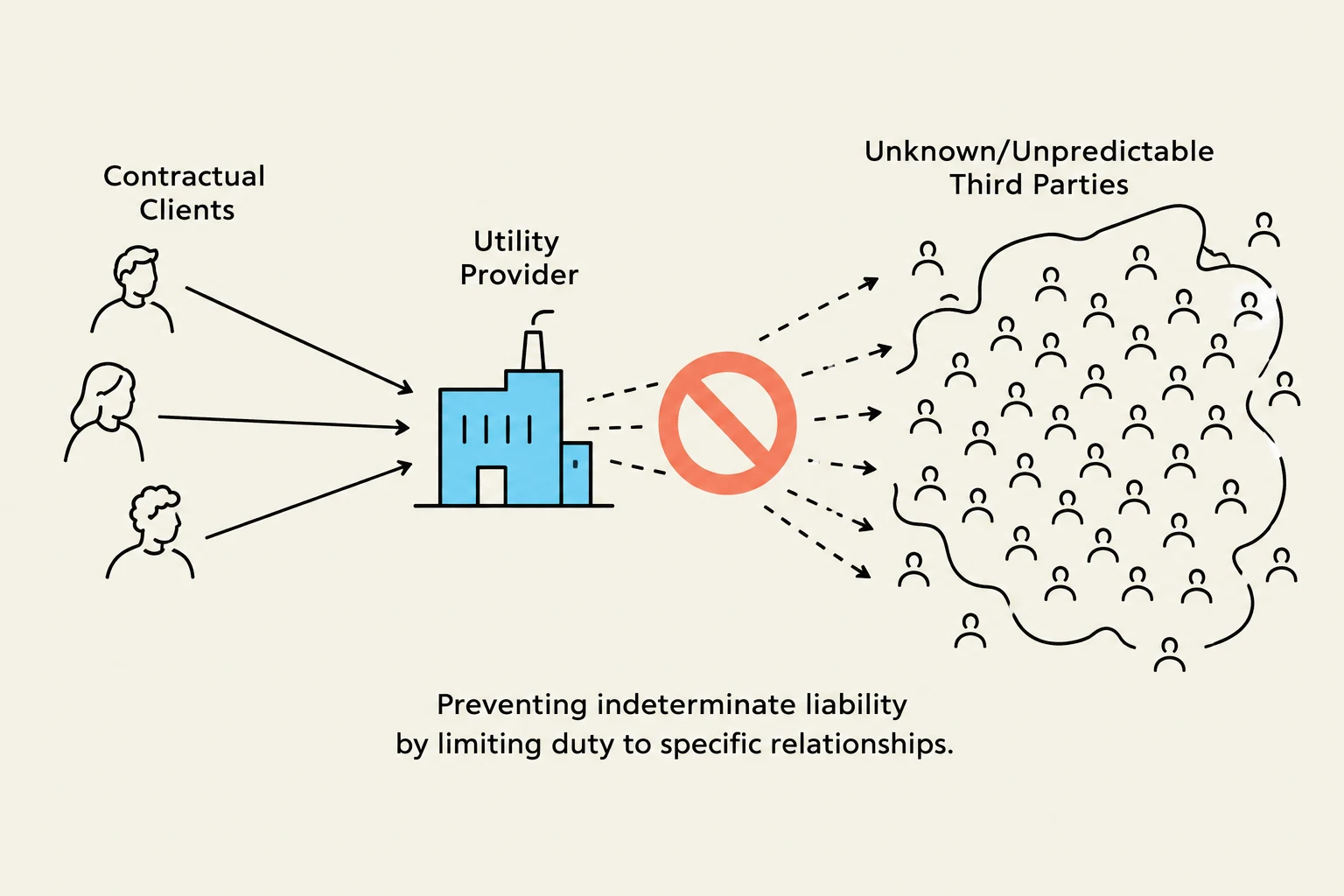
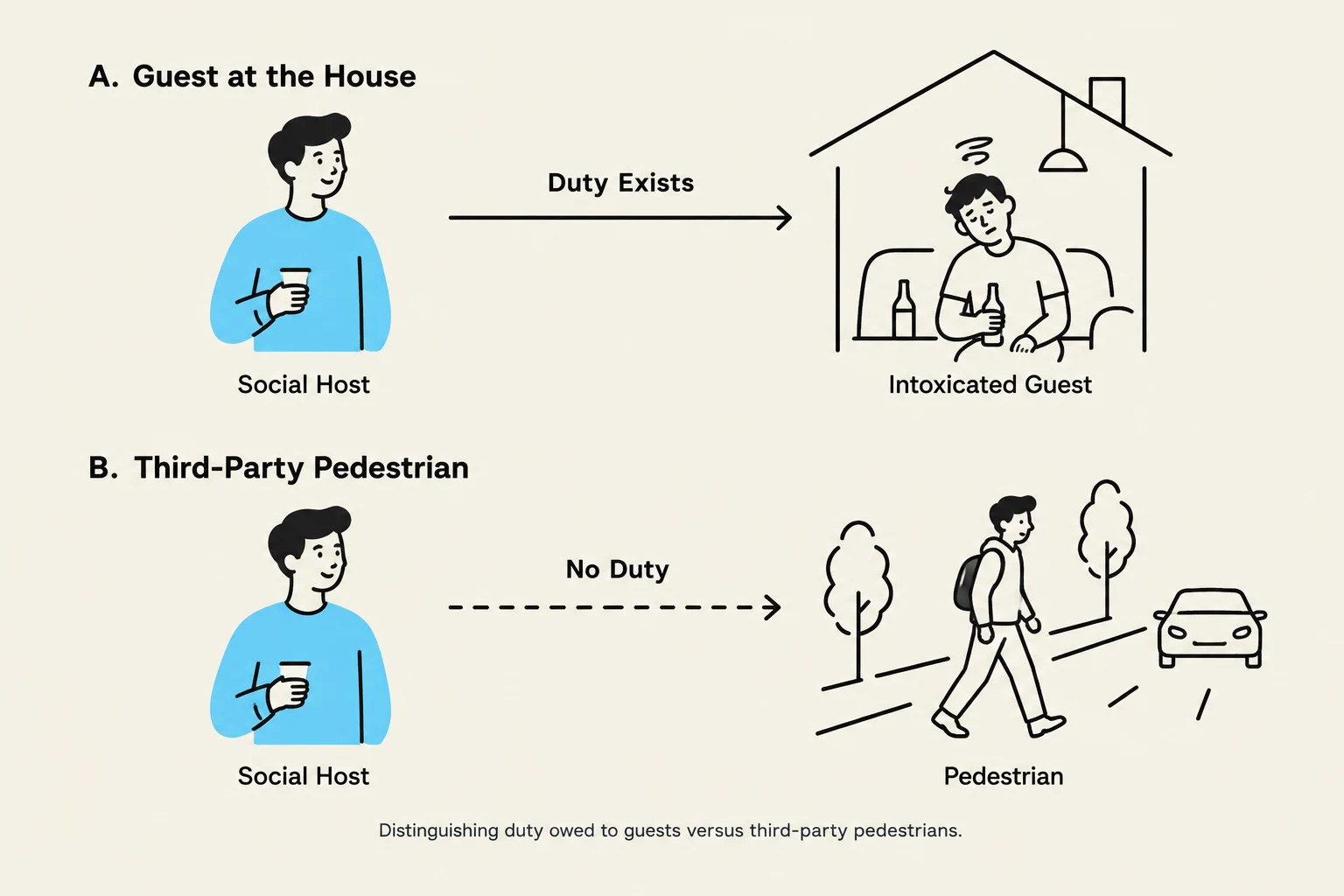
This article explores the boundaries of the duty of care, specifically examining how contractual relationships limit liability for utility providers and how courts navigate the controversial landscape of social host liability.
The Foundation: Duty of Care in Negligence
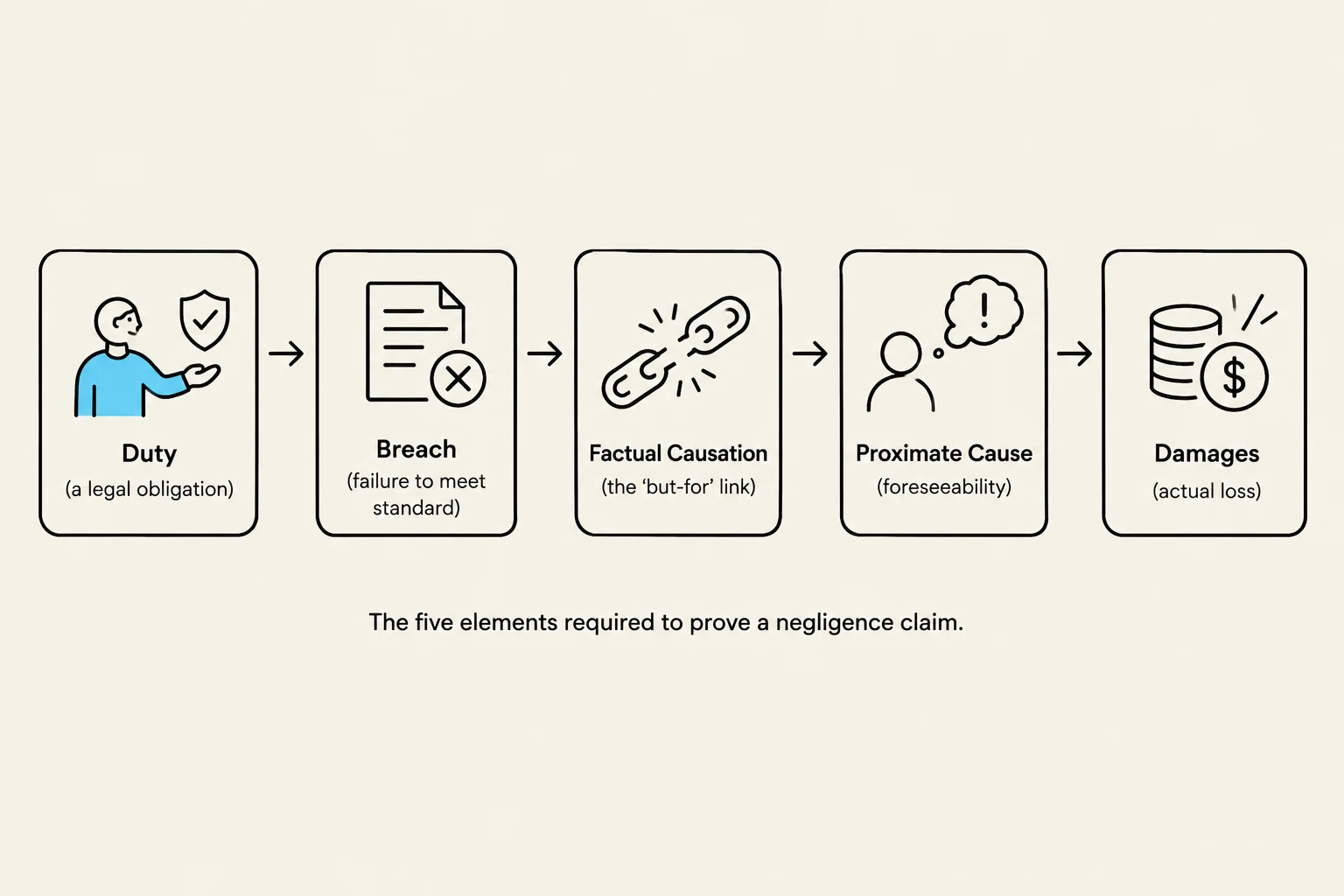
To succeed in a negligence action, a plaintiff must prove five conjunctive elements by a preponderance of the evidence: (1) duty, (2) breach, (3) factual causation, (4) proximate cause, and (5) damages.
The duty of care is a question of law decided by a judge. It asks whether the defendant had a legal obligation to exercise a certain level of care to avoid the risk of harming the plaintiff. Because duty is "disaggregated," a defendant may owe a duty to one person but not to another, even if the incident is the same.
The Spectrum of Duty Rules
Different jurisdictions apply different standards to determine if a duty exists, often categorized by how much control the judge has over the outcome:
Keep reading for free.
Create an account to finish this reading and make it part of your study routine.
Continue reading freeAlready have an account? Log in
Updated