Understanding Diabetic Emergencies: Hypoglycemia and Hyperglycemia
This content explains the two main diabetic emergencies, hypoglycemia (low blood sugar) and hyperglycemia (high blood sugar), detailing their causes, signs, symptoms, and field treatment considerations, including the role of oral glucose and the importance of airway management.
Diabetes mellitus is a condition resulting from an underproduction of insulin or an inability of the body's cells to use insulin properly. Because insulin acts as a "key" that unlocks cells to allow glucose (the body's primary energy source) to enter, any disruption in this process can lead to life-threatening emergencies. These emergencies are broadly categorized into two distinct states: hypoglycemia (low blood sugar) and hyperglycemia (high blood sugar).
While both conditions involve glucose mismanagement, they differ drastically in their onset, physiological symptoms, and the way they affect the patient's mental status.
Hypoglycemia: The Rapid Threat
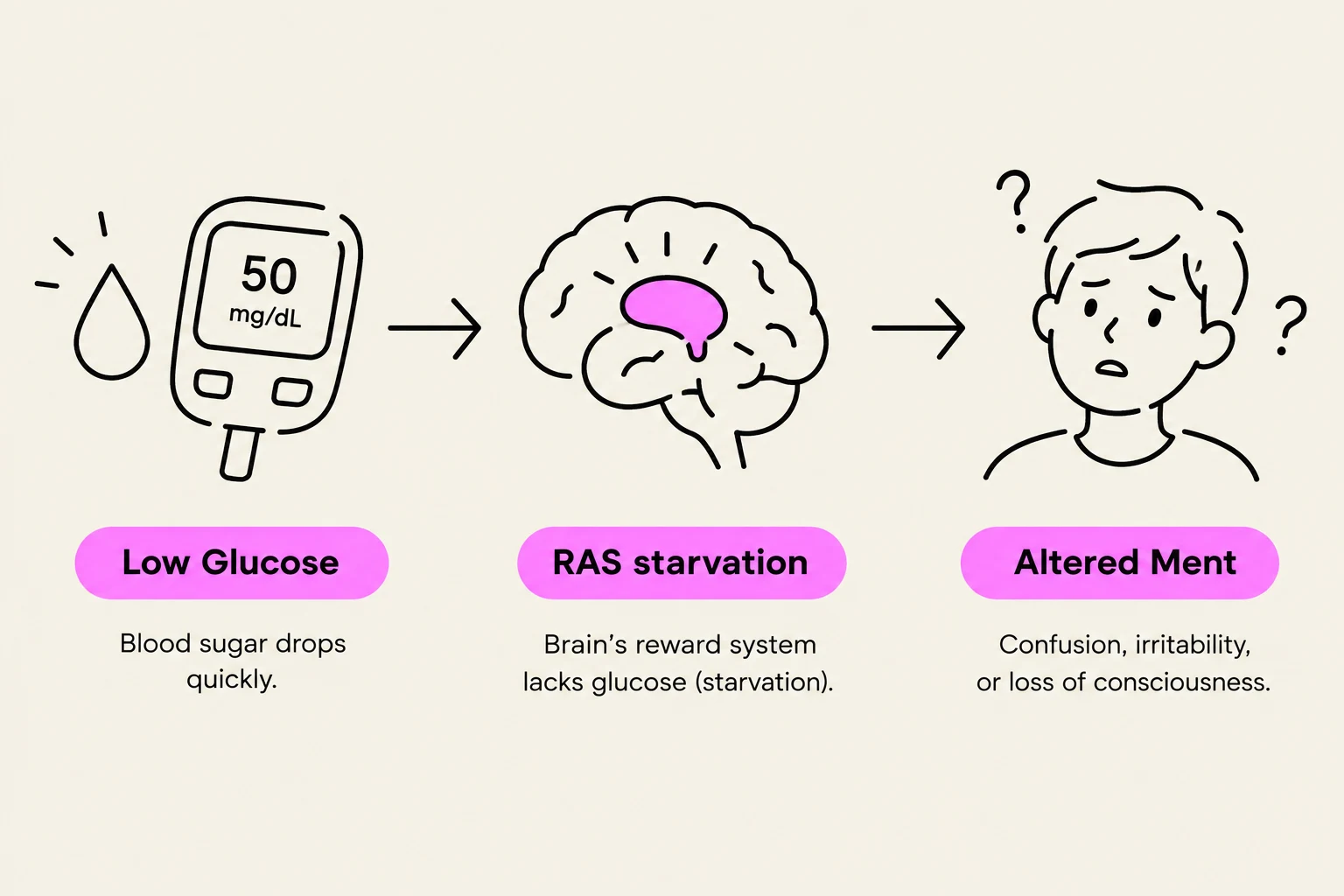
Hypoglycemia occurs when blood sugar levels drop too low, causing the body's cells—most critically those within the Reticular Activating System (RAS)—to be starved of energy. The RAS is responsible for regulating consciousness, including staying awake and paying attention; therefore, a lack of glucose to this system leads to rapid alterations in mental status.
Causes of Hypoglycemia
Hypoglycemia is often the result of an imbalance where glucose demand exceeds supply or insulin levels are too high relative to food intake. Common causes include:
Excessive insulin administration: Taking too much medication for the amount of food consumed.
Insufficient dietary intake: Skipping meals or not eating enough carbohydrates.
Overexertion: Intense physical exercise that consumes glucose rapidly.
Metabolic shifts: Increased metabolic rates or vomiting, which prevents nutrient absorption.
Signs and Symptoms
Because the brain relies on a constant supply of glucose, the onset of hypoglycemia is typically rapid. If not treated immediately, it can lead to unconsciousness and even permanent brain damage.
Clinical indicators include:
Altered Mental Status: Behavior that may mimic a drunken stupor.
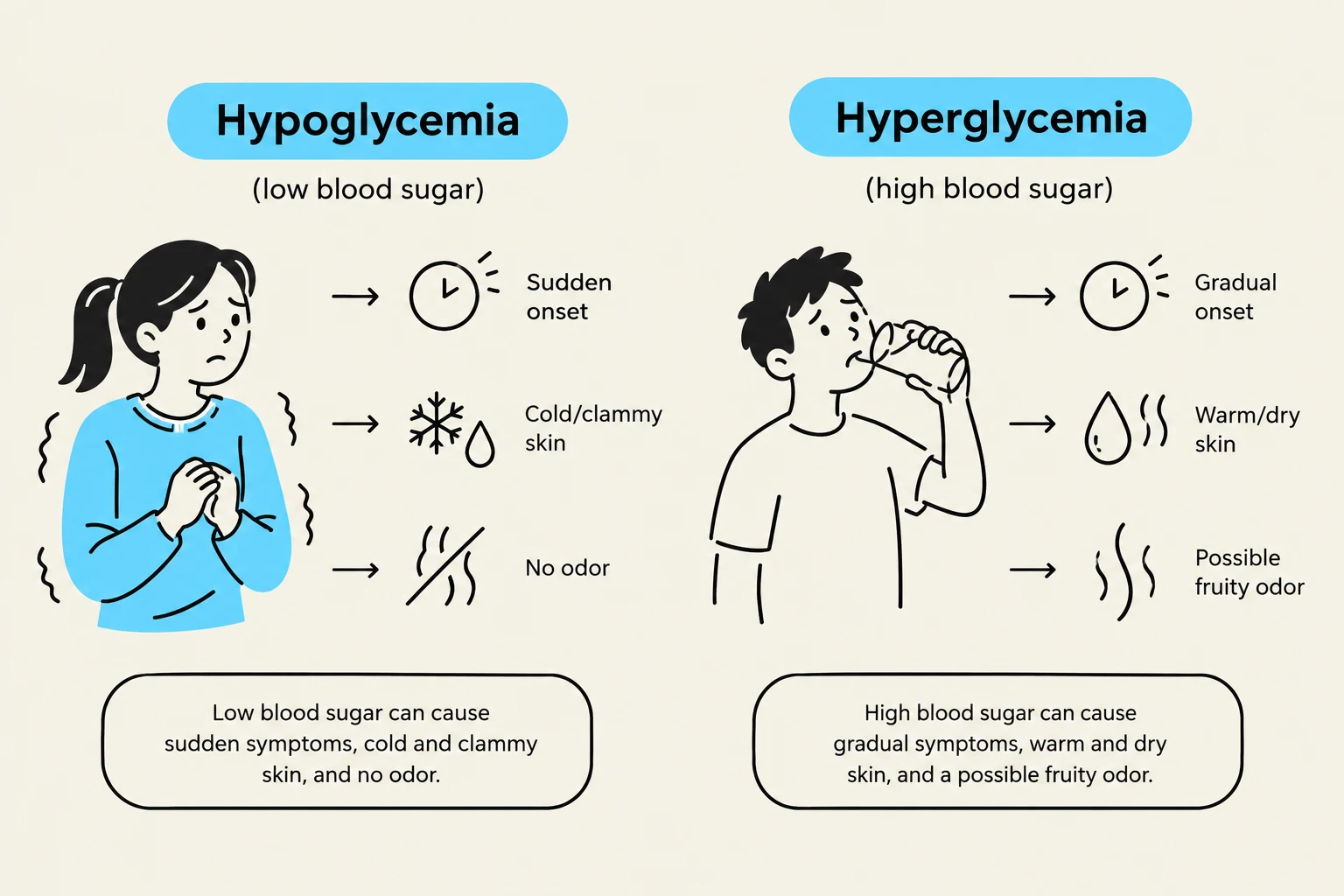
Skin Changes: Pale, sweaty skin (diaphoresis) or "cold and clammy" skin.
Vital Sign Changes: Tachycardia (rapid heart rate) and rapid breathing.
Neurological Distress: Seizures.
Diagram illustrating the progression from low glucose levels to RAS starvation and altered mental state, with accompanying explanations.
Exam Tip: When assessing a patient with altered mental status, always check for a history of diabetes and look for medical ID bracelets or insulin pumps, as these are key clues to a hypoglycemic event.
Hyperglycemia: The Slow Decline
Hyperglycemia is characterized by high blood sugar levels. This occurs when glucose remains in the bloodstream because it cannot enter the cells, usually due to an insulin deficiency. Unlike the sudden "crash" of hypoglycemia, hyperglycemia typically develops slowly over days or weeks.
Causes of Hyperglycemia
The primary driver is a lack of effective insulin, which can stem from:
Insulin Deficiency: The body's inability to produce enough insulin (common in Type 1 diabetes) or the body's resistance to it (Type 2).
Medication Errors: Forgotten or insufficient insulin injections.
Physiological Stress: Infection, physical stress, or a sudden increase in dietary sugar intake.
Signs and Symptoms
As the cells slowly starve despite the abundance of glucose in the blood, the body exhibits signs of chronic dehydration and metabolic struggle:
Increased Thirst and Hunger: Known as polydipsia and polyphagia.
Increased Urination: The body attempting to flush excess sugar.
Gastrointestinal Issues: Nausea and dehydration.
Skin Appearance: Warm, red, and dry skin.
This illustration compares the symptoms of hypoglycemia (low blood sugar) and hyperglycemia (high blood sugar), including onset, skin condition, and odor.
Diabetic Ketoacidosis (DKA)
If hyperglycemia is left untreated, the body enters a state of crisis known as Diabetic Ketoacidosis (DKA). Because the cells cannot access glucose for energy, the body begins to break down fats and proteins as an alternative fuel source.
This process produces excessive metabolic wastes (ketones). When these wastes build up in the bloodstream and combine with severe dehydration, the patient's condition becomes critical.
Key signs of DKA include:
Acetone Breath: A distinct, fruity odor on the breath.
Profoundly Altered Mental Status: Severe confusion or loss of consciousness.
Respiratory Distress: Rapid breathing as the body tries to compensate for acidity.
Shock: Resulting from profound dehydration.
Field Treatment and Oral Glucose
In the field, a critical decision point for responders is determining how to treat a patient with an altered mental status who has a history of diabetes.
The Role of Oral Glucose
Oral glucose is a common treatment used to rapidly replenish blood sugar in hypoglycemic patients.
Critical Safety Warning: The most important factor in administering oral glucose is the patient's ability to swallow. You must ensure the patient is awake enough to protect their airway from aspiration. If the patient cannot swallow or has an unprotected airway, do not administer oral glucose; instead, focus on airway management and artificial ventilations.
Clinical Decision Making
While it is difficult to distinguish between the two conditions without a glucose meter, responders often use the following logic:
If the patient is hypoglycemic: Oral glucose will help them recover.
If the patient is hyperglycemic: Oral glucose will not cause them harm.
Therefore, for a diabetic patient with an altered mental status who is capable of swallowing, oral glucose is a recommended intervention.
Flowchart illustrating the decision process for administering medication to a patient with altered mental status, based on their ability to swallow.
Summary of Blood Glucose Levels
When using a blood glucose meter, the following ranges are clinically significant:
Hypoglycemia:<60 mg/dL (Significant alterations in mental status occur at <50 mg/dL).
Hyperglycemia:>140 mg/dL (Prolonged levels >300 mg/dL lead to serious complications).
Extreme Values: Meters may display "LOW" (below 15 mg/dL) or "HIGH" (above 500 mg/dL).
Keep reading for free.
Create an account to finish this reading and make it part of your study routine.