Understanding Diabetes Mellitus: Pathophysiology, Treatment, and Patient Education
A comprehensive overview of diabetes mellitus, covering its pathophysiology, the distinctions between Type 1 and Type 2 diabetes, metabolic syndrome, acute and long-term complications, pharmacological management including insulin therapy and oral hypoglycemics, and essential patient education on diet and foot care.
Diabetes mellitus is a complex metabolic disorder characterized by the body's inability to effectively regulate blood glucose levels. Whether through a total lack of insulin or a resistance to its effects, the resulting fluctuations in blood sugar can lead to life-threatening acute crises or devastating long-term complications. Understanding the distinction between Type 1 and Type 2 diabetes, as well as the nuances of pharmacological management, is essential for effective clinical care and patient education.
Metabolic Syndrome and Risk Factors
Before a diagnosis of diabetes is even made, many patients may present with Metabolic Syndrome. This is a cluster of conditions that significantly increases the risk for diabetes, heart disease, and stroke. A diagnosis of metabolic syndrome is suggested if a patient meets three or more of the following criteria:
Blood Pressure: Hypertension (over 130 systolic) or use of BP medications.
Blood Sugar: High blood sugar (over 100 mg/dL) or use of diabetes medications.
Obesity: Increased waist circumference (35+ inches for females, 45+ inches for males).
Lipids: High total cholesterol, high triglycerides, or high LDL (over 100), combined with low HDL (under 40).
Pathophysiology: Type 1 vs. Type 2 Diabetes
The primary difference between the two main types of diabetes lies in the underlying cause of insulin deficiency or dysfunction.
Type 1 Diabetes Mellitus
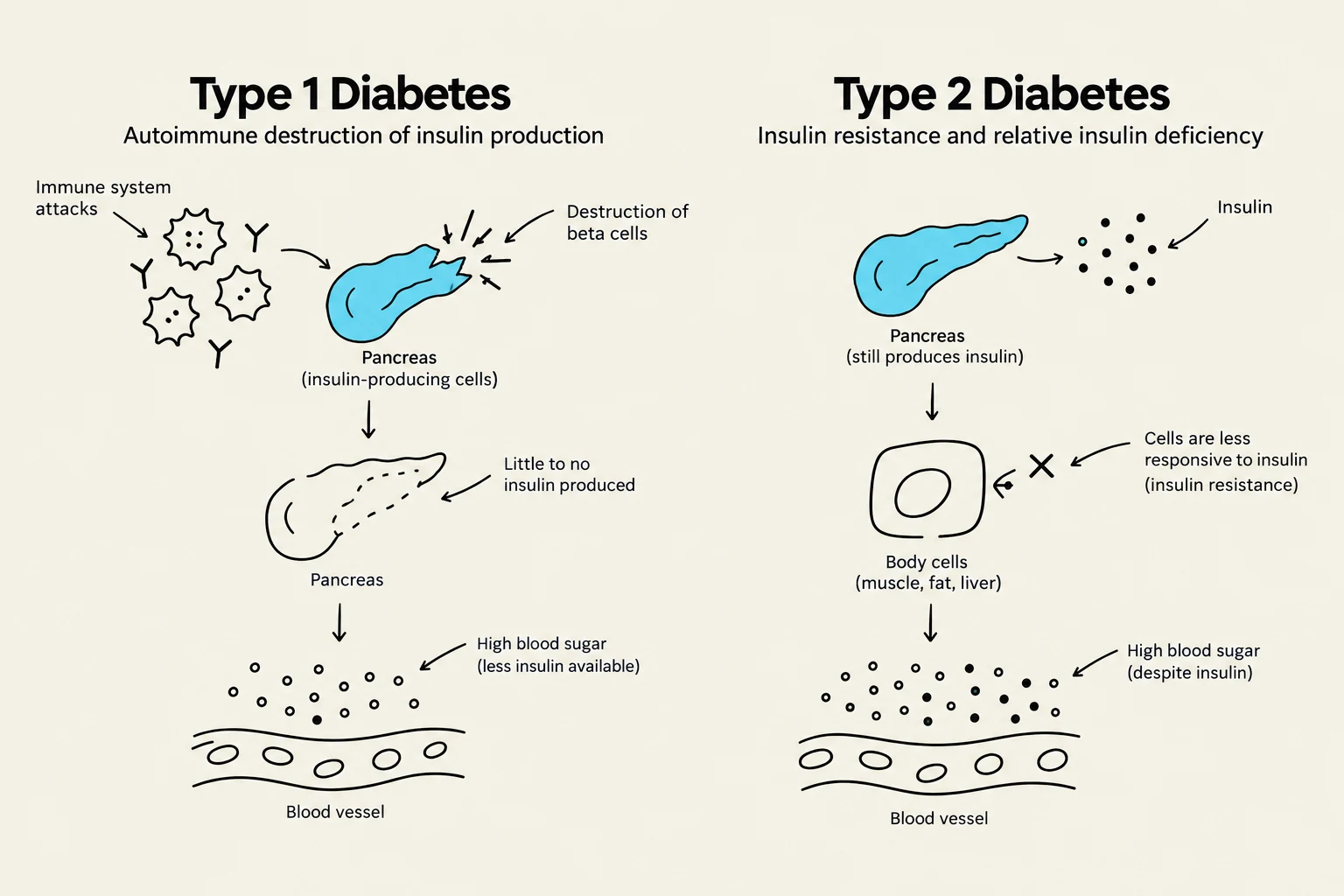
Type 1 is often characterized as an autoimmune condition where the body attacks its own insulin-producing cells. It is typically "faster and younger" in onset. Because these patients produce no insulin, they are at high risk for Diabetic Ketoacidosis (DKA).
Type 2 Diabetes Mellitus
Type 2 is generally a "slower and older" onset disease. It is driven by insulin resistance, where the body's receptors do not respond effectively to insulin, often linked to lifestyle factors such as a sedentary lifestyle and high simple sugar intake.
Diagrams illustrating the mechanisms of Type 1 and Type 2 Diabetes, showing differences in insulin production and cell response.
Acute Complications: Hyperglycemia and Hypoglycemia
Managing blood glucose is a delicate balancing act. Patients face two primary acute threats:
Hyperglycemia (High Blood Sugar)
Hyperglycemia occurs when blood sugar is high (often cited as 115 mg/dL or more). In severe cases, such as DKA in Type 1 patients, the blood can become acidic, leading to "fruity breath" and Kussmaul respirations (deep, rapid, regular breathing).
Causes: Sepsis (the #1 cause), stress (surgery), skipping insulin, or steroid use (e.g., Prednisone).
Symptoms: The "3 P's"—Polyuria (excessive urination), Polydipsia (excessive thirst), and Polyphagia (excessive hunger).
Hypoglycemia (Low Blood Sugar)
Hypoglycemia is defined as blood sugar at 70 mg/dL or less. This is considered a medical emergency because "hypo brain will die".
Symptoms: Cold, clammy, pale skin; trembling, anxiety, and shakiness. A helpful mnemonic is HIWASH: Headache, Irritable, Weakness, Anxious, Sweaty, Shaky, Hungry.
Causes: Excessive insulin, strenuous exercise, or alcohol consumption.
Clinical Alert: Hypoglycemia Management
If the patient is awake, provide rapid-acting carbohydrates like juice, soda, crackers, or low-fat milk.
If the patient is unresponsive or sleeping, they require emergency intervention, such as IV D50 (dextrose 50%).
Pharmacological Management
Insulin Therapy
Insulin is required for all Type 1 patients and many Type 2 patients. Understanding the different types and their "peak times" is critical to prevent hypoglycemia.
Insulin Type
Examples
Onset
Peak
Notes
Rapid-Acting
Aspart, Lispro, Glulisine
30–90 min
30–90 min
Best choice for meals
Regular
Regular Insulin
30–60 min
2–4 hours
ONLY type given IV
Intermediate
NPH
2–4 hours
4–12 hours
Can be mixed; "iNtermediate"
Long-Acting
Detemir, Glargine
N/A
No Peak
"Old guys"; Do NOT mix
This graph illustrates the onset, peak, and duration of activity for different types of insulin, including rapid-acting, short-acting, intermediate-acting, and long-acting insulins, showing their relative activity levels over time after injection.
Insulin Administration Tips:
Draw Up: Always draw "Clear to Cloudy" (Regular before NPH).
Rotation: Use the "Macarena" method—rotate injection sites, ideally on the abdomen at least 2 inches from the umbilicus.
Peaks + Plates: Always ensure the patient has food during the insulin's peak time to prevent a crash.
Oral Hypoglycemics (Type 2 Only)
Metformin: The first line of defense. It has a minimal risk of hypoglycemia but can cause weight gain and lactic acidosis. Note: Must stop 48 hours before/after IV contrast to protect the kidneys.
Glyburide: Can cause significant hypoglycemia and is toxic to the elderly or those with renal/liver issues.
Thiazolidinedione (e.g., Pioglitazone): Can cause new pitting edema; contraindicated in patients with Heart Failure or Liver Failure.
Long-Term Complications
Chronic hyperglycemia damages blood vessels and nerves throughout the body:
Nephropathy: Kidney damage, indicated by a high Creatinine level (>1.3).
Retinopathy: Damage to the eyes, potentially leading to blindness.
Neuropathy: Nerve damage, often resulting in a loss of sensation, particularly in the feet.
Cardiovascular: Increased risk of Hypertension, Atherosclerosis, and CVA (stroke).
Patient Education: Diet and Foot Care
Education is the cornerstone of preventing complications.
The Diabetic Diet
The goal is to maintain stable glucose levels by managing carbohydrate intake.
Avoid: Simple sugars (soda, candy, white bread, white rice, juices).
Embrace: High fiber ("BROWN" foods) such as beans, brown rice, whole wheat, and peanut butter.
Diabetic Foot Care
Because neuropathy can cause a loss of feeling, a small injury can quickly become a severe infection.
Goal: Keep feet clean, dry, and injury-free.
The "DO NOTs":
No flip-flops, high heels, or sandals.
No nylon socks (use soft cotton instead).
No OTC corn removal or cutting nails at curved angles (cut straight).
No hot baths or hot pads (use warm instead).
No vigorous rubbing or heavy powder.
The "DOs":
Perform daily inspections of the feet.
Ensure shoes fit properly.
Report any non-healing wounds to a healthcare provider immediately.
Keep reading for free.
Create an account to finish this reading and make it part of your study routine.