This content explores the stigma surrounding depression, the distinction between sadness and major depressive disorder, and methods to support those struggling with mental illness.
Mental health is often discussed in the same way we discuss physical health, yet a profound silence frequently surrounds certain conditions. For many, living with a mental health diagnosis feels like leading two separate lives: one that the world sees—the student, the athlete, the friend—and a hidden one influenced by the heavy weight of illness. Understanding the complexities of Major Depressive Disorder (MDD) and the social barriers that prevent people from seeking help is the first step toward creating a more supportive and informed society.
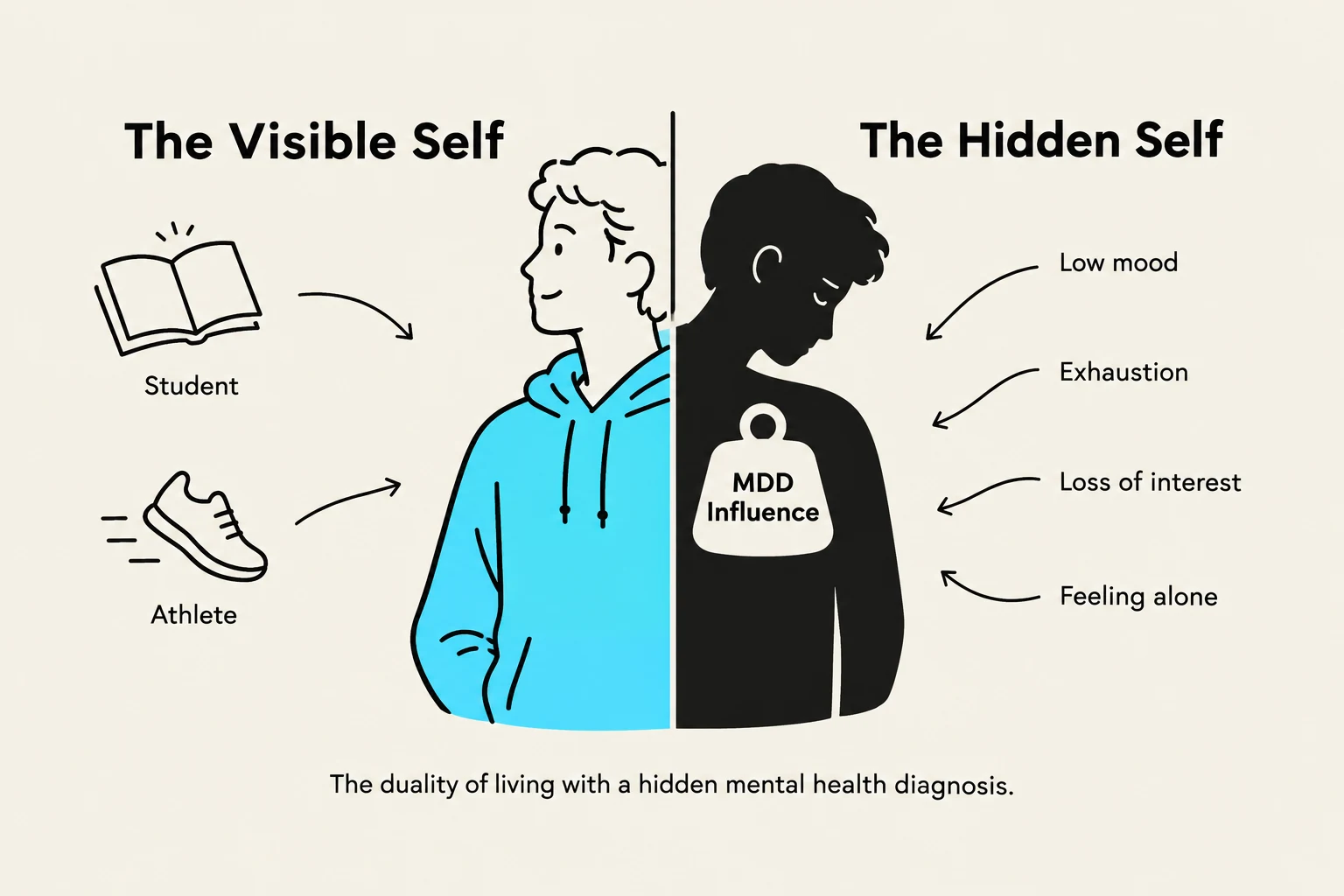
This illustration depicts the duality of living with a hidden mental health diagnosis, contrasting the "visible self" (e.g., student, athlete) with the internal struggles of the "hidden self" (e.g., low mood, exhaustion, loss of interest, feeling alone) influenced by MDD.
The Distinction: Sadness vs. Major Depressive Disorder
One of the most common misconceptions is the idea that depression is simply an intense form of sadness. However, clinical experts and those with lived experience emphasize that these two states are fundamentally different.
Sadness is a natural, temporary emotional response to specific life events, such as a loss, a disappointment, or a setback. It is a healthy part of the human experience that typically dissipates as circumstances change or time passes.
Major Depressive Disorder, by contrast, is an ongoing and pervasive condition. It can be described as a "parasite" that takes up residence in the mind, often occurring even when life circumstances are positive or "going right". While sadness is a reaction to the world, depression can feel like an internal force that makes an individual feel powerless and disconnected from their own life.
Recognizing the Symptoms: Age Matters
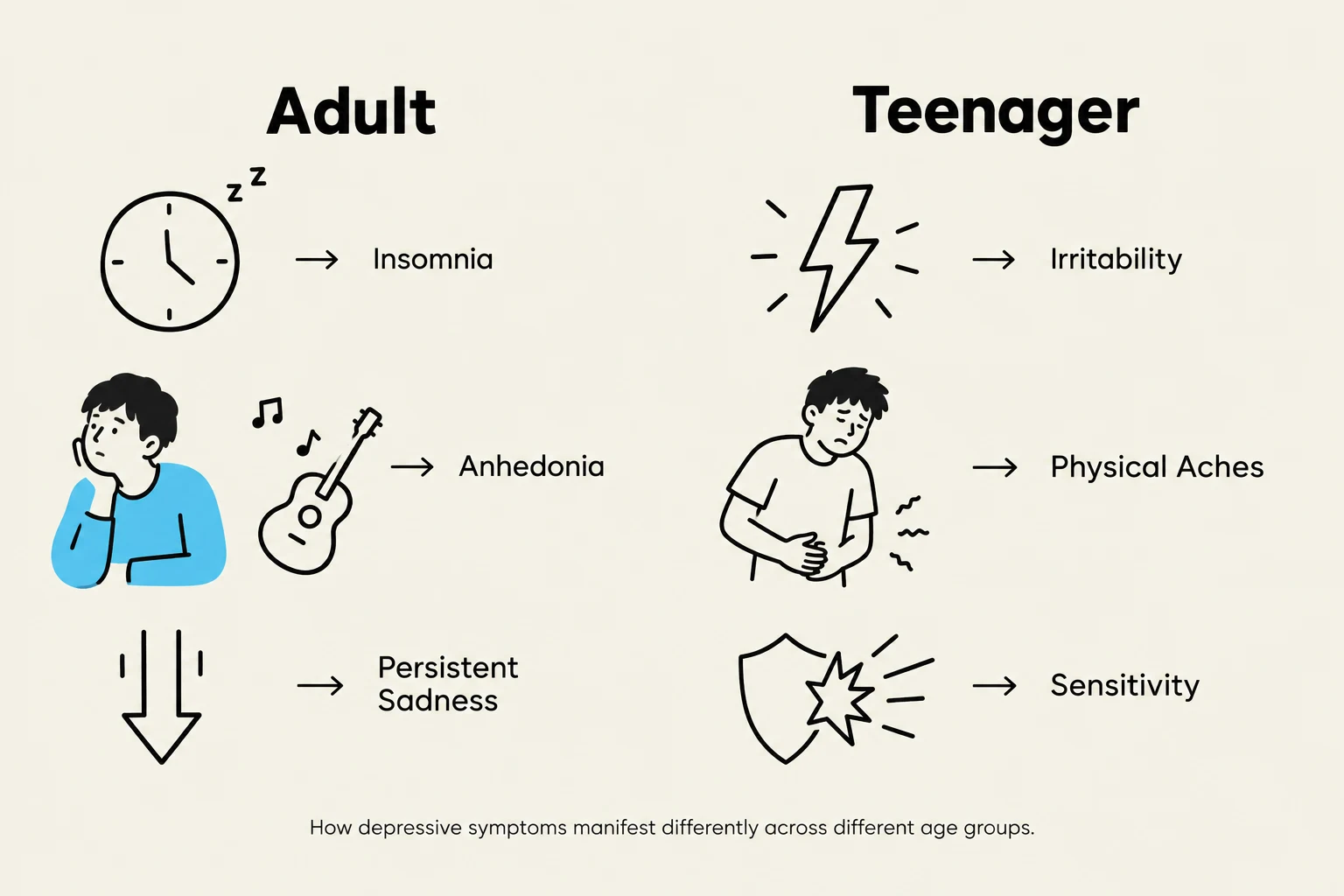
This illustration depicts how depressive symptoms can manifest differently in adults and teenagers, including insomnia, anhedonia, persistent sadness, irritability, physical aches, and increased sensitivity.
Depression does not look the same in everyone. Recognizing the signs is critical for early intervention, but the symptoms often manifest differently depending on the individual's stage of life.
Adult Symptoms
In adults, the clinical presentation of depression often includes:
Persistent sadness: A low mood that does not lift.
Insomnia: Difficulty sleeping or staying asleep.
Anhedonia: A significant loss of interest in activities that were previously enjoyed.
Teenage Symptoms
For adolescents, depression may not present as "sadness" at all, which can lead to it being overlooked by parents and educators. Instead, look for:
Irritability: Frequent outbursts or a "short fuse."
Physical manifestations: Unexplained aches and pains throughout the body.
Sensitivity: Extreme sensitivity to criticism or perceived rejection.
Study Tip: When analyzing case studies in psychology, always check the age of the subject. If a teenager is presenting with physical pain and irritability rather than crying, consider depression as a potential underlying cause rather than just physical illness.
The Barrier of Stigma and the Risk of Silence
Despite the prevalence of mental health issues, a significant barrier to recovery is stigma. In many cultures, depression is incorrectly viewed as a sign of a "bad attitude" or a personal weakness. This misconception creates a sense of shame, leading individuals to hide their struggles to avoid being judged or appearing "unfit" for roles like college admissions or professional advancement.
The consequences of this stigma are life-threatening. Because people fear being seen as "weak," they often avoid seeking the help they need. The statistics surrounding this are sobering:
In the United States, approximately $17%$ of the adult population will experience depression in their lifetime.
An estimated $15%$ of people diagnosed with depression will die by suicide.
The global response to this epidemic is currently insufficient; only $14%$ of countries currently have a formal suicide prevention plan in place.
Seeking Help and the DEVOTE Method
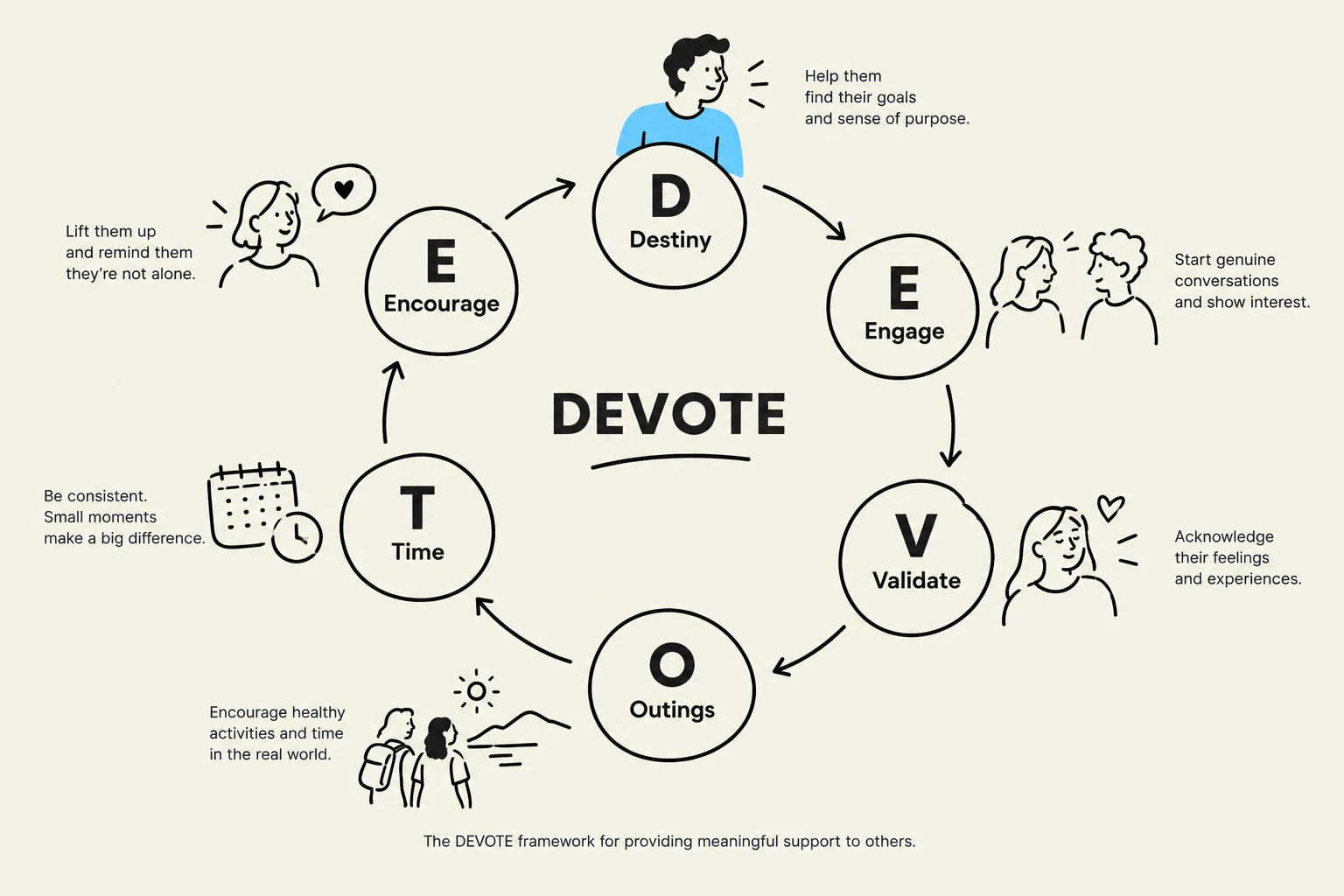
The DEVOTE framework is a model for providing meaningful support to others, encompassing Destiny, Encourage, Engage, Validate, Outings, and Time.
If you or someone you know is struggling, it is vital to remember that depression is treatable. While there is no "vaccine" for depression, the symptoms can be "shrunk" through professional intervention.
Professional Steps
A primary care doctor is often the best first point of contact. They can administer a quick, 10-question survey to evaluate the severity of symptoms and provide necessary referrals to therapists or specialists. This process is often a brief, 10-minute conversation that can be life-saving.
Supporting Others: The DEVOTE Acronym
If you are supporting a friend or loved one, you do not need to be a therapist to make a difference. You can use the DEVOTE framework to provide meaningful support:
Letter
Action
Description
D
Destiny
Remind them that depression is not their destiny; it is a condition, not their identity.
E
Engage
Regularly reach out and interact with them to prevent isolation.
V
Validate
Acknowledge and validate their feelings rather than dismissing them.
O
Outings
Invite them on simple activities, like a walk, even if they initially decline.
T
Time
Remind them that they have much more to do and experience in their lifetime.
E
Encourage
Gently encourage them to seek professional medical help.
Exam Note: If a question asks for ways to mitigate social isolation in patients with MDD, the "DEVOTE" method serves as a practical application of social support theory, emphasizing validation and consistent engagement.
Conclusion
Breaking the silence surrounding mental health is a global necessity. By treating mental health with the same urgency as physical injuries and dismantling the stigma that labels illness as weakness, we can ensure that no one feels they have to hide their "real self". Depression may be a part of many people's lives, but as the mantra goes: it is not their destiny.
Keep reading for free.
Create an account to finish this reading and make it part of your study routine.