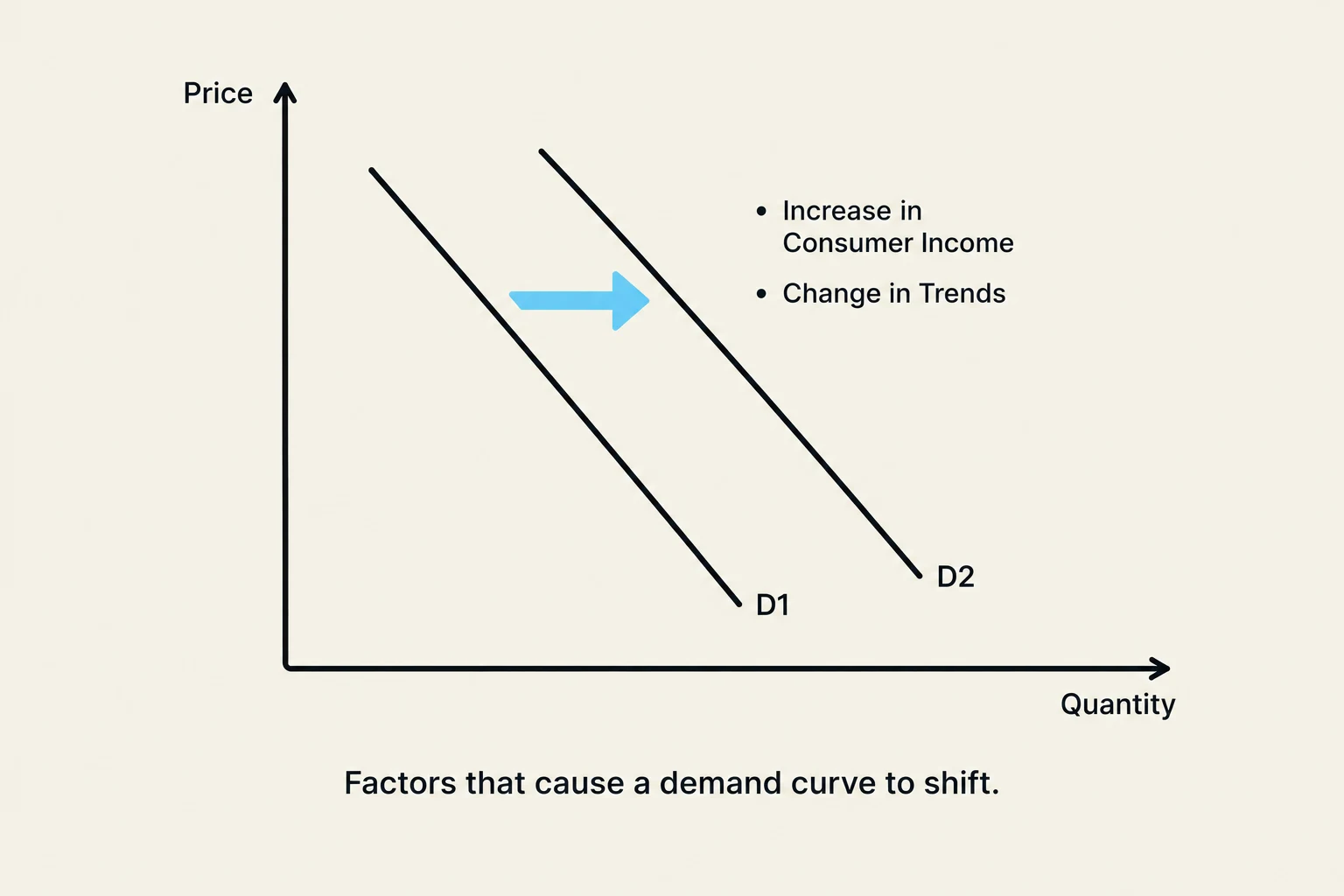
Understanding Demand and Price Elasticity in Microeconomics

Explains the fundamental concepts of demand and price elasticity in microeconomics, including the law of demand, inelastic vs. elastic demand, and factors influencing demand. Uses graphical representations and real-world examples.

Save this reading to your study set

Sign up free

Microeconomics is the branch of economics that studies the behavior of individuals and firms in making decisions regarding the allocation of scarce resources. One of the most fundamental concepts in this field is Demand, which describes the relationship between the price of a good or service and the amount of that good or service that consumers are willing and able to purchase.

By understanding how demand behaves, economists and businesses can predict how changes in the market will affect consumer behavior and total revenue.

The Fundamentals of Demand

A standard downward-sloping demand curve illustrating the inverse relationship between price and quantity demanded.
At its core, demand is defined by the relationship between two primary variables: Price (PP) and Quantity Demanded (QQ).

In a standard market model, we use a Standard Demand Curve Graph to visualize this relationship. On this graph, the vertical axis represents the Price (PP) and the horizontal axis represents the Quantity (QQ).

The demand curve typically slopes downward from left to right. This downward slope illustrates the "Law of Demand": as the price of a good decreases, the quantity demanded by consumers generally increases, and vice versa.

Standard Demand Curve and Elasticity Comparison

Price Elasticity of Demand
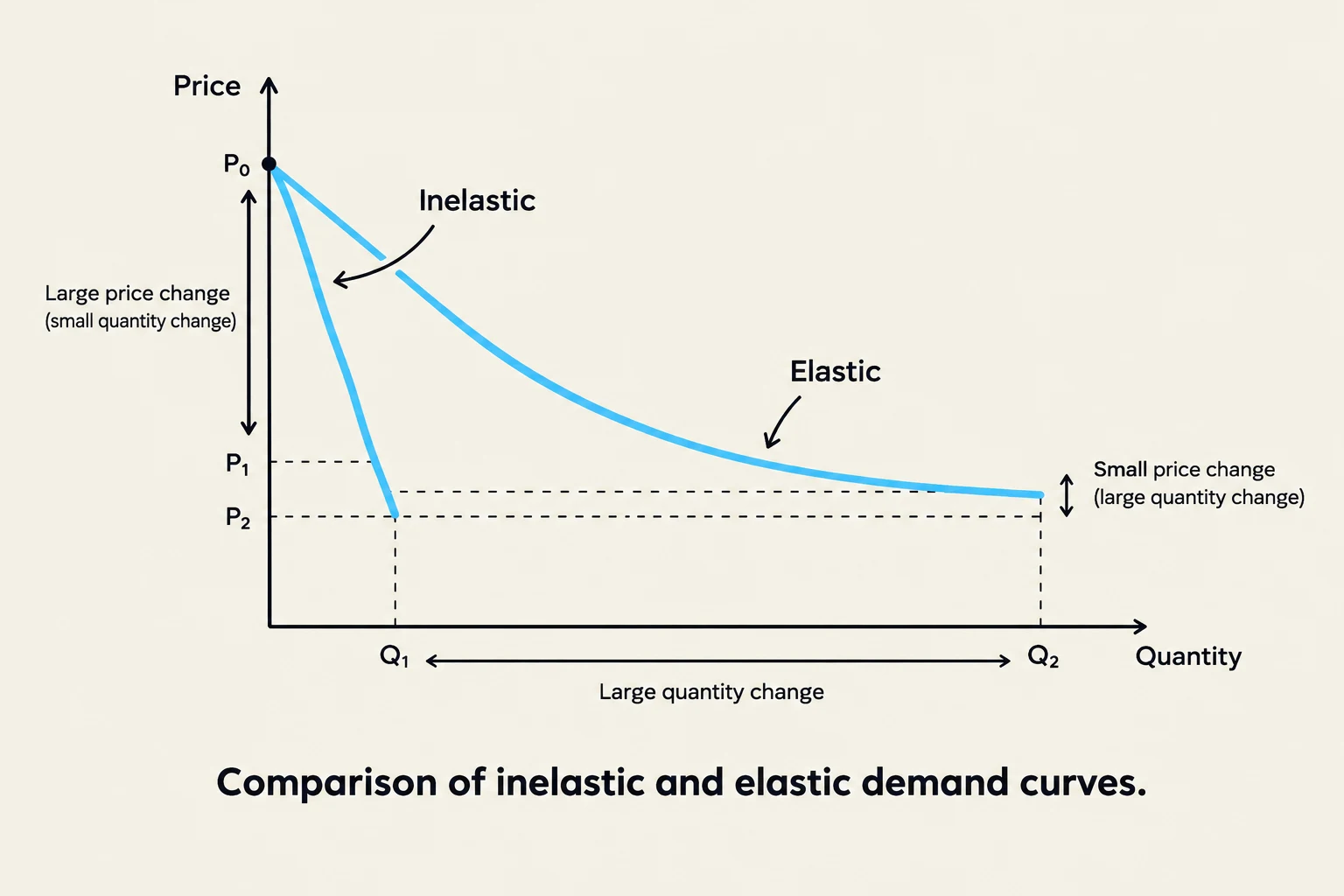
Comparison of inelastic and elastic demand curves.
While we know that price changes affect quantity, not all goods react to price changes in the same way. This "responsiveness" is known as Elasticity. We categorize demand into two main types based on how much the quantity demanded shifts when the price moves:

Keep reading for free.

Create an account to finish this reading and make it part of your study routine.

Continue reading free

Already have an account? Log in

Updated

Study it your way.

Import this reading into your study set to get started with another study mode.

Make it your own.

Keep this reading in a new study set, or add it to one you already use.