


In the study of criminal law, particularly regarding the offense of criminal damage, the distinction between negligence and recklessness often hinges on the specific factual circumstances of an incident. To understand the legal nuances of "recklessness," one must look closely at the actions of the individuals involved and the physical consequences of those actions. This article reviews the factual background of the case involving two appellants and the subsequent fire damage that serves as the cornerstone for legal debate.
The Incident: Actions of the Appellants
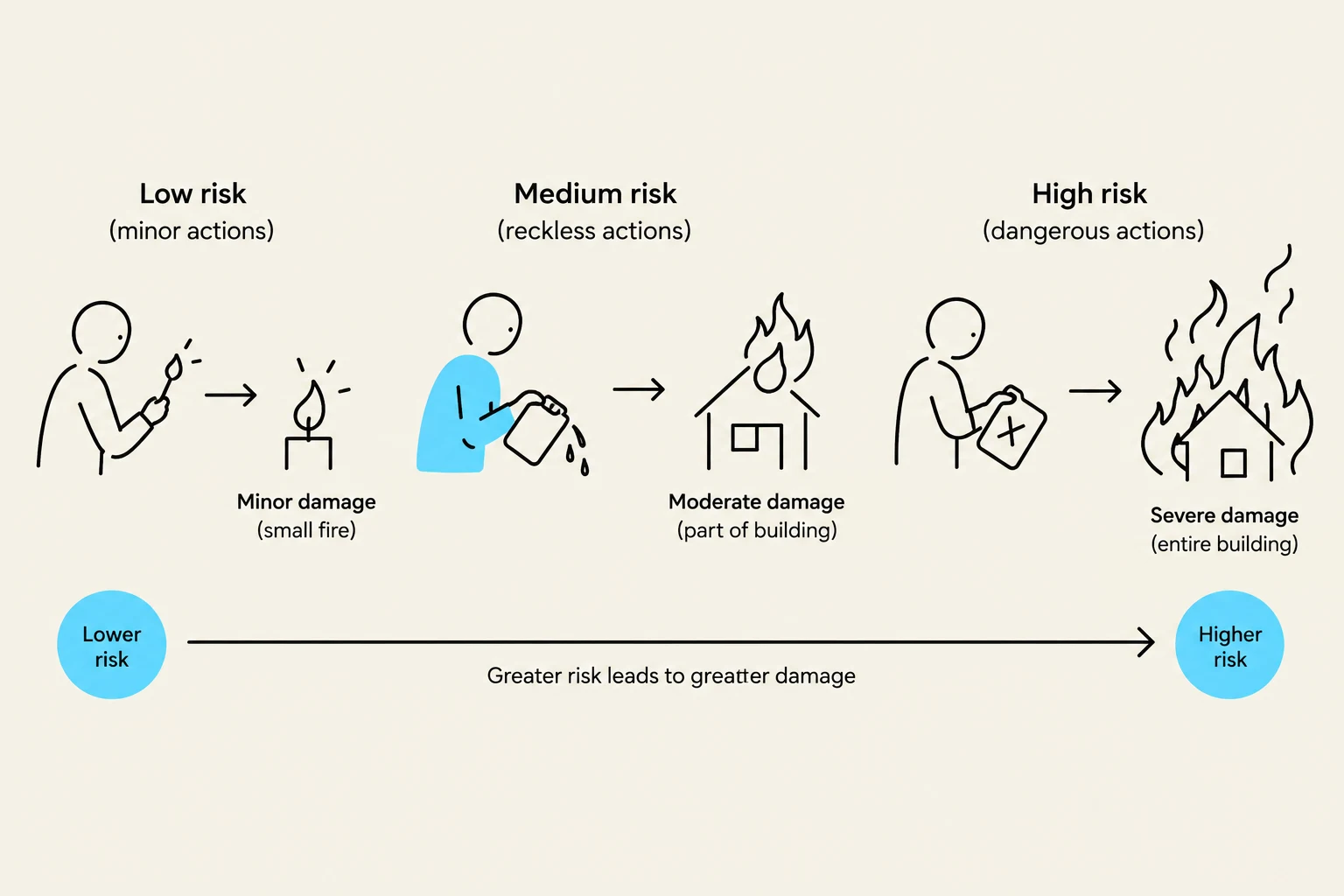
The core of the legal dispute arises from a specific set of events involving two appellants. While the exact nature of their intent is the subject of judicial scrutiny, the physical sequence of events is well-documented. The appellants engaged in activities that, while perhaps not intended to cause a catastrophic blaze, created the conditions necessary for a fire to ignite and spread.
In many criminal damage cases, the prosecution must prove that the defendant's conduct was not merely a mistake, but a conscious disregard of a substantial and unjustifiable risk. In this instance, the appellants' behavior provided the factual basis for determining whether they met the threshold for criminal recklessness.
Exam Tip: When analyzing factual backgrounds in criminal law, always separate the actus reus (the physical act of causing damage) from the mens rea (the mental state, such as recklessness). The facts of the fire provide the actus reus, but the appellants' awareness of the risk determines the mens rea.
Keep reading for free.
Create an account to finish this reading and make it part of your study routine.
Continue reading freeAlready have an account? Log in
Updated