


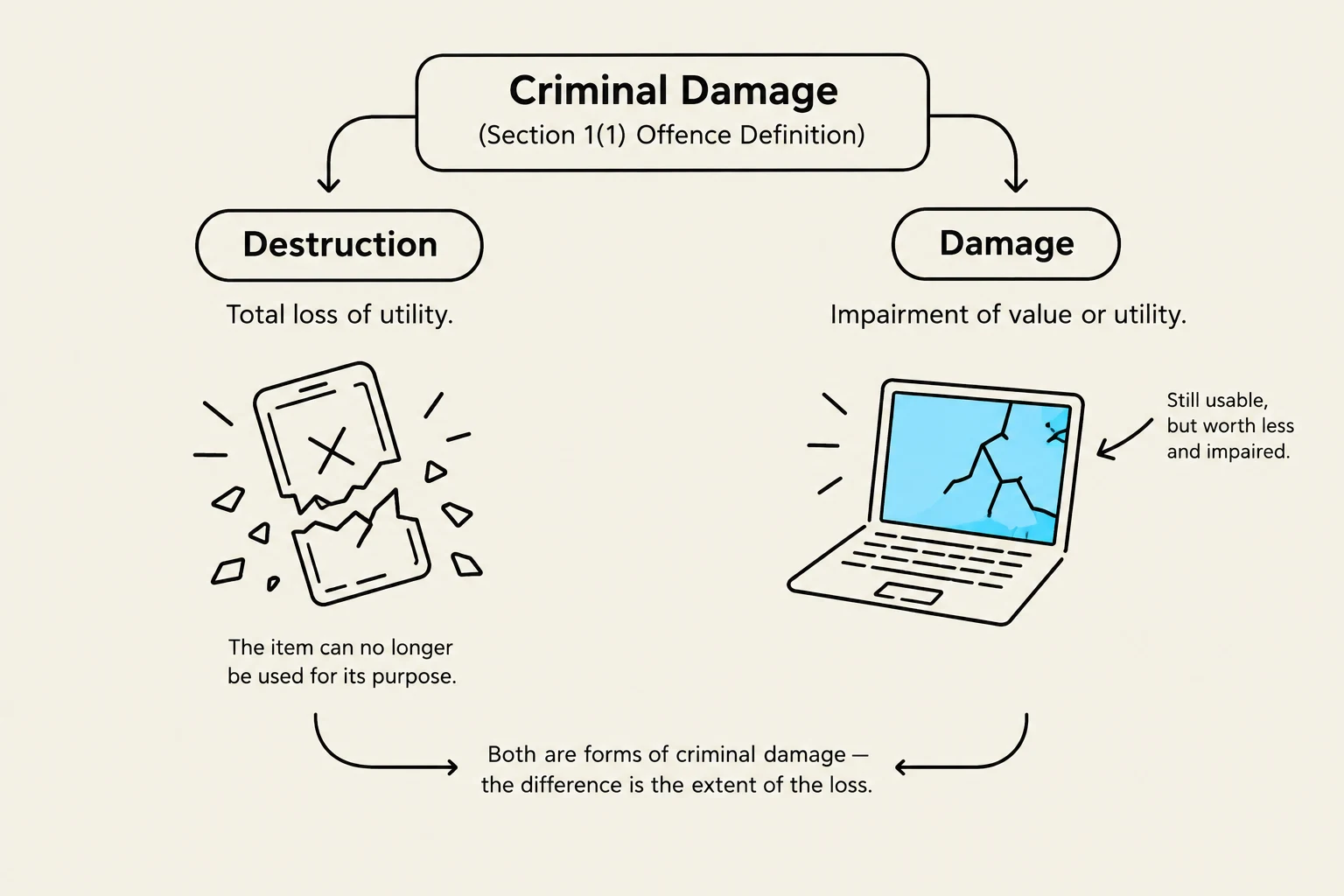
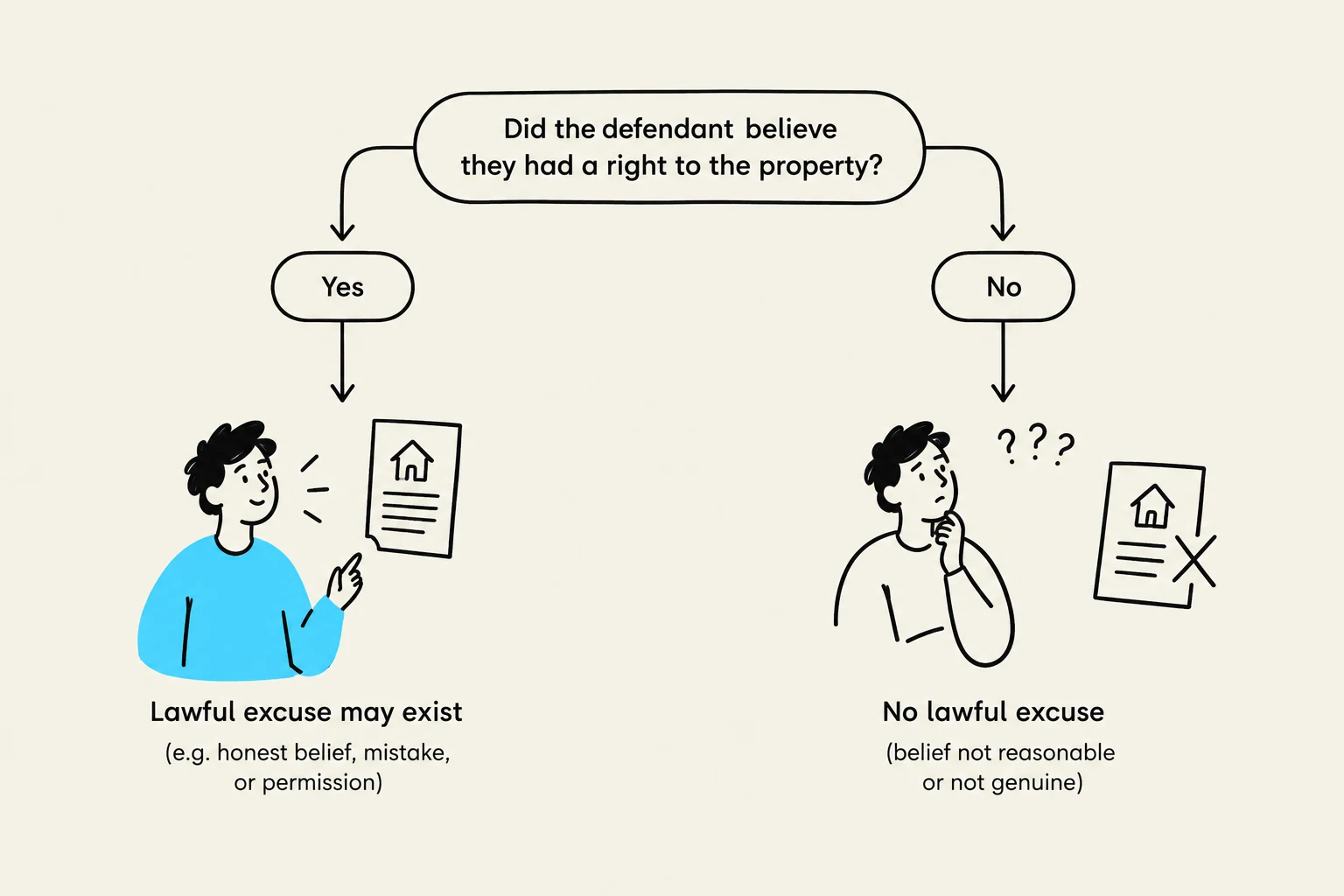
In criminal law, the protection of property is a fundamental pillar of social order. Section 1(1) of the Criminal Damage Act 1971 defines the core offence, establishing the legal framework for when an individual's actions toward property cross the line from mere mischief into criminal conduct. To secure a conviction under this section, the prosecution must prove a specific set of elements: the act of destroying or damaging property, the fact that the property belongs to another, and the absence of a lawful excuse.
The Actus Reus: Destroying or Damaging Property
The actus reus (the physical element) of the offence requires that the defendant destroys or damages property. While "destroy" is straightforward—implying the total loss of utility or existence of an object—"damage" is more nuanced. Damage does not necessarily require physical breakage; it can include any impairment of the property's value, usefulness, or even its aesthetic appearance if that impairment is significant.
For example, if a person sprays graffiti on a pristine wall, they have not "destroyed" the wall, but they have "damaged" it by reducing its value and requiring cleaning.
Property Belonging to Another
A secondary but vital component of the actus reus is that the property must belong to "another." This prevents individuals from being charged with criminal damage for destroying their own belongings. However, the law is strict regarding shared ownership. If a person damages property that they own jointly with someone else, they can still be liable for criminal damage because the property belongs to "another" (the co-owner) as well as themselves.
Keep reading for free.
Create an account to finish this reading and make it part of your study routine.
Continue reading freeAlready have an account? Log in
Updated