


Success in any academic course depends as much on logistical organization as it does on subject matter expertise. Understanding when specific tasks are due and how they impact your final grade is the first step toward effective time management. This article serves as a logistical guide to your upcoming assessments, specifically focusing on the practice assignments and the syllabus quiz.
Understanding the Assessment Landscape
Before diving into the course content, it is essential to distinguish between graded assessments and low-stakes practice opportunities. In this course, you will encounter different types of tasks designed to test your knowledge at various stages of the semester.
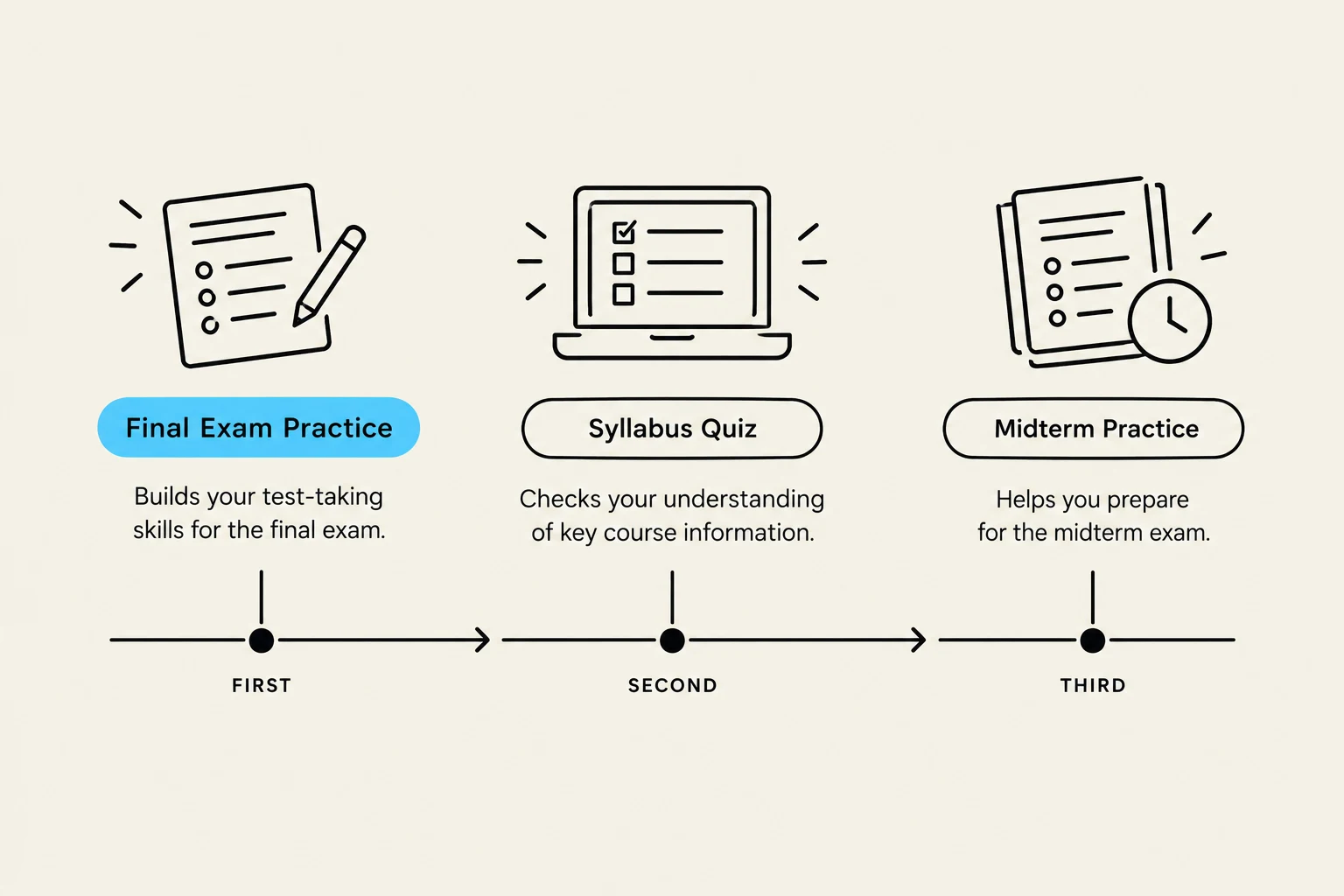
The most critical distinction to make is between the Syllabus Quiz and the Practice Assignments. While the quiz carries a direct impact on your grade, the practice assignments are designed to facilitate learning without the pressure of point deductions.
Exam Tip: Always treat practice assignments as if they were graded. They are your best opportunity to identify knowledge gaps before the high-stakes exams occur.

Key Deadlines and Point Values
To ensure you do not miss any critical windows, you should record the following dates in your personal calendar. Note that the time zones vary between CDT (Central Daylight Time) and CST (Central Standard Time), so pay close attention to the specific timing.
Keep reading for free.
Create an account to finish this reading and make it part of your study routine.
Continue reading freeAlready have an account? Log in
Updated