Understanding Coronary Artery Disease and Atherosclerosis
An in-depth explanation of Coronary Artery Disease (CAD), detailing the progressive stages of atherosclerosis from endothelial injury to complicated lesions, and discussing modifiable and non-modifiable risk factors. It also covers clinical manifestations and management strategies including lifestyle changes, pharmacol
Coronary Artery Disease (CAD) stands as the leading cause of death in the United States, accounting for one in every four deaths. At its core, CAD is a progressive condition characterized by the narrowing or occlusion of the coronary arteries, which supply the heart muscle (myocardium) with essential oxygen and nutrients. This narrowing is almost always driven by a process known as atherosclerosis—the abnormal accumulation of lipids, fatty substances, and fibrous tissue within the arterial walls. Understanding how this process evolves from a minor injury to a life-threatening blockage is fundamental to managing cardiovascular health.
The Progressive Stages of Atherosclerosis
Atherosclerosis does not occur overnight; it is a chronic process that typically develops over many years. It follows a predictable sequence of pathological changes within the arterial intima.
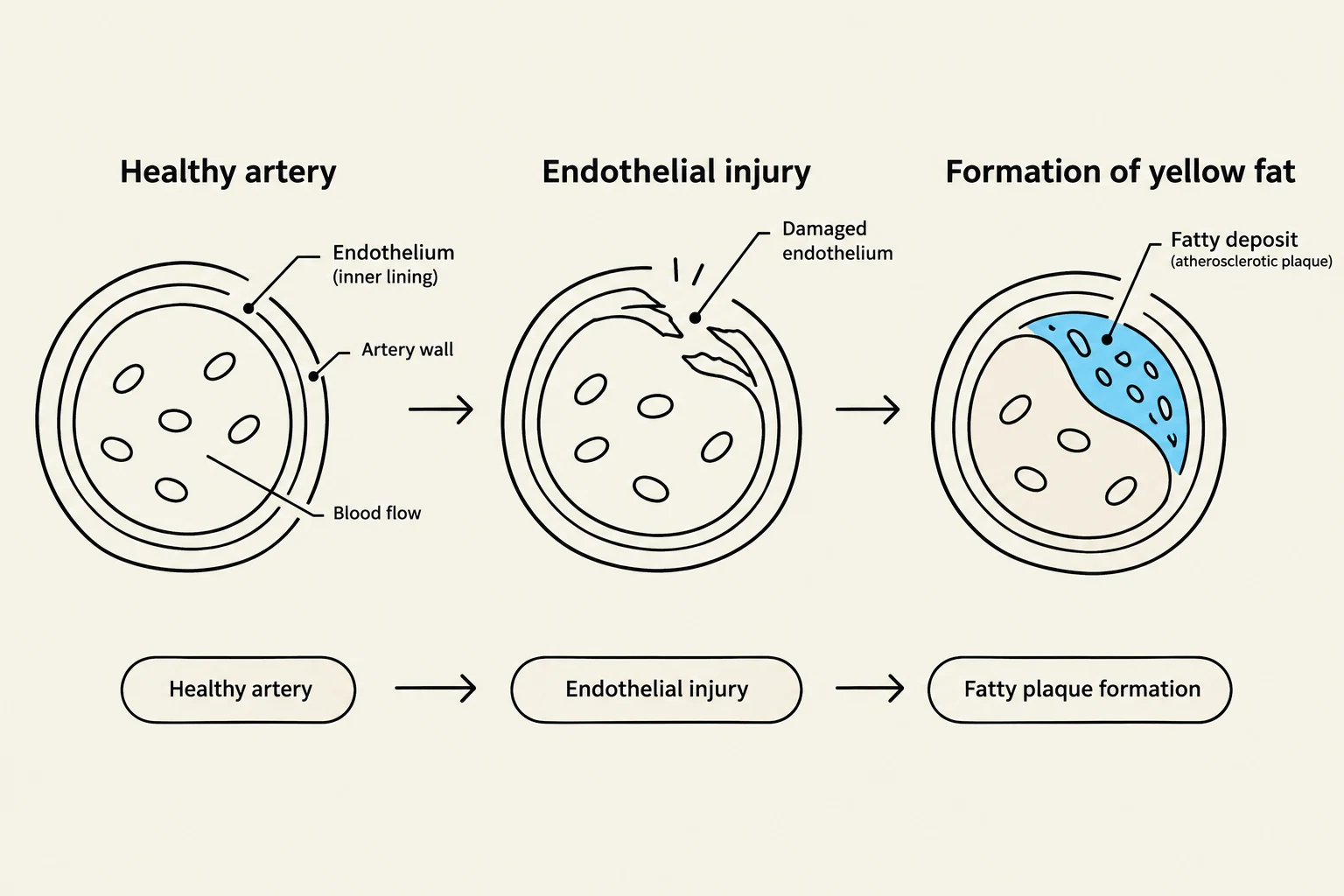
1. Endothelial Injury
The process begins with damage to the endothelium, the delicate inner lining of the blood vessel. While a healthy endothelium is non-reactive to platelets and coagulation factors, injury can be triggered by various insults, including toxins from tobacco use, high blood pressure (hypertension), diabetes, or local inflammatory responses from infections.
2. Fatty Streak
Once the endothelial barrier is compromised, the "fatty streak" forms. This is the earliest visible lesion of atherosclerosis. During this stage, lipid-filled smooth muscle cells accumulate, appearing as subtle yellow tinges within the vessel wall. These streaks can be detected in the coronary arteries as early as age 18.
Diagram illustrating the progression from a healthy artery to endothelial injury and subsequent fatty plaque formation, also known as atherosclerosis.
3. Fibrous Plaque
As the disease progresses, lipoproteins (carriers of cholesterol in the blood) transport more cholesterol and other lipids into the arterial intima. To stabilize the area, the body covers the fatty streak with collagen, creating a grayish or white fibrous plaque. This plaque can grow to cover the entire lumen (the opening of the vessel), significantly narrowing the path for blood flow and reducing oxygen delivery to distal tissues.
4. Complicated Lesion and Thrombus Formation
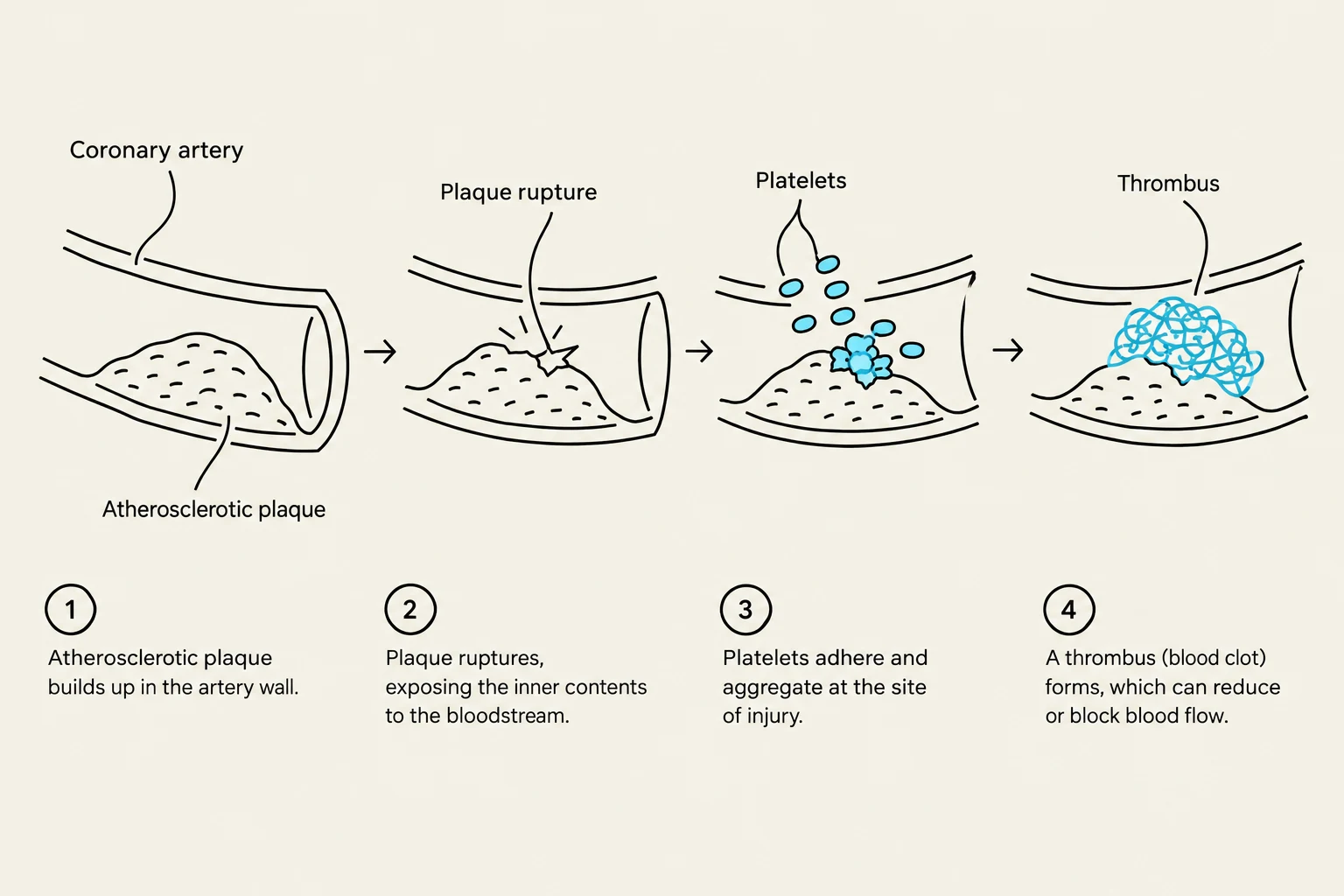
The most dangerous stage is the "complicated lesion". If the fibrous plaque becomes unstable, it may undergo ulceration or rupture. When this happens, the integrity of the arterial wall is lost, triggering a massive accumulation of platelets at the site. This leads to the formation of a thrombus (a blood clot), which can adhere to the wall and cause either further narrowing or a total arterial occlusion. A total blockage can lead to acute myocardial ischemia and, if not reversed within approximately 20 minutes, irreversible heart muscle damage.
Diagram illustrating the formation of a thrombus in a coronary artery due to plaque rupture and platelet aggregation.
Risk Factors: What Drives the Disease?
Risk factors for CAD are categorized into two groups: those we cannot change (non-modifiable) and those we can influence through lifestyle or medical intervention (modifiable).
Non-Modifiable Risk Factors
These are inherent characteristics that a patient cannot alter:
Age: The incidence of CAD is highest in middle-aged men. However, after age 75, the incidence of serious heart events becomes roughly equal between men and women, though women often experience more deaths at this stage.
Gender: Women often present with atypical signs of angina rather than the classic symptoms of a myocardial infarction (MI).
Ethnicity: African Americans tend to experience an earlier and more severe onset of CAD compared to their White counterparts.
Genetics and Family History: A strong family history is a major risk factor. It is estimated that genetics contribute between 40% and 60% to the risk of CAD and MI.
Modifiable Risk Factors
These are the primary targets for nursing management and health promotion.
Lipids and Lipoproteins
Lipids must be combined with proteins to become soluble in the blood, forming lipoproteins.
LDL (Low-Density Lipoprotein): Often called "bad" cholesterol, LDL carries cholesterol to the arterial walls, increasing the risk of atherosclerosis.
HDL (High-Density Lipoprotein): Known as "good" cholesterol, HDL is protective because it transports lipids away from the arteries and back to the liver for metabolism.
Clinical Thresholds: High risk is associated with total cholesterol >200 mg/dL or triglycerides >150 mg/dL.
Metabolic and Lifestyle Factors
Hypertension: Blood pressure levels >140/90 mmHg increase the workload on the heart and accelerate atherosclerosis.
Diabetes: Individuals with diabetes have a 2–4 times higher risk of CAD due to increased tendencies toward endothelial dysfunction and altered lipid metabolism.
Metabolic Syndrome: This is a cluster of risk factors—including central obesity, hypertension, abnormal lipids, and elevated fasting glucose—often linked to insulin resistance.
Obesity: Defined as a BMI >30, obesity is closely linked to hypertension and diabetes.
Tobacco Use: Smoking increases LDL, decreases HDL, and reduces the blood's oxygen-carrying capacity due to carbon monoxide exposure.
Physical Inactivity: Lack of exercise prevents the natural increase in HDL and the improvement of collateral circulation that comes with regular activity.
Substance Abuse: Illicit drugs like cocaine or methamphetamines can induce coronary spasms, leading to chest pain and ischemia.
Exam Tip: Identifying Unstable Angina
When distinguishing between types of angina, remember that Unstable Angina is characterized by:
New onset angina that occurs at rest or with minimal exertion.
An increase in the frequency, duration, or severity of pain.
This differs from Chronic Stable Angina, which is typically precipitated by physical exertion.
Psychosocial Factors
Even personality and mental health play a role. Type A personalities—characterized by perfectionism, high drive, and high stress—are at higher risk. Additionally, depression is a significant risk factor; depressed patients often have elevated circulating catecholamines, which contribute to endothelial injury and inflammation. Finally, high levels of homocysteine (an amino acid breakdown product) can damage the vessel lining and promote plaque buildup.
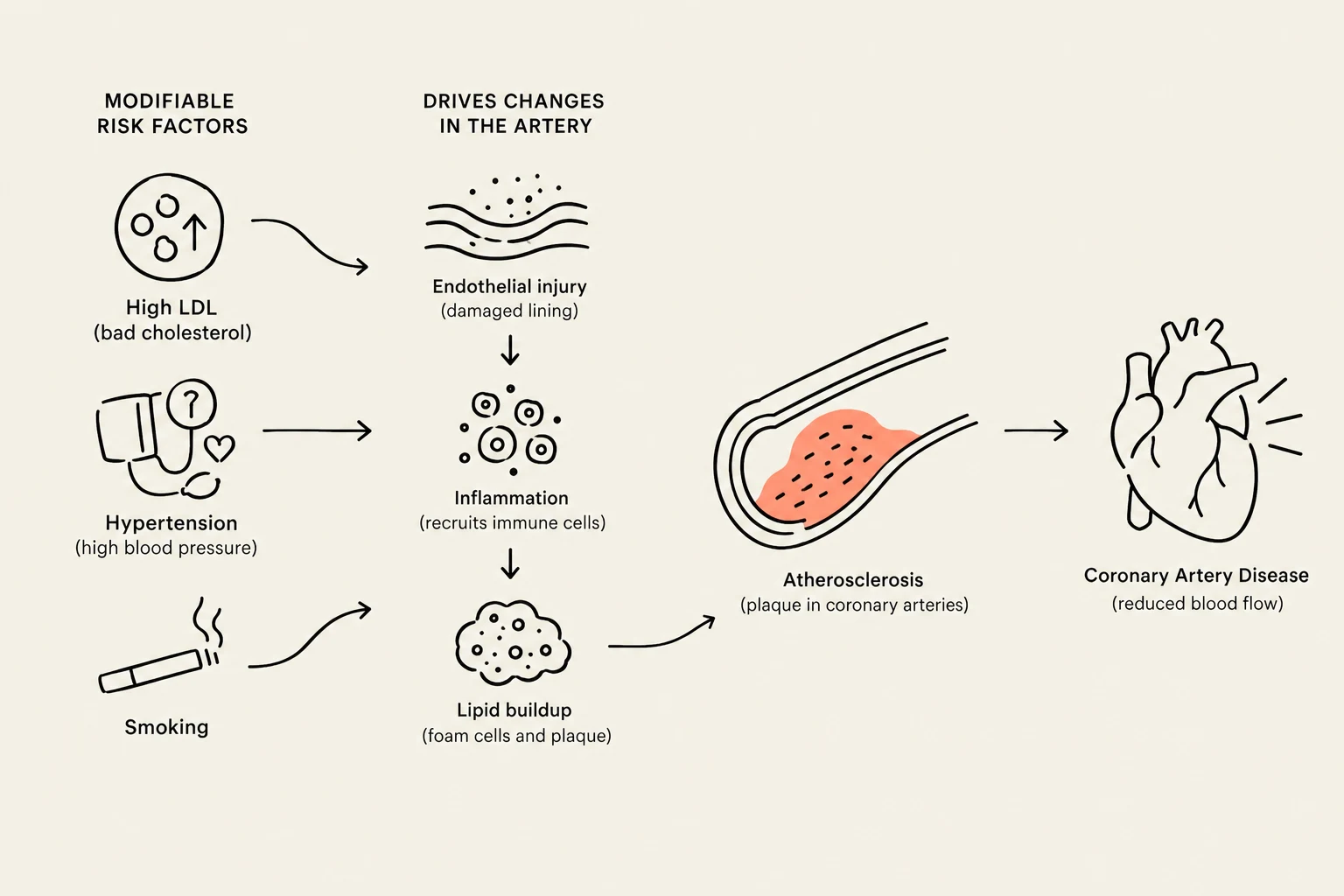
This diagram illustrates how modifiable risk factors such as high LDL cholesterol, hypertension, and smoking can lead to endothelial injury, inflammation, lipid buildup, atherosclerosis, and ultimately coronary artery disease, characterized by reduced blood flow.
Clinical Manifestations and Management
The most common clinical manifestation of CAD is angina, or chest pain caused by myocardial ischemia. This occurs when the demand for myocardial oxygen exceeds the supply provided by the coronary arteries. While pain is often substernal, it can radiate to the neck, jaw, shoulders, or arms.
Management Strategies
Management is multifaceted and must be ongoing throughout a patient's life.
Lifestyle Modification: This includes the "FITT" formula for exercise (Frequency, Intensity, Type, Time), a low-saturated-fat/high-fiber diet, and smoking cessation.
Pharmacological Therapy:
Statins: Inhibit cholesterol synthesis in the liver (e.g., Atorvastatin).
Nitrates: Used to reduce the frequency of anginal attacks by dilating vessels (e.g., Nitroglycerin).
Beta Blockers: Reduce myocardial oxygen demand by decreasing heart rate and contractility (e.g., Metoprolol).
Antiplatelets: Low-dose aspirin (81 mg) is often recommended to prevent clot formation.
Invasive Procedures: If a blockage is significant (typically >70%), doctors may perform Percutaneous Coronary Intervention (PCI), using a balloon to compress the plaque and a stent to keep the vessel open.
Keep reading for free.
Create an account to finish this reading and make it part of your study routine.