


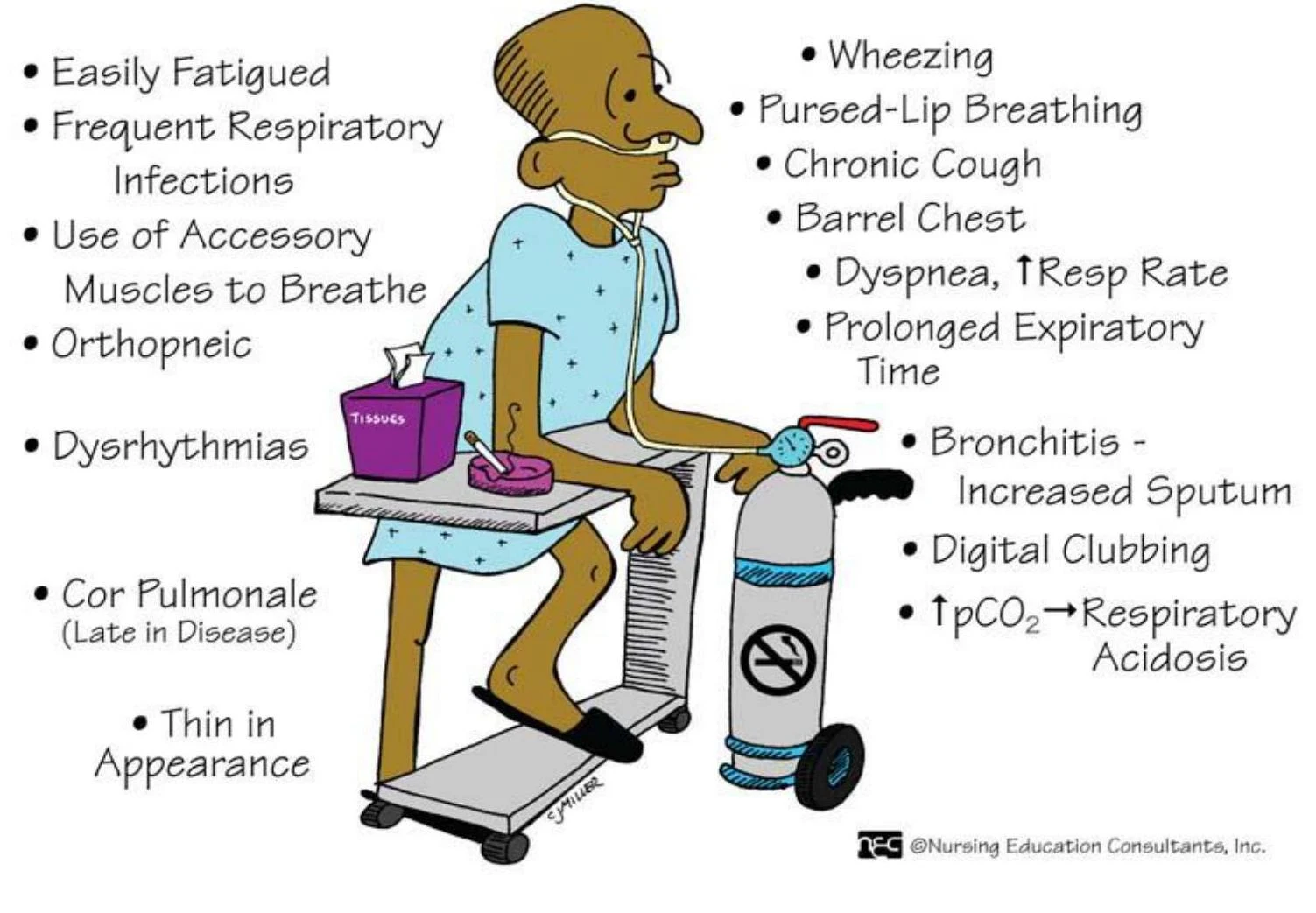
Chronic Obstructive Pulmonary Disease (COPD) is a progressive respiratory condition characterized by chronic airflow limitation. It primarily encompasses two distinct but often overlapping pathologies: chronic bronchitis (an airway issue involving inflammation and mucus) and emphysema (an alveolar issue involving loss of elasticity and air trapping). For healthcare providers, managing COPD requires a deep understanding of how these structural changes impact gas exchange, leading to critical shifts in oxygenation and acid-base balance.
Assessing Gas Exchange: ABGs and Oxygenation
To evaluate how effectively a patient is exchanging gases, clinicians rely on Arterial Blood Gases (ABGs). ABGs provide a direct measurement of the patient's respiratory status by analyzing several key components:
- Partial Pressure of Arterial Oxygen (): This measures the pressure of oxygen dissolved in the arterial blood. A normal range is typically 80–100 mmHg. In COPD, patients often experience hypoxia (low oxygen levels in the tissues) or hypoxemia (low oxygen in the blood).
- Partial Pressure of Arterial Carbon Dioxide (): This measures the pressure of carbon dioxide in the blood, reflecting alveolar ventilation. The normal range is 35–45 mmHg.
- Bicarbonate (): This reflects the metabolic component and how the kidneys compensate for respiratory imbalances. The normal range is 22–26 mEq/L.
Clinicians also use (pulse oximetry) as a non-invasive way to monitor oxygen saturation, though it does not provide the full picture offered by an ABG.
Clinical Note: In COPD, the "air trapping" caused by emphysema leads to a prolonged expiratory phase and can result in elevated levels.
Acid-Base Imbalance and the ROME Mnemonic
When a patient with COPD cannot effectively exhale carbon dioxide, they enter a state of hypoventilation. This leads to respiratory acidosis, a condition where the blood pH drops due to the accumulation of .
Keep reading for free.
Create an account to finish this reading and make it part of your study routine.
Continue reading freeAlready have an account? Log in
Updated