


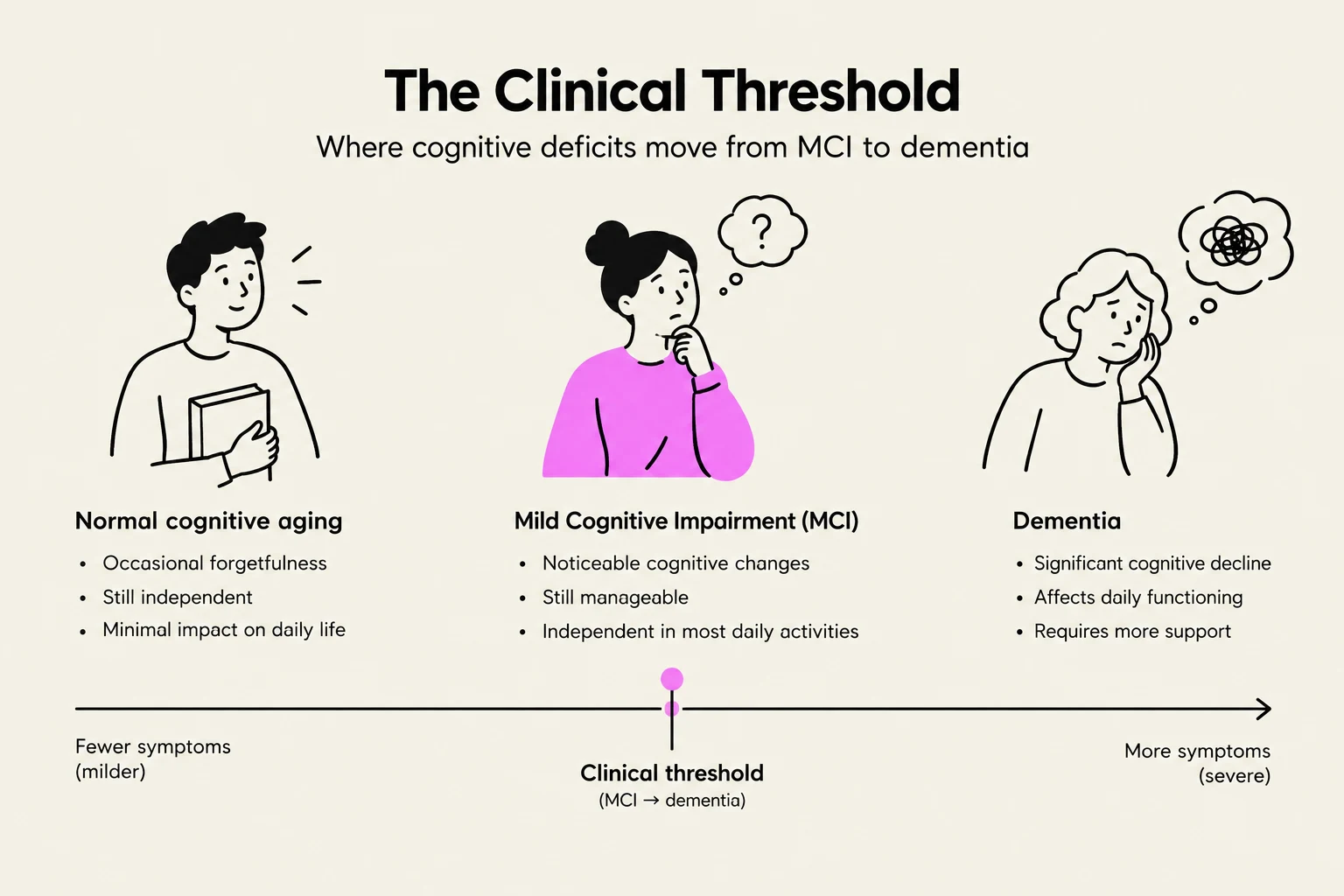
As we age, many people experience subtle changes in memory or processing speed. However, a common clinical challenge is determining whether these changes are a natural part of the aging process, a transitional stage known as Mild Cognitive Impairment (MCI), or a more serious condition classified as Major Neurocognitive Disorder, commonly known as dementia. Understanding the nuances between these stages is critical for diagnosis, intervention, and providing appropriate care.
Normal Aging vs. Cognitive Decline
It is essential to start by distinguishing between "normal" age-related changes and pathological decline. As the brain ages, certain physiological changes occur, such as a slight decrease in the volume of specific brain regions or a slowing of neural transmission speeds.
In normal aging, an individual might experience "tip-of-the-tongue" moments, occasionally forgetting where they placed their keys, or taking slightly longer to learn a new technological skill. Crucially, these lapses do not prevent the person from performing their daily activities, managing their finances, or living independently. The person remains aware of these lapses and can often use compensatory strategies (like writing things down) to manage them.
Exam Tip: When distinguishing normal aging from pathology, always look at functional independence. If the person can still perform Activities of Daily Living (ADLs) without significant struggle, it is likely not dementia.
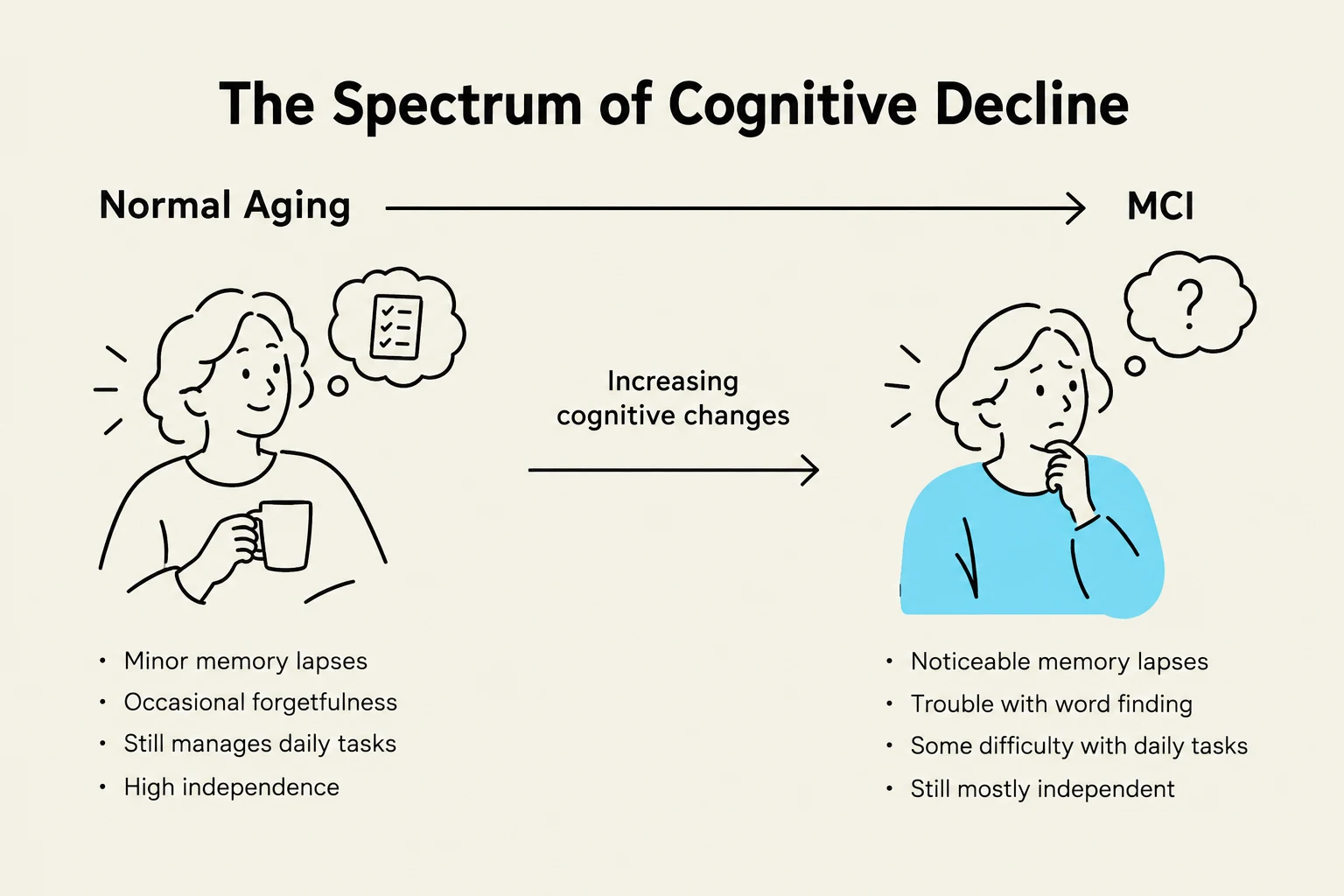
Mild Cognitive Impairment (MCI): The Gray Area
Mild Cognitive Impairment (MCI) represents a transitional state between the cognitive abilities of normal aging and those of dementia. Individuals with MCI exhibit cognitive decline that is greater than what is expected for their age and education level, but the decline is not severe enough to interfere significantly with their daily independence.
Keep reading for free.
Create an account to finish this reading and make it part of your study routine.
Continue reading freeAlready have an account? Log in
Updated