


In the United States, the pursuit of fairness is a continuous struggle between the nation's high ideals and its complex reality. While the country is dedicated to the proposition that all men are created equal, the legal mechanisms required to ensure this equality are nuanced and constantly evolving. To understand how the law protects citizens, one must distinguish between the rights that protect individual freedoms and the rights that ensure group equality.
Civil Liberties vs. Civil Rights
A common point of confusion in political science is the distinction between civil liberties and civil rights (also known as equal rights).
- Civil liberties are specific individual rights that protect citizens from government interference (such as freedom of speech).
- Civil rights refer to the right of every person to receive equal protection under the law and to ensure equal access to society's opportunities and public facilities.
While liberties focus on what the government cannot do to you, civil rights focus on the equal treatment of members of different groups.
Study Tip: Think of civil liberties as a "shield" protecting your personal space from the state, and civil rights as a "leveler" ensuring everyone has the same access to the playing field.
The Constitutional Foundation: The Fourteenth Amendment
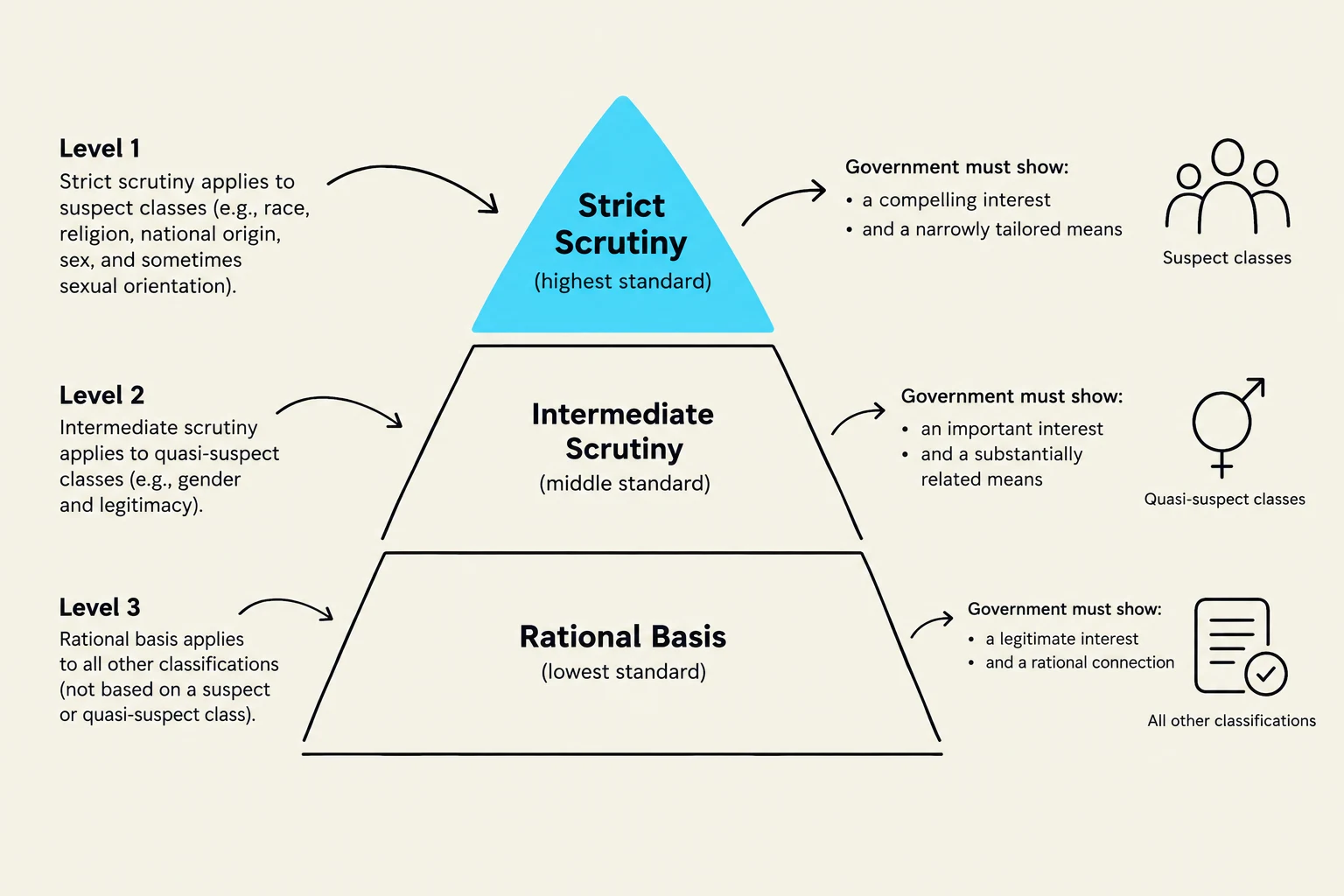
The primary legal engine for civil rights is the Fourteenth Amendment. Specifically, the equal-protection clause forbids states from denying any person equal protection under the law.
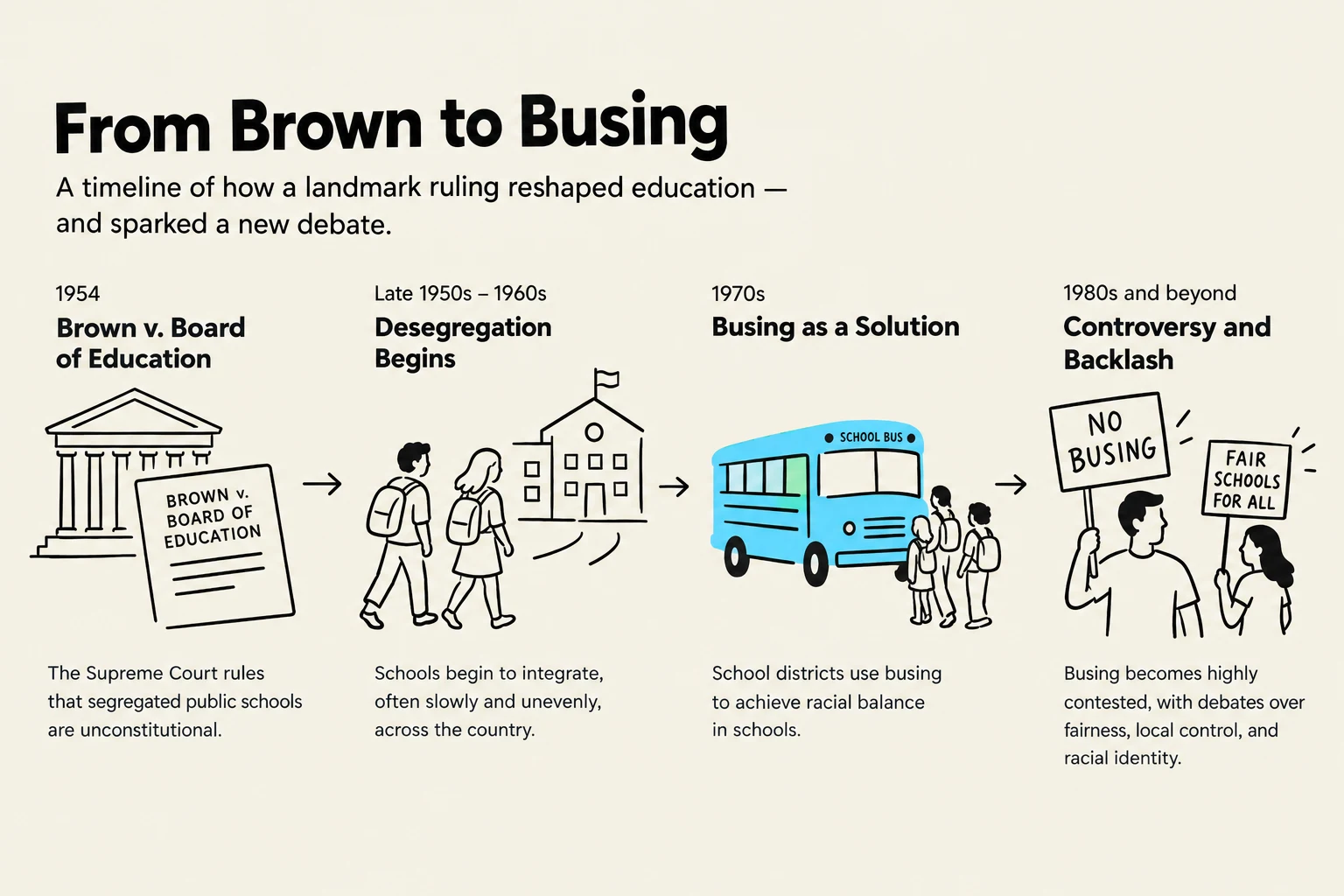
One of the most significant applications of this clause was the landmark Supreme Court case Brown v. Board of Education of Topeka (1954), which ruled that forced segregation in public schools was unconstitutional. However, the path from legal victory to social reality is often long. Despite the Brown decision, little change in segregation was observed 15 years later. Later, the Court encouraged busing as a solution to integrate schools, but this remained highly controversial. Today, due to the end of racial busing and the phenomenon of "white flight" to the suburbs, many schools remain racially segregated.

Keep reading for free.
Create an account to finish this reading and make it part of your study routine.
Continue reading freeAlready have an account? Log in
Updated