


In Canada, the concept of healthcare is deeply intertwined with the idea of social equity. Rather than a single, centralized system, Canadian healthcare is a complex network of national, provincial, and territorial programs designed to protect the well-being of its citizens. At the heart of this system is Medicare, a foundational element of the Canadian social safety net.
The Social Safety Net and Medicare
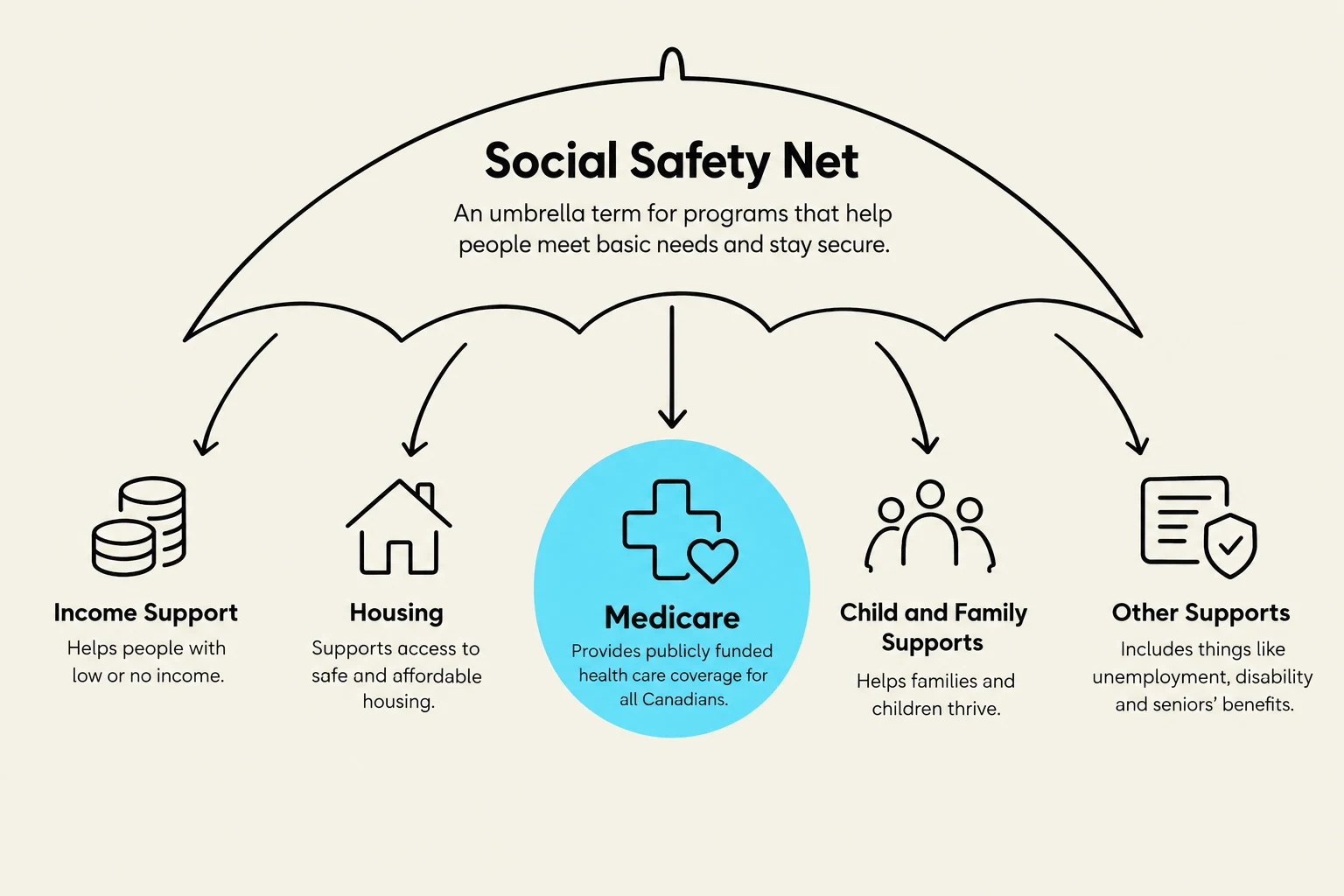
To understand Medicare, one must first understand the "social safety net." This refers to the collective network of national, provincial, and territorial social programs established to protect the most vulnerable members of Canadian society.
Medicare serves as a primary pillar of this net. While it is often discussed as a "national" program, it is technically a system of prepaid access to medically necessary hospital and physician services. Instead of paying a bill at the doctor's office, the system is funded through general taxation, ensuring that services are available to all citizens and permanent residents based on need rather than the ability to pay.
Concept Check: Remember that Medicare is not a single "plan" like private insurance, but a system of prepaid access funded by the public through taxes.
The Canada Health Act
The delivery of healthcare in Canada is not arbitrary; it is governed by the Canada Health Act. This Act is foundational to how health services are delivered across the country. Its primary objective is to "protect, promote and restore the physical and mental well-being of residents of Canada and to facilitate reasonable access to health services without financial or other barriers".


Keep reading for free.
Create an account to finish this reading and make it part of your study routine.
Continue reading freeAlready have an account? Log in
Updated