Understanding California Barbering and Cosmetology Act Regulations
This document outlines the administration, powers, and duties of the State Board of Barbering and Cosmetology regarding licensing, inspections, and public protection. It details board structure, core functions, safety and compliance measures, and recordkeeping.
The California Barbering and Cosmetology Act, codified in Chapter 10 of Division 3 of the California Business and Professions Code, establishes a comprehensive regulatory framework for professionals in the barbering, cosmetology, esthetics, electrology, and manicurist fields. At its core, the Act is driven by a singular, paramount objective: the protection of the public. This principle guides all licensing, regulatory, and disciplinary actions undertaken by the State Board of Barbering and Cosmetology.
The State Board of Barbering and Cosmetology: Administration and Structure
The State Board of Barbering and Cosmetology is the administrative body responsible for overseeing the licensed professions. The Board comprises 13 members, a mix of public and professional representatives. This diverse composition ensures that a broad range of perspectives informs the Board's decisions.
Board Member Appointment and Terms
The appointment process for Board members is designed to bring both public interest and professional expertise to the table.
Governor's Appointments: The Governor appoints five public members and all six professional members. These professional members represent specific licensed professions: one cosmetologist, one barber, one esthetician, one electrologist, one manicurist, and one establishment owner.
Legislative Appointments: The Senate Committee on Rules and the Speaker of the Assembly each appoint one public member, adding further legislative oversight.
Members serve four-year terms, with a strict limit of two consecutive terms to encourage fresh perspectives and prevent entrenchment.
Executive Officer Duties
To manage the day-to-day operations and enforce the Act, the Board may appoint an Executive Officer. This individual is exempt from civil service and is responsible for exercising the powers and performing the duties delegated by the Board. A key responsibility of the Executive Officer is to ensure the provision of necessary personnel, including examiners and inspectors, to carry out the provisions of the Act.
Core Functions and Powers of the Board
The Board's authority extends across several critical areas, all aimed at upholding public safety and professional standards.
Protection of the Public: The Paramount Priority
It cannot be overstated that the protection of the public is the highest priority for the Board. This guiding principle means that whenever the protection of the public is in conflict with other interests, public protection will always take precedence.
Licensing and Examination Administration
A fundamental duty of the Board is to administer a fair and effective licensing system. This includes:
Conducting and administering examinations for licensure.
Issuing licenses to qualified individuals.
Ensuring that examinations adequately assess competency in protecting consumer health and safety. Examinations include written tests on antisepsis, disinfection, and the use of mechanical apparatus and electricity as applicable to the licensed practice.
Exam Tip: Applicants must acknowledge understanding of basic labor laws as provided by the Board with their application materials. This understanding is a condition of admittance to the examination facility.
Disciplinary Functions
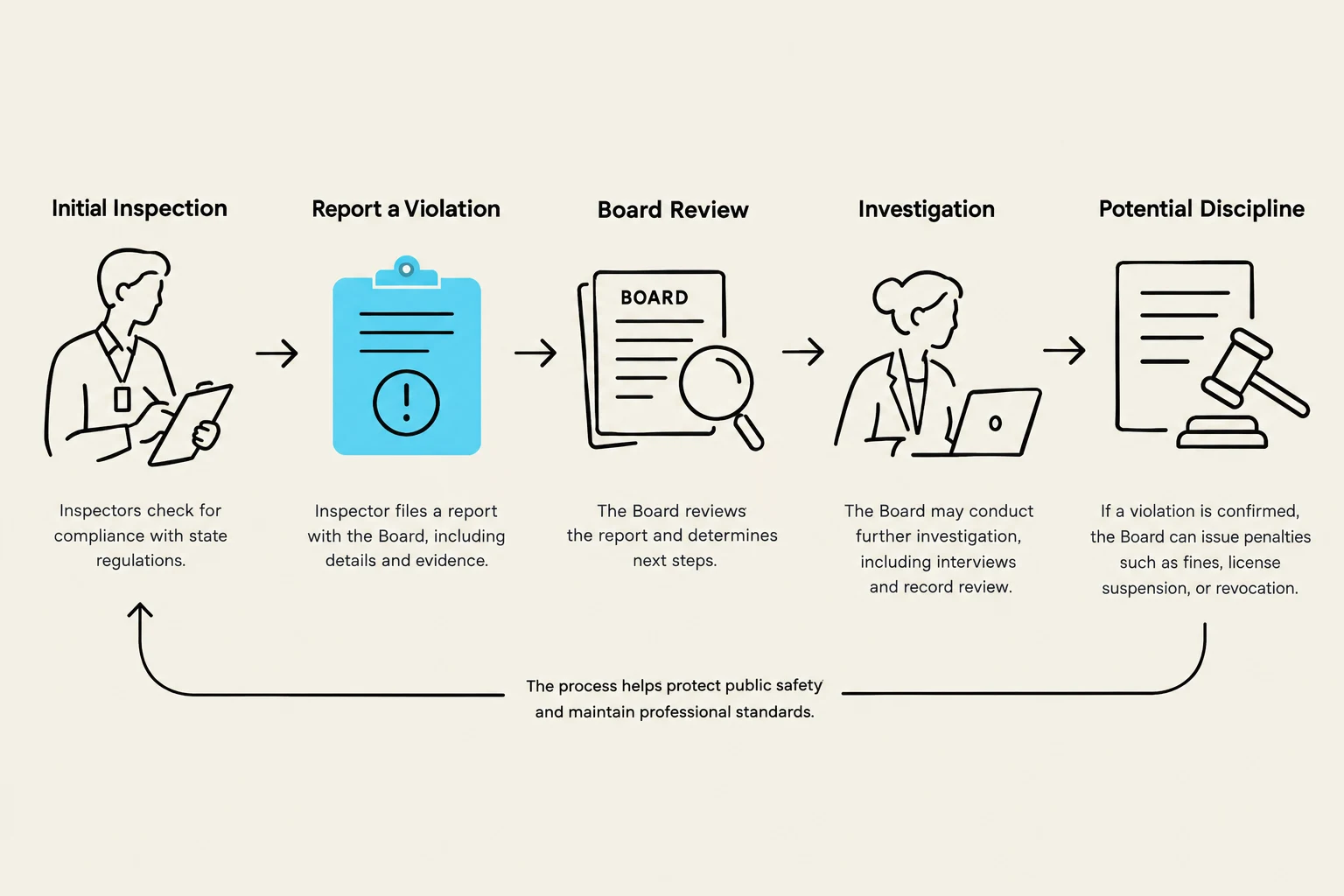
The Board has the authority to discipline individuals who violate the Act or its regulations. This ensures accountability and maintains the integrity of the licensed professions. Disciplinary actions can range from warnings to license suspension or revocation, depending on the severity of the violation.
Ensuring Safety and Compliance
A significant portion of the Board's regulatory efforts focuses on maintaining safe and sanitary conditions within licensed establishments and schools.
Sanitary Conditions and Public Health Safety
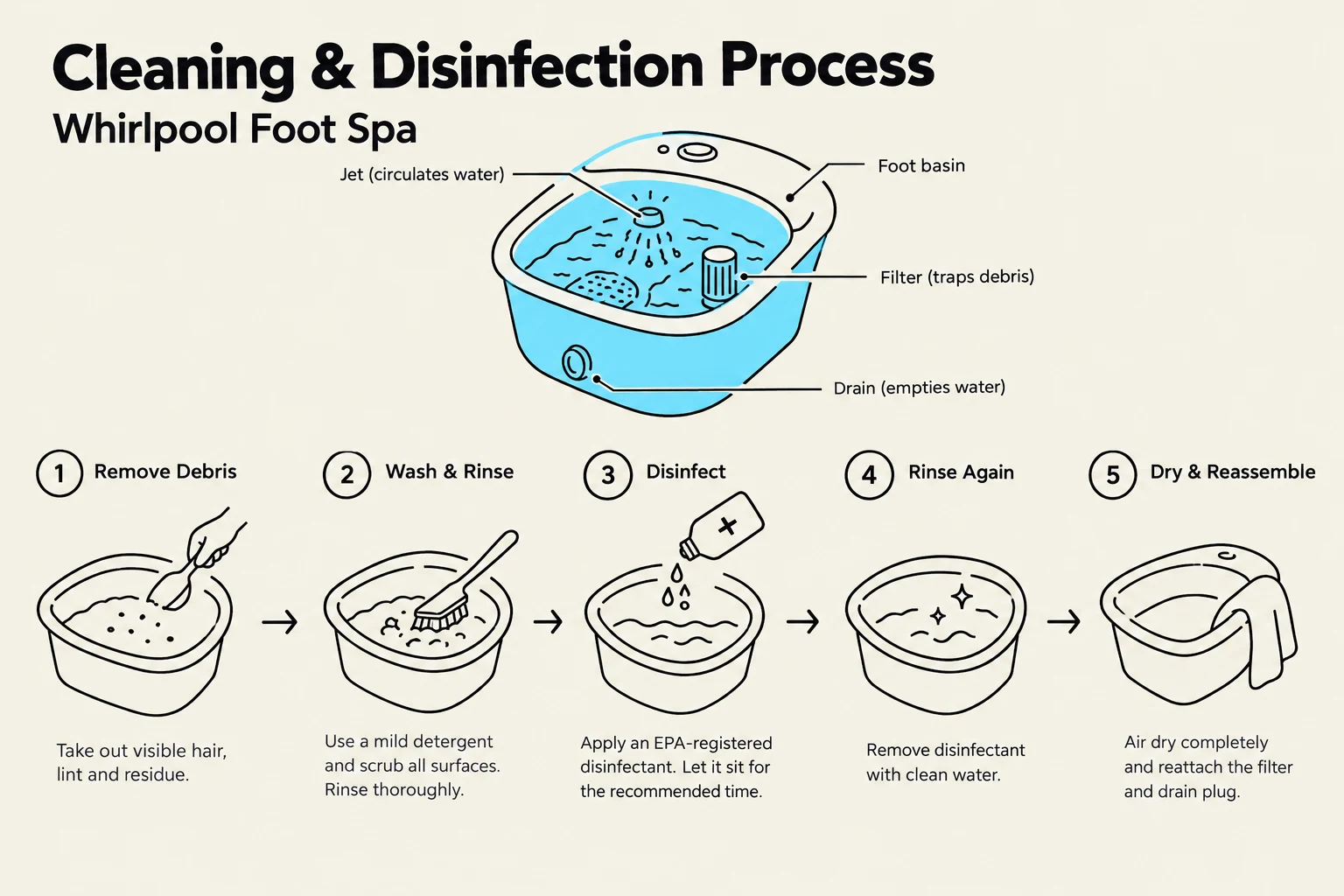
The Board is empowered to adopt rules governing sanitary conditions and precautions necessary to protect public health and safety in establishments, approved schools, and during the practice of any licensed profession. This includes detailed regulations for cleaning and disinfecting equipment, such as whirlpool foot spas, pipeless foot spas, and non-whirlpool basins.
This diagram illustrates the five-step process for cleaning and disinfecting a whirlpool foot spa: Remove Debris, Wash & Rinse, Disinfect, Rinse Again, and Dry & Reassemble.
Establishment and School Inspections
To ensure compliance, the Board's Executive Officer and authorized representatives have the right to inspect establishments, mobile units, and schools during business hours or whenever services are being performed. Inspections can be random or targeted, focusing on public health and safety.
Callout: The Board is mandated to develop and evaluate a protocol for inspections when language barriers exist between inspectors and establishment personnel.
Notices of Violation
When schools are found to be in violation of health and safety regulations, they receive a Notice of Violation. This notice clearly specifies the violated regulation and provides a timeline for correction. A copy of this notice is also provided to the Bureau for Private Postsecondary Education.
Recordkeeping and Advisory Support
The Board maintains important records and utilizes advisory committees to enhance its regulatory effectiveness.
Recordkeeping Requirements
The Board is responsible for maintaining records of its proceedings, including public meetings and committee sessions. Crucially, it keeps a registration record for each licensee, containing their name, address, license number, and date issued. This record also includes any information provided by the applicant during the licensure process. The Board also collects spoken and written language preferences from applicants and renewal applicants.
Health and Safety Advisory Committee
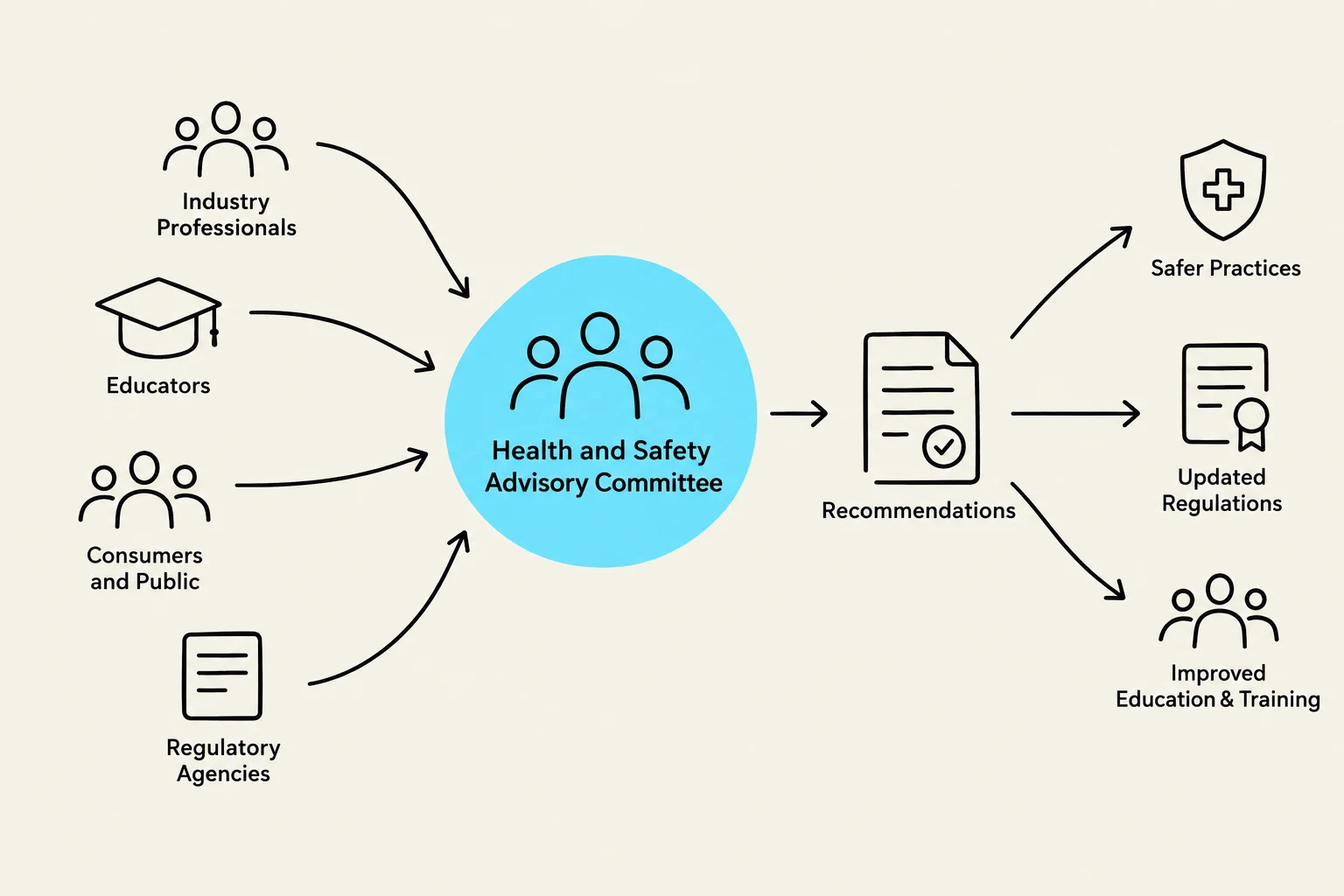
To provide expert guidance, the Board establishes a Health and Safety Advisory Committee. This committee advises the Board on health and safety issues impacting licensees. A key function of this committee is to ensure licensees are educated on vital topics like basic labor laws and the recognition of signs of physical and sexual abuse among clients.
This diagram illustrates the process by which input from industry professionals, educators, consumers, and regulatory agencies informs a Health and Safety Advisory Committee. The committee's recommendations lead to safer practices, updated regulations, and improved education and training.
Basic Labor Laws Education
The Board is committed to educating licensees about their rights and responsibilities concerning labor laws. This includes providing information on:
The distinctions between employee and independent contractor status.
Wage and hour rights for hourly employees.
Antidiscrimination and antiretaliation laws.
Resources for obtaining more information on state and federal labor laws.
Student Alert: Applicants are provided with informational materials on basic labor laws with their application. Acknowledging receipt and understanding of these materials is mandatory.
Physical and Sexual Abuse Awareness
Recognizing the vulnerability of clients and the potential role of professionals in identifying abuse, the Board promotes awareness of physical and sexual abuse. This education covers:
Domestic violence.
Sexual assault.
Human trafficking.
Elder abuse.
The Board may utilize various communication channels, including mail, television, radio, and the internet, to promote this awareness. Importantly, licensees are not required to act on information obtained about potential abuse unless otherwise mandated by law.
The California Barbering and Cosmetology Act and its associated regulations form a robust system designed to protect the public while supporting the professional development and ethical conduct of licensed individuals.
This flowchart illustrates the process of handling violations, from initial inspection to potential disciplinary actions, emphasizing public safety and professional standards.
Keep reading for free.
Create an account to finish this reading and make it part of your study routine.