This content explains the critical role of calcium in physiological stability, detailing its regulation by hormones like PTH and calcitriol. It covers the definition, pathophysiology, risk factors, clinical manifestations (including Chvostek and Trousseau signs), and management strategies for hypocalcemia.
Calcium is far more than just a structural component of bone; it is a dynamic electrolyte that serves as a cornerstone for physiological stability. In the human body, calcium plays critical roles in stabilizing cell membranes, facilitating muscle contraction and relaxation, maintaining cardiac function, and supporting the complex cascade of blood clotting. Because these functions are so vital, the body employs a sophisticated regulatory network to ensure that serum calcium levels remain within a very narrow therapeutic window.
Calcium Regulation and Normal Levels
The normal range for serum calcium is maintained between 9–11 mg/dL. To keep levels within this range, the body relies on a delicate interplay of hormones, vitamins, and chemical balances.
The primary regulators include:
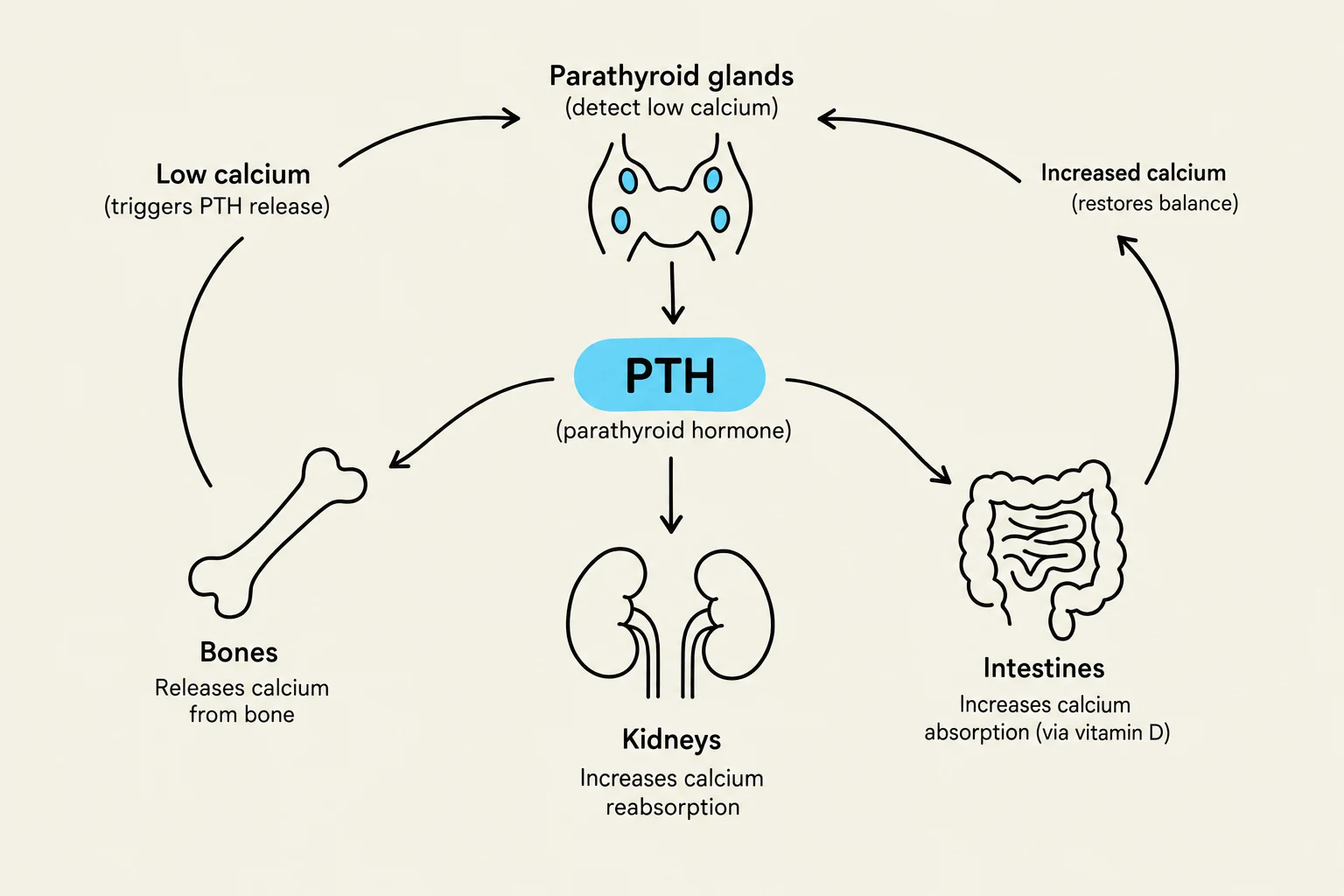
Parathyroid Hormone (PTH): The chief regulator that increases serum calcium when levels drop.
Calcitriol (Active Vitamin D): Works in conjunction with PTH to enhance intestinal absorption of calcium.
Calcitonin: Acts as an antagonist to PTH, helping to lower calcium levels by inhibiting bone resorption.
Acid-Base Balance: Changes in pH (such as alkalosis) can influence how calcium binds to plasma proteins, thereby affecting the amount of free, ionized calcium available in the blood.
Plasma Protein Levels: Specifically albumin, which carries calcium in the bloodstream.
Diagram illustrating the role of parathyroid hormone (PTH) in regulating calcium levels in the body. PTH is released by the parathyroid glands in response to low calcium. It acts on bones to release calcium, on kidneys to increase calcium reabsorption, and on intestines to increase calcium absorption, thereby restoring calcium balance.
Understanding Hypocalcemia
Hypocalcemia is clinically defined as a serum calcium level of less than 9 mg/dL. When the concentration of calcium in the blood falls below this threshold, the body enters a state of physiological stress that requires immediate hormonal intervention.
Pathophysiology
The pathophysiology of low calcium is characterized by increased neuromuscular excitability. In a healthy state, calcium helps stabilize nerve cell membranes; when calcium is deficient, the threshold for nerve depolarization is lowered, causing nerves to fire more easily and unpredictably. This leads to the hallmark symptoms of muscle spasms, tingling, and involuntary contractions.
Risk Factors
Several clinical and lifestyle factors can predispose a patient to hypocalcemia:
Surgical Interventions: Specifically a parathyroidectomy (removal of the parathyroid glands), which can lead to a sudden drop in PTH.
Nutritional and Lifestyle Factors: Including malnutrition, lactose intolerance, alcoholism, and inadequate Vitamin D intake or synthesis.
Medical Conditions: Such as acute pancreatitis, hypoparathyroidism, malabsorption disorders, and renal failure (which is often complicated by hyperphosphatemia).
Chemical Imbalances: Specifically alkalosis, which can decrease the ionized fraction of calcium.
Exam Tip: Always remember the "reciprocal relationship" between calcium and phosphorus. In many clinical scenarios, such as renal failure, as phosphate levels rise (hyperphosphatemia), calcium levels tend to fall (hypocalcemia).
Clinical Manifestations and Complications
Because calcium affects the nervous, muscular, and cardiovascular systems, the manifestations of hypocalcemia are widespread.
Neuromuscular Symptoms
The most striking signs are related to neuromuscular irritability:
Paresthesias: Numbness or tingling sensations, typically felt around the lips (circumoral), the tongue, fingers, and feet.
Tetany: Involuntary, painful muscle contractions and spasms.
Convulsions: In severe cases, the heightened electrical activity in the nervous system can lead to seizures.
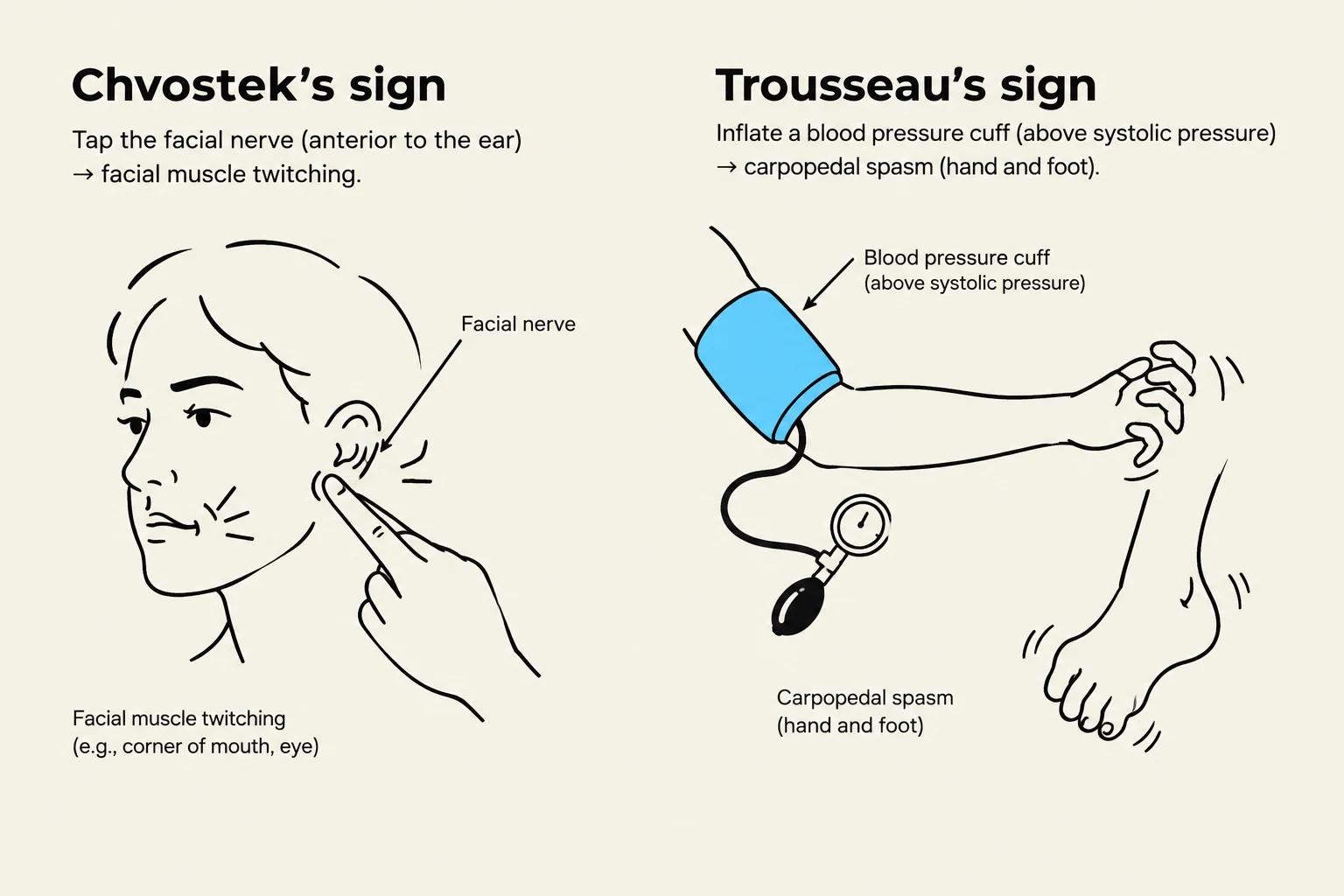
Clinicians often use two specific physical assessment signs to identify hypocalcemia:
Chvostek Sign: An involuntary twitching of the facial muscles when the facial nerve is tapped anterior to the ear.
Trousseau Sign: The precipitation of a carpal spasm (hand contraction) when a blood pressure cuff is inflated above systolic pressure on the arm.
Hypocalcemia can also be life-threatening due to its impact on vital organs:
Cardiac Effects: Patients may experience bradycardia (slow heart rate), dysrhythmias (irregular heartbeats), and hypotension (low blood pressure).
Respiratory Effects: A critical complication is laryngospasm, where the muscles of the larynx spasm, potentially obstructing the airway and causing stridor.
Medical and Nursing Management
Management strategies depend on whether the hypocalcemia is acute or chronic.
Acute Management
For patients presenting with acute, symptomatic hypocalcemia, rapid intervention is necessary to prevent cardiac arrest or airway obstruction:
Calcium Gluconate IV: This is used to raise serum calcium or stabilize the cardiac membrane.
Warning: Calcium gluconate must be administered with extreme caution. Too rapid an IV administration can cause cardiac arrest.
Chronic Management
For long-term stability, the focus shifts to dietary and oral supplementation:
Dietary Changes: Increasing intake of calcium-rich foods such as milk, cheese, yogurt, broccoli, and sardines.
Oral Supplements: Administration of calcium carbonate and Vitamin D to ensure proper absorption.
Nursing Alert: When monitoring a patient with calcium imbalances, always assess their potassium ($K^+$) and magnesium (Mg2+) levels simultaneously. Imbalances in these electrolytes often occur together and can exacerbate the clinical presentation.
Keep reading for free.
Create an account to finish this reading and make it part of your study routine.