


Understanding personality requires looking at the unique pattern of thoughts, attitudes, values, and behaviors that an individual develops to adapt to their environment. When these patterns become long-term, inflexible, and significantly different from societal expectations—causing impairment in social or occupational functioning—they are classified as personality disorders.
Personality disorders are generally grouped into three clusters: Cluster A (eccentric/odd), Cluster B (erratic/dramatic), and Cluster C (fearful/anxious). Among the most clinically challenging within the "Erratic" Cluster B is Borderline Personality Disorder (BPD).
Understanding Borderline Personality Disorder (BPD)
BPD is characterized by a pervasive pattern of instability that touches almost every aspect of a person's life, including their emotions, self-image, and relationships. Unlike some other disorders that may be more localized, BPD affects the very core of how an individual perceives themselves and others.
Key Clinical Features
Patients with BPD typically present with several hallmark symptoms:
- Affective Instability: Rapid and intense shifts in mood (e.g., moving from extreme happiness to intense irritability or anxiety).
- Identity Disturbances: An unstable sense of self, where the individual may struggle to know who they are or what they value.
- Impulsivity and Self-Harm: Engaging in risky behaviors and a high prevalence of self-injurious behaviors.
- Cognitive Dysfunction: Difficulties with problem-solving and distorted thinking patterns.
The Psychological Core: Beliefs and Dynamics
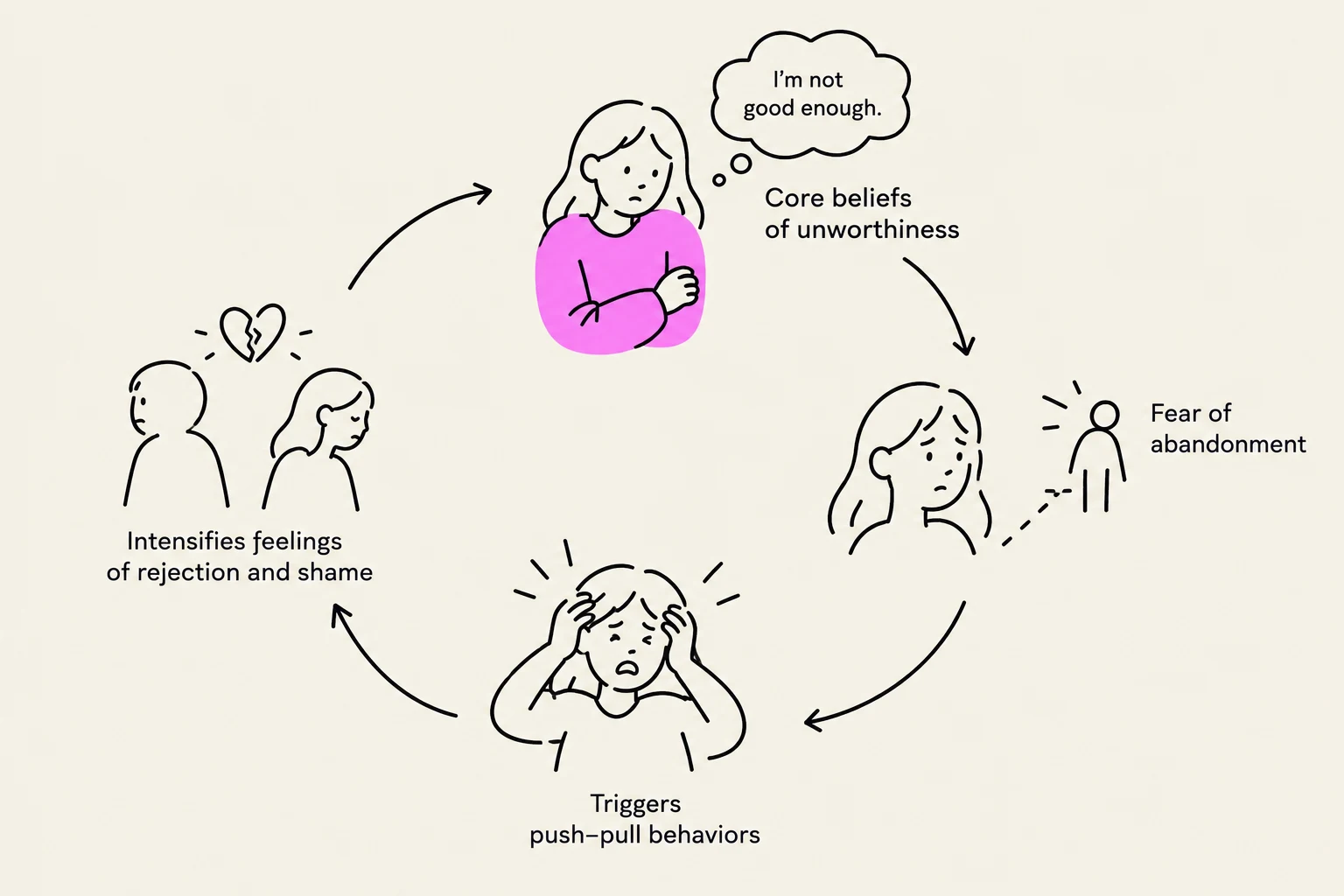
At the heart of BPD lie deep-seated negative core beliefs. A patient may fundamentally believe, "I am bad" or "I am unworthy". These beliefs often fuel an intense fear of abandonment, leading to a characteristic "push-pull" dynamic in relationships. In this cycle, the patient may oscillate between extreme idealization ("I love you") and extreme devaluation ("I hate you") as they struggle to maintain stable connections.

Keep reading for free.
Create an account to finish this reading and make it part of your study routine.
Continue reading freeAlready have an account? Log in
Updated