


The skeletal system is not only a structural framework for the body but also a dynamic tissue subject to various pathological processes. Among the most significant alterations in bone function are neoplasms—abnormal growths of tissue caused by uncontrolled cell division. Understanding the distinction between different types of bone tumors is critical for clinical diagnosis and determining the appropriate course of treatment.
Classification of Bone Neoplasms
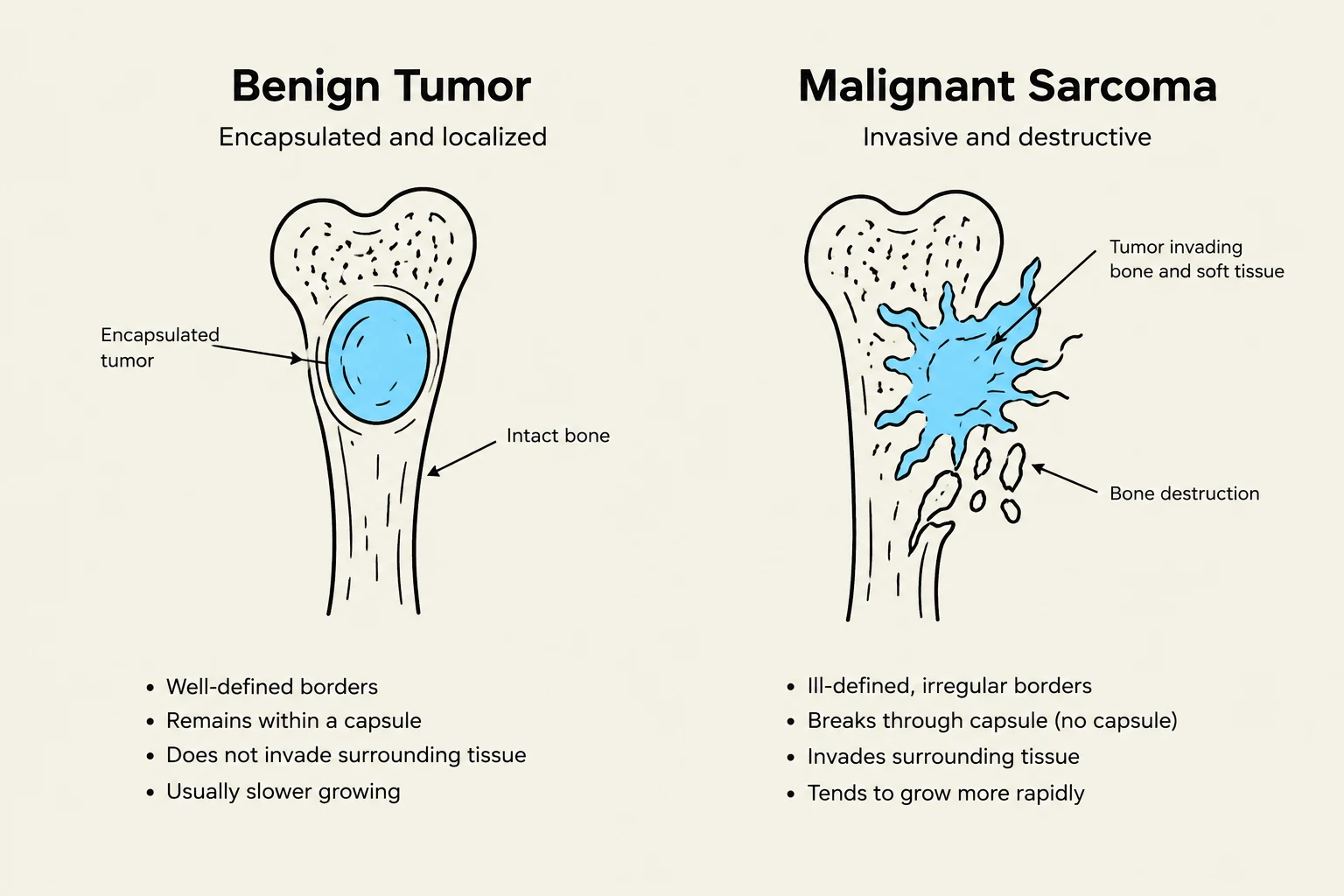
Neoplasms in the bone are broadly categorized based on their biological behavior: whether they are localized and slow-growing or invasive and life-threatening.
Benign Neoplasms
Benign neoplasms are non-cancerous growths. While they can cause issues by pressing on nearby structures, nerves, or blood vessels, they do not invade surrounding tissues or spread to distant parts of the body.
Malignant Neoplasms and Sarcomas
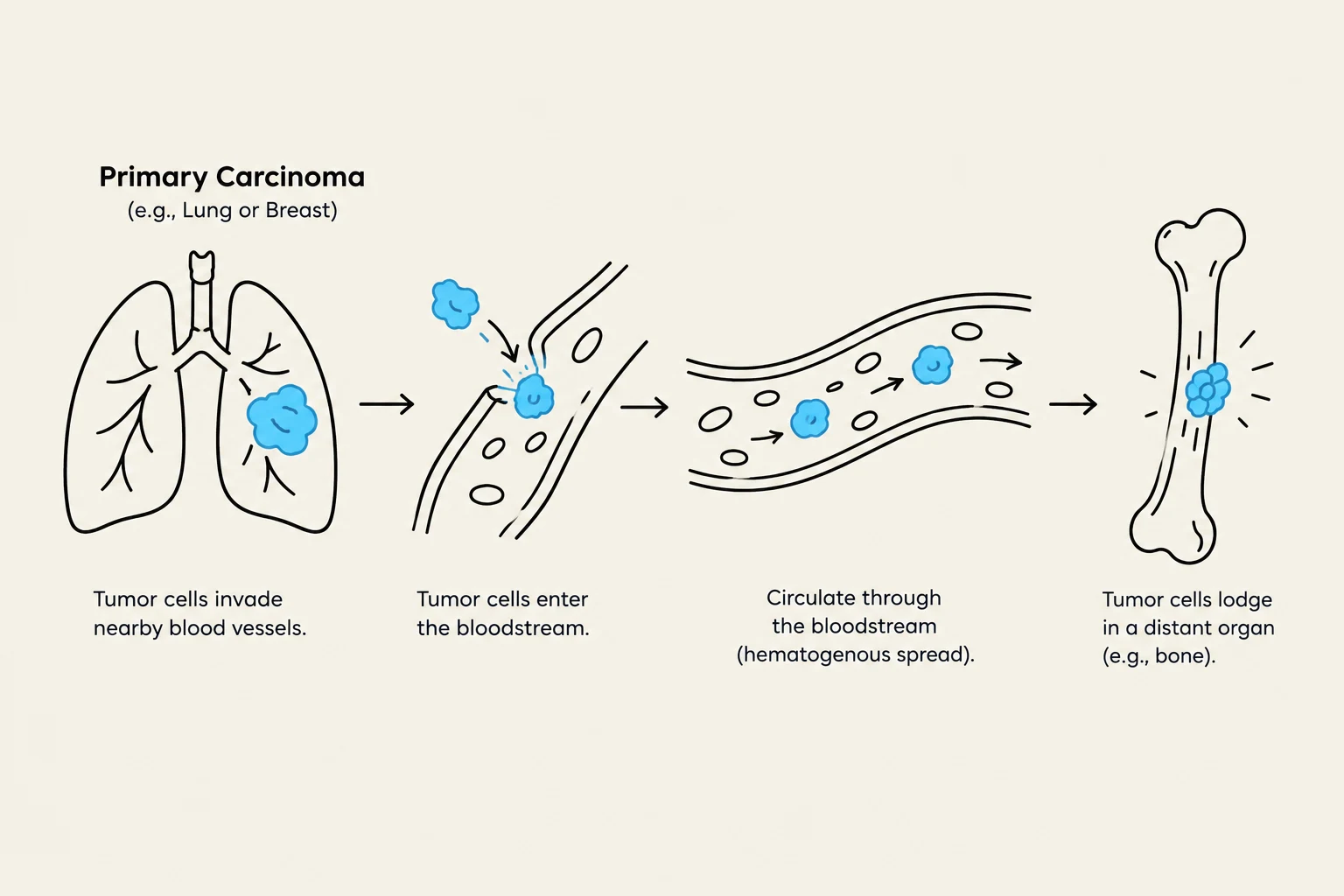
Malignant neoplasms are cancerous growths characterized by their ability to invade adjacent tissues and spread throughout the body. When a malignancy originates directly within the bone tissue itself, it is specifically referred to as a sarcoma.

Keep reading for free.
Create an account to finish this reading and make it part of your study routine.
Continue reading freeAlready have an account? Log in
Updated