


As men age, they often encounter changes in their urinary habits that can significantly impact their quality of life. One of the most common clinical conditions encountered in aging male populations is Benign Prostatic Hyperplasia (BPH). While the term "hyperplasia" sounds intimidating, it refers to a non-cancerous increase in the number of cells within the prostate gland. Understanding how this enlargement interacts with the urinary system is essential for healthcare students and patients alike to grasp the progression from mild discomfort to serious bladder complications.
The Anatomy of the Obstruction
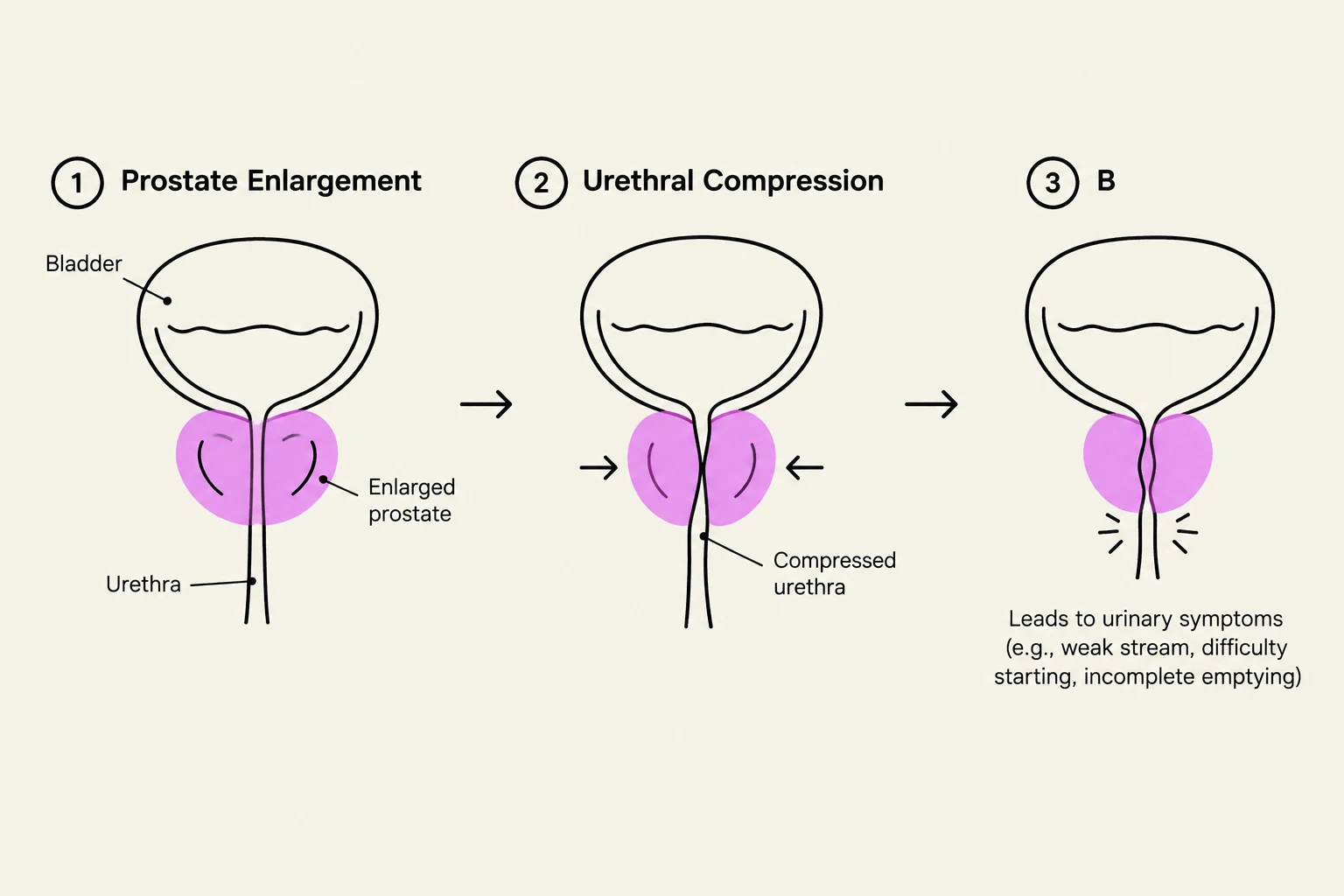
To understand BPH, one must first understand the anatomical relationship between the prostate and the urethra. The prostate is a walnut-sized gland that sits just below the bladder, completely encircling the proximal portion of the urethra.
In a healthy state, the urethra remains open, allowing urine to flow freely from the bladder to the outside of the body. However, when the prostate undergoes hyperplasia, the glandular tissue expands outward. Because the urethra is positioned directly through the center of the prostate, this expansion acts like a tightening ring around a garden hose.
This mechanical compression creates what clinicians call "bladder outlet obstruction." As the passage narrows, the resistance to urine flow increases, forcing the body to work harder to achieve the same result.
The Pathophysiology of Bladder Dysfunction
The body does not simply accept this obstruction without consequence; instead, it attempts to compensate through physiological changes. This compensation is often what leads to the most distressing symptoms.
1. Detrusor Muscle Hypertrophy
When the bladder must push urine through a narrowed urethra, the muscular wall of the bladder—known as the detrusor muscle—must contract with greater force. Much like a skeletal muscle that grows larger when lifting heavy weights, the detrusor muscle undergoes hypertrophy to overcome the resistance. While this helps maintain flow in the short term, a thickened, hyperactive bladder becomes more irritable and prone to involuntary contractions.

Keep reading for free.
Create an account to finish this reading and make it part of your study routine.
Continue reading freeAlready have an account? Log in
Updated