


Antidepressants are a diverse group of pharmacological agents used to manage mood disorders, including major depressive disorder and various anxiety disorders. While all antidepressants aim to modulate neurotransmitter levels in the brain—primarily serotonin, norepinephrine, and dopamine—they differ significantly in their mechanism of action, side effect profiles, and safety margins. For clinicians and students, understanding these differences is crucial for selecting the appropriate therapy and managing potential life-threatening complications.
Selective Serotonin Reuptake Inhibitors (SSRIs)
SSRIs are currently the first-line treatment for most depressive and anxiety disorders due to their favorable safety profile and ease of use. Their primary mechanism involves blocking the reuptake pump of serotonin () at the presynaptic neuron, thereby increasing the concentration of serotonin available in the synaptic cleft.
While SSRIs are generally well-tolerated, they are not without side effects. Common issues include gastrointestinal upset (nausea, diarrhea), sexual dysfunction, and sleep disturbances. A critical clinical consideration is their impact on anxiety; while they are used to treat anxiety disorders, some patients may experience a transient increase in anxiety or agitation during the initial stages of treatment.
Clinical Tip: When starting an SSRI, monitor patients closely during the first two weeks. While they are safer in overdose than older classes, the risk of suicidal ideation in younger populations must always be assessed.

Tricyclic Antidepressants (TCAs)
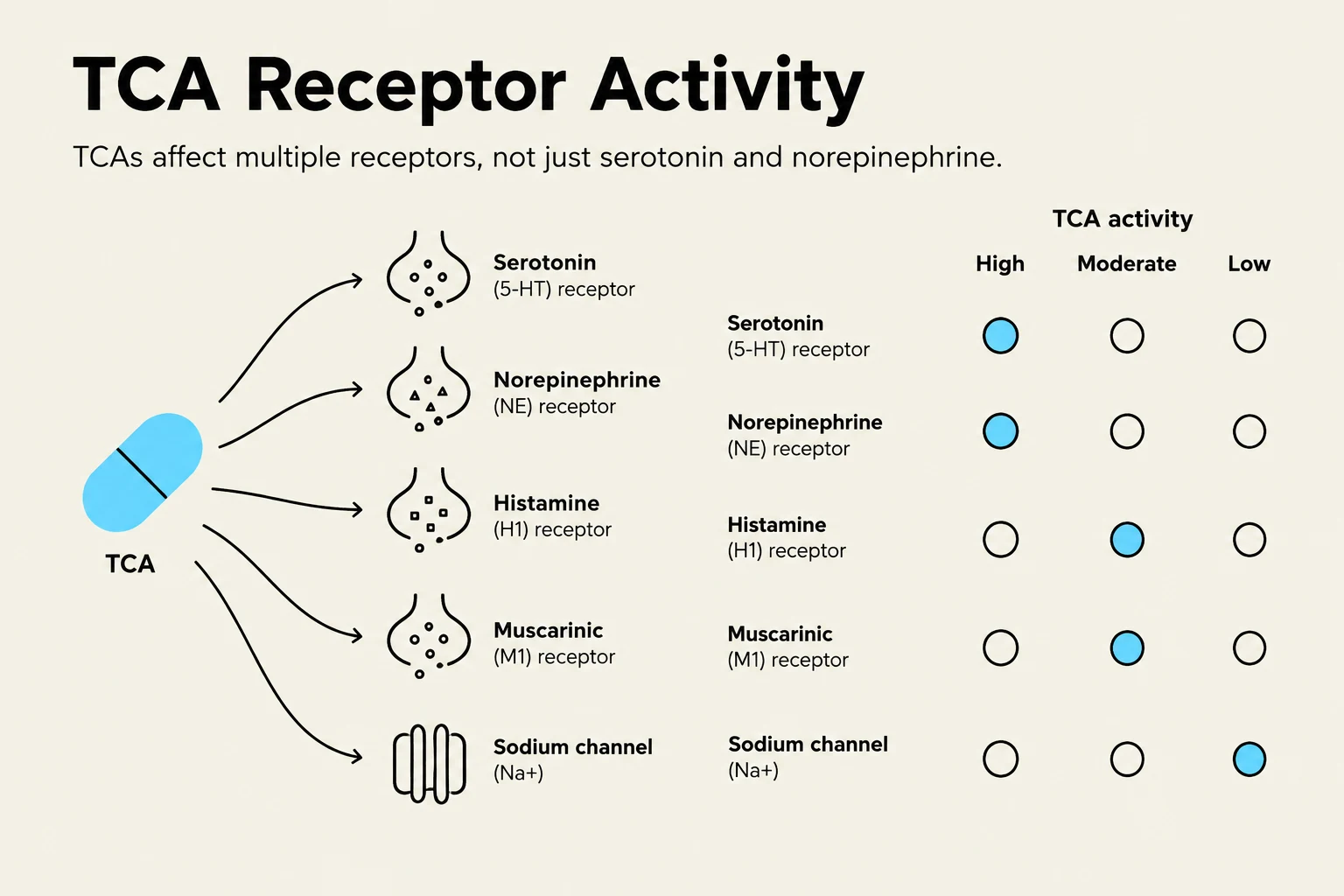
Before the advent of SSRIs, TCAs were the standard of care. They work by inhibiting the reuptake of both serotonin and norepinephrine. However, their lack of selectivity is their greatest clinical weakness. TCAs also interact with various other receptors, including histamine (), muscarinic (acetylcholine), and alpha-adrenergic receptors.
Keep reading for free.
Create an account to finish this reading and make it part of your study routine.
Continue reading freeAlready have an account? Log in
Updated