Understanding Anti-Infective Agents: Mechanisms and Nursing Considerations
A comprehensive guide to anti-infective pharmacology, detailing mechanisms of action for bactericidal and bacteriostatic agents, critical nursing alerts, and patient monitoring for common drug classes like penicillins, cephalosporins, aminoglycosides, and fluoroquinolones.
Mastering anti-infective pharmacology requires more than just memorizing drug names; you must understand the mechanism of action, the specific way a drug kills or inhibits a pathogen, and the critical safety monitoring required to protect the patient. In pharmacology, we distinguish between bactericidal agents (which kill bacteria outright) and bacteriostatic agents (which inhibit growth, allowing the host's immune system to finish the job).
This illustration depicts the difference between bactericidal and bacteriostatic mechanisms of action. Bactericidal agents kill bacteria by destroying their cell walls, while bacteriostatic agents inhibit bacterial growth, often by preventing replication or by attracting immune cells like macrophages to consume them.
This guide categorizes key agents by their mechanism of action to help you organize your study for Exam 4.
Cell Wall Synthesis Inhibitors (Bactericidal)
These agents target the structural integrity of the bacterial cell wall. If the wall is compromised, the bacteria undergo lysis and die.
Glycopeptides
Vancomycin is a "big one" for serious Gram-positive infections, most notably MRSA. While it is administered intravenously for systemic infections, it is given orally (PO) specifically to treat Clostridioides difficile (C. diff) because it is not absorbed from the gut.
Nursing Alert: Red Man Syndrome: If Vancomycin is infused too rapidly, patients may experience "red man syndrome," characterized by flushing and hypotension of the face, neck, and chest. To prevent this, ensure the drug is infused over at least 60 minutes.
Toxicity: Monitor closely for nephrotoxicity (kidney damage) and ototoxicity (hearing loss/tinnitus).
Monitoring: Always draw a trough level (the lowest concentration in the blood) right before the next dose—usually before the 4th dose—to ensure therapeutic levels (commonly 10–20 mcg/mL).
Penicillins and Cephalosporins
Both classes are beta-lactam antibiotics that break down the bacterial cell wall.
Penicillins (e.g., Amoxicillin, Penicillin G): Used for Strep, syphilis, and H. pylori. The most critical adverse effect is anaphylaxis (wheezing, hives, hypotension). Always assess for allergies before administration and keep epinephrine ready. Note that penicillins can lower the effectiveness of oral contraceptives.
Cephalosporins (e.g., Cefazolin, Cefaclor): Cefazolin is frequently used for surgical prophylaxis (given within 60 minutes before an incision).
Cross-allergy: There is a risk of cross-sensitivity in patients with a history of penicillin anaphylaxis.
Alcohol Interaction: Some cephalosporins can cause a disulfiram-like reaction if consumed with alcohol.
Protein Synthesis Inhibitors
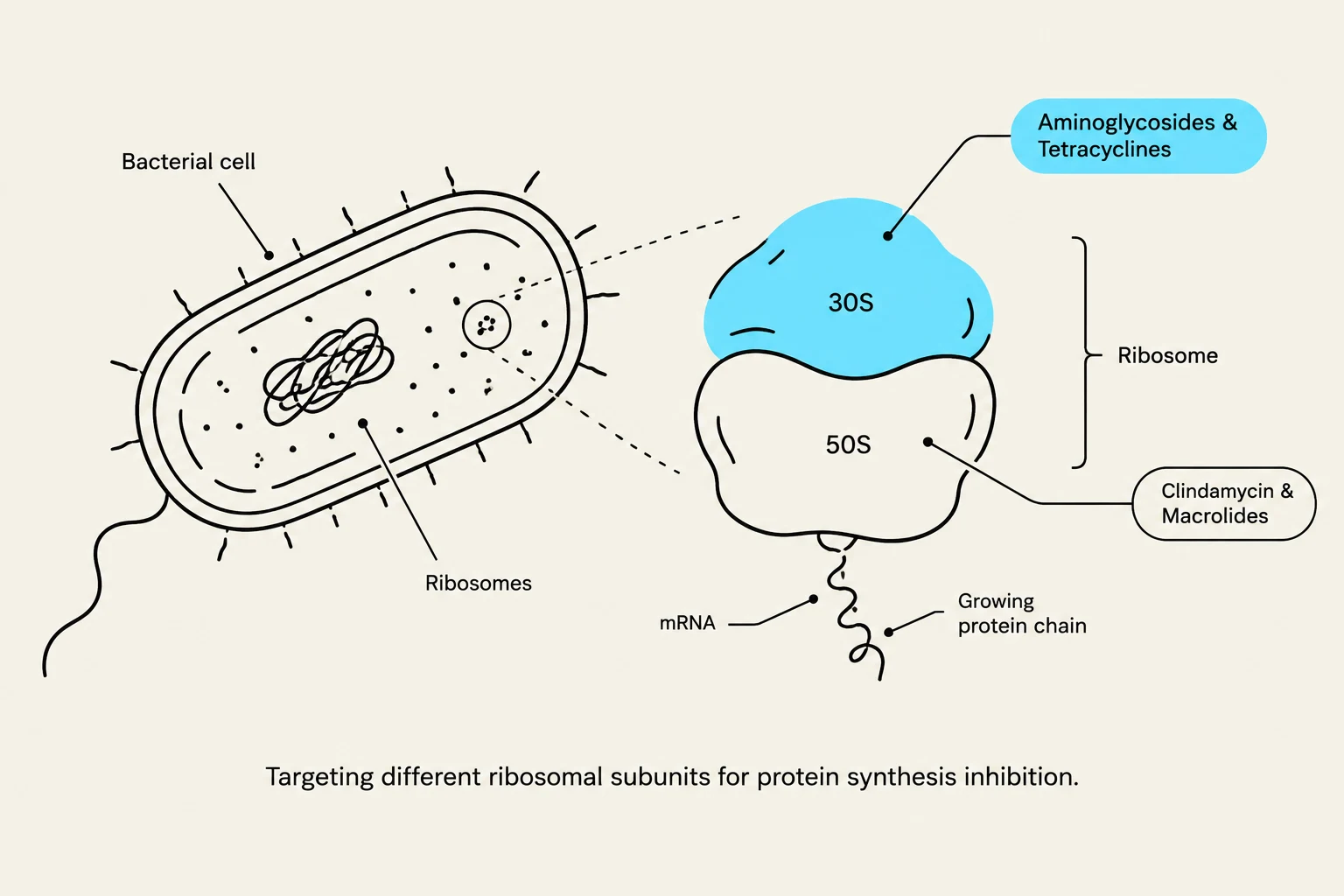
This diagram illustrates how different antibiotics target specific ribosomal subunits (30S and 50S) in bacterial cells to inhibit protein synthesis.
These drugs target the bacterial ribosome to prevent the production of essential proteins. They can be either bacteriostatic or bactericidal depending on the specific drug and organism.
Aminoglycosides
Gentamicin targets Gram-negative bacteria by binding to the 30S ribosome. This class is highly toxic and requires strict monitoring.
Peak and Trough Levels: You must monitor both peak and trough levels to prevent toxicity.
Toxicity: High risk for nephrotoxicity (monitor BUN/Creatinine and urine output) and ototoxicity (monitor for tinnitus, vertigo, or hearing loss).
Nursing Action: Encourage the patient to drink 2–3 L of fluids per day to protect the kidneys, unless they have a fluid restriction.
Lincosamides
Clindamycin binds to the 50S ribosome. It is often used for anaerobic infections or for patients allergic to penicillin.
Black Box Warning: Clindamycin carries a Black Box Warning for C. diff/pseudomembranous colitis. If a patient reports frequent, loose, or bloody stools, notify the provider immediately. Do not give antidiarrheals, as they can trap the toxin in the gut.
Macrolides
Erythromycin is a common alternative for patients with penicillin allergies. It binds to the 50S ribosome and is generally bacteriostatic.
Adverse Effects: The most common complaints are GI upset (nausea, vomiting, cramps). It also carries a risk of QT prolongation (cardiac dysrhythmias).
Interactions: It is a CYP3A4 inhibitor, meaning it can raise levels of drugs like warfarin or digoxin.
Oxazolidinones
Linezolid is used for highly resistant Gram-positive infections like MRSA and VRE.
Bone Marrow Suppression: Long-term use can lead to low platelets or anemia; monitor CBC weekly.
Tyramine Interaction: Linezolid acts like an MAOI. Patients must avoid tyramine-rich foods (aged cheese, cured meats, red wine, soy sauce) to prevent a hypertensive crisis.
Tetracyclines
Tetracycline binds to the 30S ribosome and is bacteriostatic.
Contraindications: Avoid in children under 8 and pregnant/breastfeeding women due to the risk of permanent tooth staining and slowed bone growth.
Photosensitivity: Patients must use sunscreen and protective clothing.
Absorption: Absorption is blocked by dairy, antacids, and iron. These should be taken at least 1–2 hours apart from the medication.
DNA Synthesis Inhibitors (Bactericidal)
Fluoroquinolones
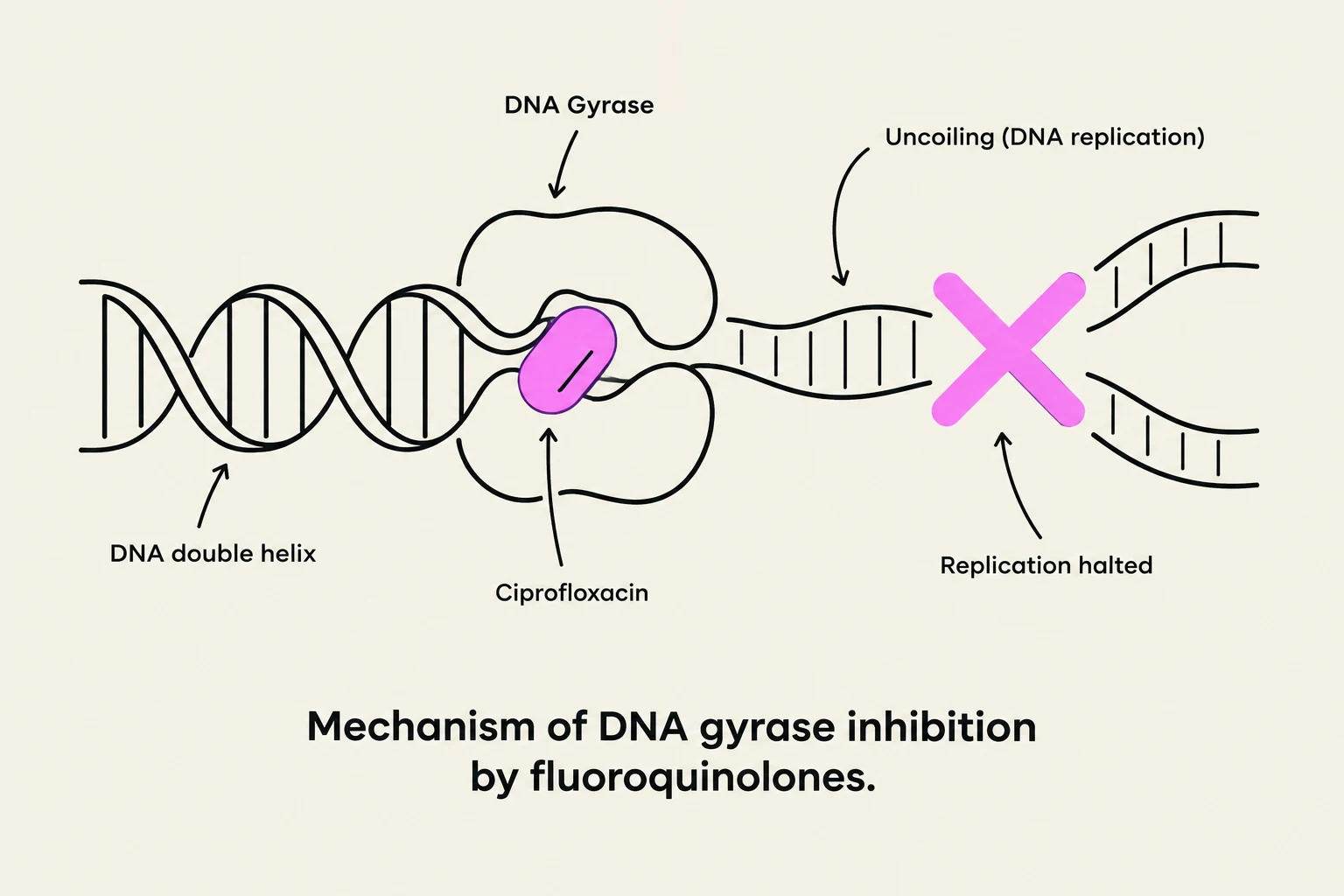
This diagram illustrates the mechanism by which fluoroquinolones inhibit DNA gyrase, a crucial enzyme for DNA replication. The drug Ciprofloxacin binds to DNA gyrase, preventing the uncoiling of the DNA double helix and thus halting replication.Ciprofloxacin works by blocking DNA gyrase, preventing bacteria from replicating their DNA.
Black Box Warning: There is a significant risk of tendon rupture (specifically the Achilles tendon). Patients should report any sudden tendon pain immediately.
Other Effects: Can cause QT prolongation, blood sugar fluctuations (important for diabetics), and photosensitivity.
Nursing Action: Encourage fluid intake to prevent crystals in the urine. Like tetracyclines, absorption is blocked by dairy and antacids.
Summary of Critical Nursing Alerts
To succeed on the exam, keep these "big picture" themes in mind:
Concern
Associated Drugs
Nursing Action
Kidney/Ear Toxicity
Vancomycin, Gentamicin
Monitor BUN/Creatinine and hearing
Superinfections
Most Antibiotics, Clindamycin
Monitor for yeast infections or C. diff
Tyramine Risk
Linezolid, Isoniazid
Avoid aged cheese, cured meats, red wine
Photosensitivity
Tetracycline, Ciprofloxacin
Use sunscreen and protective clothing
QT Prolongation
Erythromycin, Ciprofloxacin
Monitor ECG in at-risk patients
Exam Tip: If a question mentions a patient on an antibiotic developing "watery, bloody diarrhea," your first thought should be Clindamycin and C. diff.
Keep reading for free.
Create an account to finish this reading and make it part of your study routine.