Understanding Anemia: Causes, Symptoms, and Mechanisms
Anemia is a condition characterized by a decrease in the oxygen-carrying capacity of the blood, resulting from reduced hemoglobin, decreased hematocrit, or abnormal hemoglobin. This explanation covers its clinical symptoms and the three primary mechanisms of its occurrence.
In the complex system of human physiology, the blood serves as a vital transport medium, ensuring that every cell in the body receives the nutrients and oxygen required for survival. One of the most critical functions of blood is gas exchange, specifically the transport of oxygen (O2) from the lungs to the various tissues of the body. When this transport system fails, the body enters a state known as anemia.
Anemia is clinically defined as a decrease in the oxygen (O2) carrying capacity of the blood. Because the primary goal of the cardiovascular system is to deliver oxygen to tissues, any reduction in the blood's ability to carry this gas leads to a cascade of physiological symptoms and compensatory responses.
Clinical Symptoms of Anemia
Because anemia results in reduced O2 delivery to bodily tissues, patients often present with a specific set of clinical signs. These symptoms are direct reflections of the body's struggle to maintain aerobic metabolism in the face of declining oxygen levels.
Common symptoms include:
Pallor: A paleness of the skin or mucous membranes, often due to reduced red blood cell concentration or blood flow.
Fatigue and Weakness: As tissues receive less oxygen, energy production (ATP) becomes less efficient, leading to profound tiredness.
Shortness of Breath: The body attempts to increase oxygen intake by increasing the rate of respiration.
In more severe cases, the heart may attempt to compensate for the low oxygen levels by increasing its rate (tachycardia) to circulate the remaining erythrocytes more quickly. Furthermore, the body may attempt to boost production by increasing the number of reticulocytes—immature red blood cells that have just entered the bloodstream after ejecting their organelles.
Exam Tip: If a clinical case describes a patient with high reticulocyte counts alongside anemia, think of "compensatory erythropoiesis." The body is working overtime to replace lost or destroyed cells.
The Three Primary Mechanisms of Anemia
To understand why anemia occurs, we must look at the components of the blood. Anemia is categorized into three primary mechanisms: a decrease in the amount of hemoglobin, a decrease in the hematocrit, or the presence of abnormal hemoglobin.
1. Decreased Amount of Hemoglobin
Hemoglobin is the specialized protein within erythrocytes responsible for binding O2. If the total amount of hemoglobin is low, the blood's capacity to carry oxygen is diminished, even if the number of red blood cells remains normal.
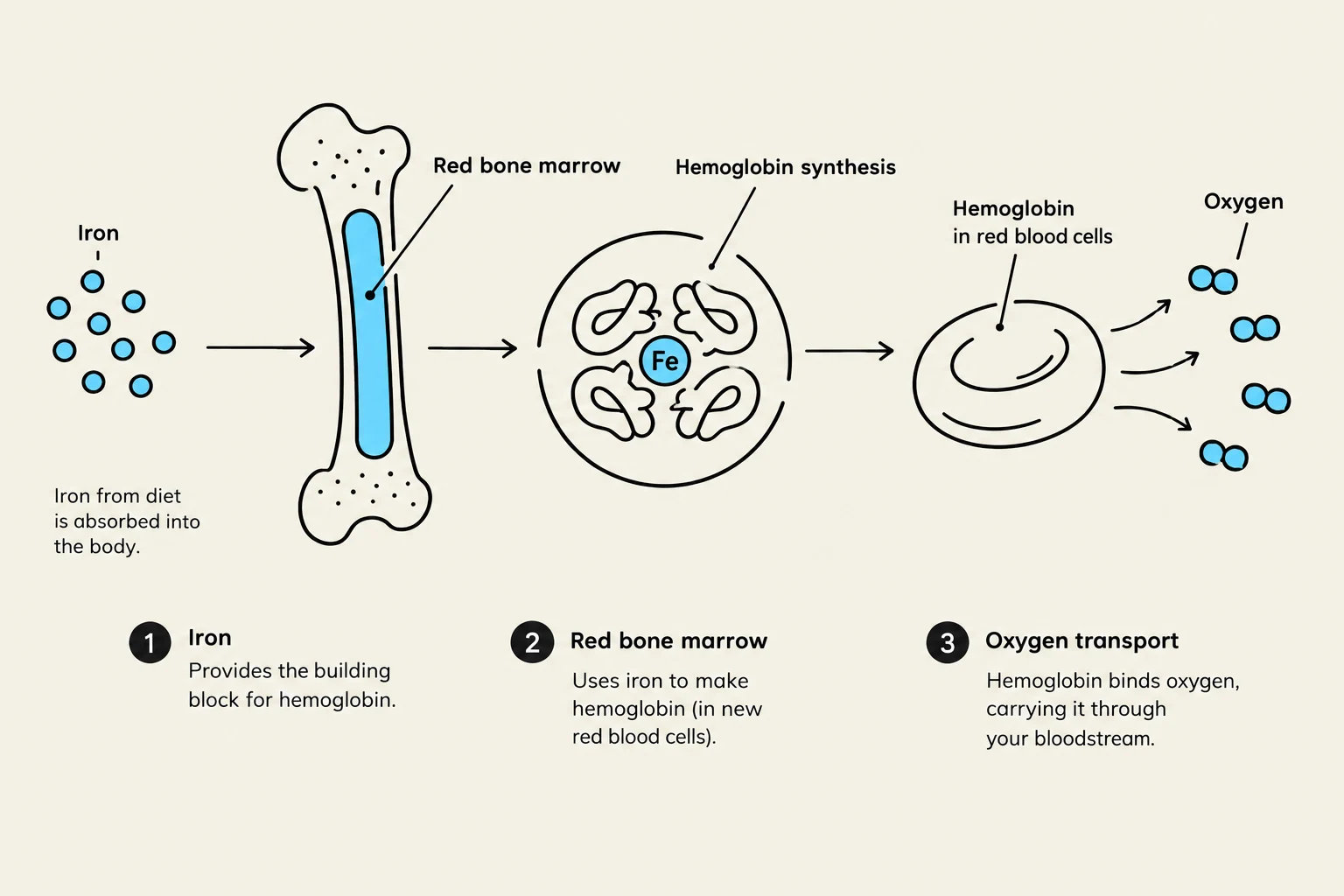
Iron Deficiency Anemia: This is the most common type of anemia. Since iron is a required component of the heme group in hemoglobin, a lack of iron prevents proper hemoglobin synthesis. This can be caused by inadequate dietary intake, reduced intestinal absorption, or slow, chronic blood loss, such as during menstruation.
Anemia of Chronic Disease: Certain underlying conditions, such as cancer, can trigger the production of chemicals that interfere with the transport of iron from the liver to the red bone marrow.
Other Factors: A decrease in hemoglobin can also be linked to Vitamin B6 deficiency, certain medications, or heavy metal poisoning (such as lead). Pregnancy can also impact hemoglobin levels.
This diagram illustrates the process of hemoglobin synthesis and oxygen transport in the body, starting with iron absorption, its use in red bone marrow to create hemoglobin, and finally, hemoglobin's role in carrying oxygen through the bloodstream.
2. Decreased Hematocrit
The hematocrit is the percentage of the total blood volume that is composed of erythrocytes. A decrease in hematocrit means there are simply fewer red blood cells available to perform gas exchange.
Blood Loss: This can be acute, occurring suddenly due to an injury, or chronic, such as from a bleeding ulcer.
Pernicious Anemia: This is caused by a Vitamin B12 deficiency. Vitamin B12 is essential for DNA synthesis; without it, the production of new cells in the red bone marrow is impaired.
Hemolytic Anemia: This occurs when there is excessive erythrocyte destruction. Causes can include bacterial infections, diseases of the immune system, liver disease, or lead poisoning.
Aplastic Anemia: This is a serious condition characterized by the inability of the red bone marrow to produce red blood cells at all. It is often caused by exposure to certain medications or ionizing radiation.
3. Abnormal Hemoglobin
In some cases, the number of cells and the amount of hemoglobin may be relatively normal, but the hemoglobin itself is structurally defective, preventing it from functioning correctly.
The most common cause of abnormal hemoglobin is Sickle Cell Disease. In this condition, the body produces an abnormal version of hemoglobin known as hemoglobin S (HbS).
When oxygen levels in the blood become low, the HbS causes the erythrocytes to change from their normal biconcave disc shape into a curved "sickle" shape. These sickled cells are problematic for two reasons:
Ischemia: The sickle-shaped cells can become stuck in small capillaries, blocking blood flow and leading to ischemia (lack of blood supply) and subsequent tissue damage.
Reduced Cell Lifespan: Sickled cells are fragile and undergo premature destruction, which lowers the total number of circulating erythrocytes and contributes to a state of anemia.
Comparison of normal and sickled erythrocytes and their respective hemoglobins, illustrating the structural differences and their functional implications.
Summary Table for Study
Mechanism
Primary Cause Examples
Key Physiological Impact
↓ Hemoglobin
Iron deficiency, Chronic disease
Reduced O2 binding capacity per cell
↓ Hematocrit
Blood loss, B12 deficiency, Aplastic anemia
Reduced total number of O2 carriers
Abnormal Hb
Sickle cell disease (HbS)
Cell shape changes, capillary blockage
Keep reading for free.
Create an account to finish this reading and make it part of your study routine.