This guide explains the pathophysiology of Type 2 Diabetes Mellitus, detailing insulin resistance, decreased insulin production, and increased hepatic glucose production. It covers various oral hypoglycemic agents, their mechanisms of action, and management of acute complications like hypoglycemia, hyperglycemia, Diabe
Type 2 Diabetes Mellitus (T2DM) is a complex metabolic disorder characterized by the body's inability to effectively utilize insulin. Unlike Type 1 Diabetes, which involves the autoimmune destruction of beta cells and an absolute insulin deficiency, Type 2 is driven by a combination of physiological factors that often allow for management through lifestyle changes and oral medications before insulin becomes a necessity. Effective management requires a deep understanding of the underlying pathophysiology to select the appropriate pharmacological intervention and provide life-saving nursing care.
Pathophysiology of Type 2 Diabetes
The progression of Type 2 Diabetes is driven by three primary mechanisms: insulin resistance, decreased insulin production, and increased hepatic glucose production.
Insulin Resistance: The body's cells (particularly muscle and fat) do not respond effectively to insulin, meaning glucose cannot easily enter the cells for energy.
Increased Hepatic Glucose Production: The liver continues to release glucose into the bloodstream even when blood sugar levels are already high.
Decreased Insulin Production: Over time, the pancreatic beta cells become exhausted and can no longer produce enough insulin to overcome the resistance.
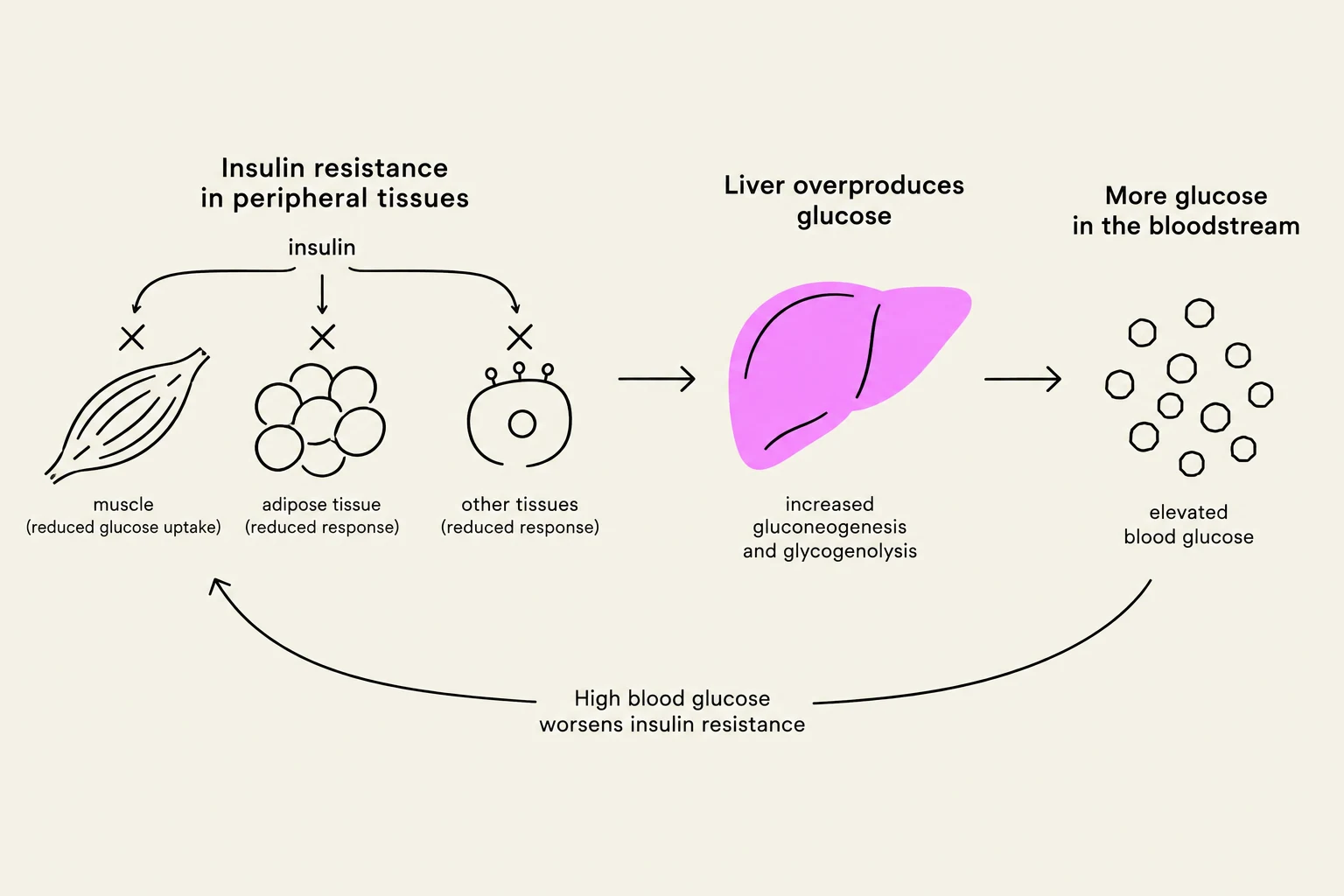
This diagram illustrates the physiological process of insulin resistance, where peripheral tissues like muscle and adipose tissue show a reduced response to insulin, leading to less glucose uptake. This, in turn, causes the liver to overproduce glucose through gluconeogenesis and glycogenolysis, resulting in elevated blood glucose levels. The high blood glucose further exacerbates insulin resistance, creating a feedback loop.
Oral Hypoglycemic Agents (OHA)
When lifestyle modifications alone are insufficient, clinicians prescribe Oral Hypoglycemic Agents. These drugs are categorized by their specific mechanism of action.
Targeting Insulin Sensitivity and Glucose Production
Biguanides: The most common example is Metformin (Glucophage). It works by decreasing hepatic glucose production and increasing insulin sensitivity.
Thiazolidinediones (TZDs): Agents like Pioglitazone (Actos) increase insulin sensitivity in muscle and fat while also decreasing glucose production in the liver.
Stimulating Insulin Secretion
Sulfonylureas: These agents, such as Glipizide and Glyburide, stimulate the pancreatic beta cells to secrete more insulin.
Meglitinides: These are short-acting agents like Repaglinide (Prandin) that promote rapid, glucose-dependent insulin secretion, making them useful for managing post-meal spikes.
DPP-4 Inhibitors: Drugs like Sitagliptin (Januvia) inhibit the DPP-4 enzyme, which in turn increases levels of GLP-1. This increases insulin secretion and decreases glucagon levels.
Managing Absorption and Excretion
Alpha-glucosidase inhibitors: Acarbose (Precose) reduces the absorption of carbohydrates in the intestines, which helps prevent significant glucose spikes after eating.
SGLT2 inhibitors: Agents such as Dapagliflozin promote the excretion of glucose through the urine by inhibiting renal glucose reabsorption.
Other Metabolic Agents
Other pharmacological options include Bile Acid Sequestrants (e.g., Colesevelam) to lower LDL cholesterol and modest blood glucose, and Dopamine-2 Agonists (e.g., Bromocriptine) to modulate hypothalamic metabolic regulation. Additionally, appetite suppressants like Ozempic (a GLP-1 analogue) can help regulate insulin secretion and promote weight loss.
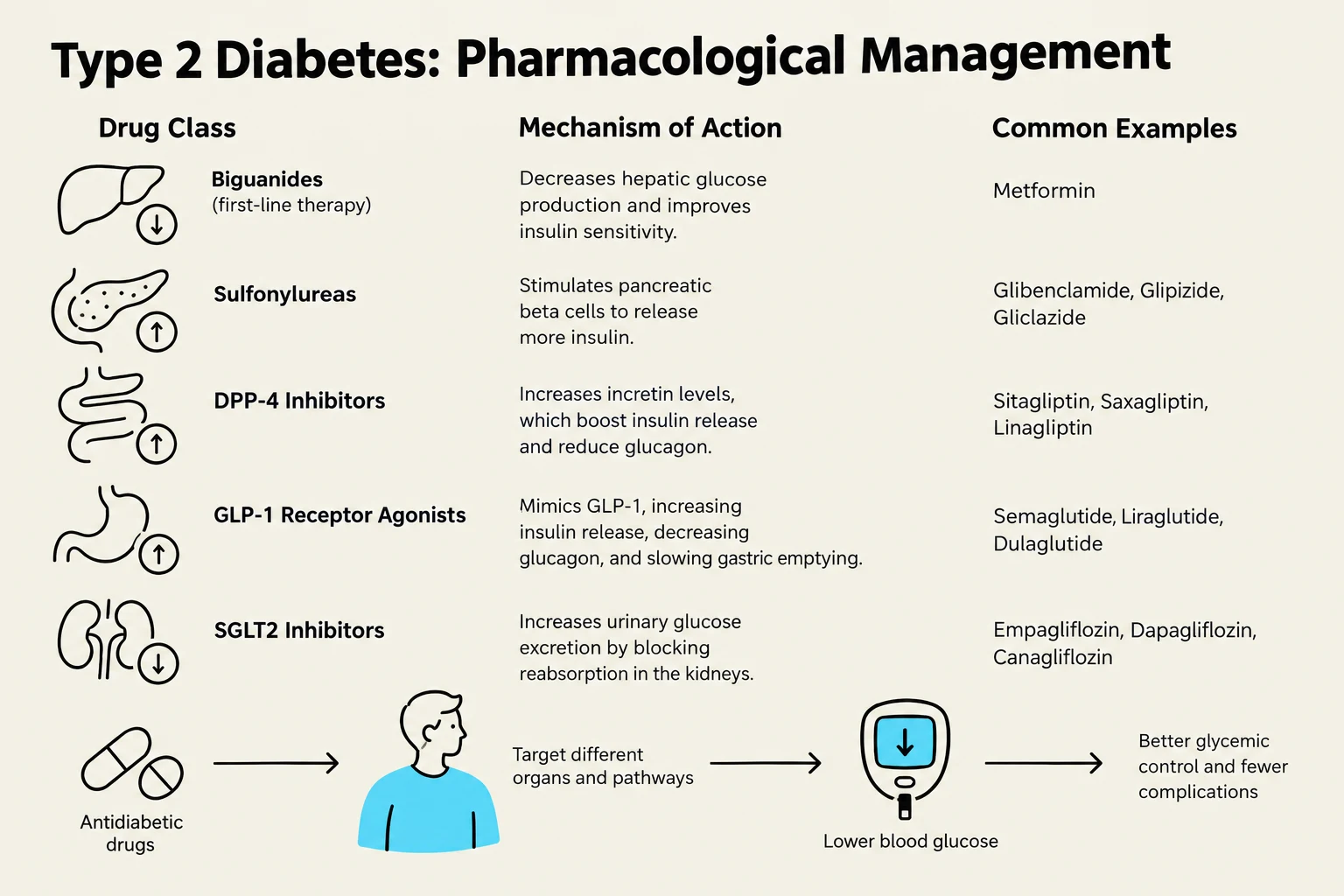
This chart outlines the pharmacological management of Type 2 Diabetes, detailing drug classes, their mechanisms of action, and common examples.
Acute Complications: Hypoglycemia vs. Hyperglycemia
Nursing management must prioritize the prevention and recognition of acute glycemic crises.
Hypoglycemia (Low Blood Sugar)
Hypoglycemia is defined as blood glucose <4.0 mmol/L. It is a dangerous condition that can result from too much insulin, insufficient food intake, or inconsistent exercise.
Treatment: For conscious patients, provide 15g of fast-acting carbohydrates (e.g., 4 glucose tablets or 125ml of apple juice). Re-test after 15 minutes. For unconscious patients, administer Glucagon (IM/SC) or IV Dextrose (D50W).
Hyperglycemia (High Blood Sugar)
Hyperglycemia is generally defined as blood glucose >7.0 mmol/L.
While both involve severe hyperglycemia, they present differently and require distinct management.
Diabetic Ketoacidosis (DKA)
DKA is more common in Type 1 Diabetes but can occur in Type 2. It is characterized by an absolute insulin deficiency that leads to the breakdown of fat for fuel, producing ketones.
Clinical Presentation: Nausea, vomiting, abdominal pain, Kussmaul respirations (deep, labored breathing to blow off CO2), and acetone-scented breath.
Diagnostics: Glucose >15 mmol/L, positive ketones in urine/serum, and metabolic acidosis (pH <7.3).
Management Priority: The "D, K, A" approach:
Dehydration: Replace fluids with Isotonic saline (0.9% NS).
Potassium (K+): Insulin will drive potassium into cells, risking profound hypokalemia. Crucial Rule: Do not start insulin if K+<3.3 mmol/L.
Acidosis/Glucose: Correct glucose gradually. Do not allow glucose to drop faster than 4 mmol/L per hour to prevent cerebral edema.
Hyperosmolar Hyperglycemic State (HHS)
HHS is a life-threatening emergency typically seen in elderly patients with Type 2 Diabetes. Unlike DKA, these patients produce enough insulin to prevent significant ketone production, but not enough to prevent extreme hyperglycemia.
Clinical Presentation: Extreme dehydration and neurological changes (somnolence, coma, seizures) due to high serum osmolality.
Diagnostics: Glucose often >34 mmol/L, high serum osmolality, and minimal/absent ketones.
Exam Tip: The Potassium Rule
In DKA management, always check the potassium level before administering insulin. If the patient's potassium is low (<3.3 mmol/L), insulin must be withheld because insulin will cause potassium to shift into the cells, potentially causing fatal cardiac arrhythmias.
Nursing Management and Patient Education
Nursing care focuses on stabilizing blood glucose and preventing injury.
Nursing Priorities
Unstable Blood Glucose: Monitor glucose levels frequently, especially when the patient is ill (e.g., fever or infection increases insulin needs).
Injury Prevention: Monitor for hypoglycemia and the resulting risk of falls or seizures.
Peripheral Neurovascular Function: Patients with long-term diabetes are at high risk for neuropathy and impaired healing.
Essential Patient Education
Foot Care: Due to the risk of neuropathy and poor circulation, patients must inspect their feet daily for sores or infections.
Dietary Management: Encourage high-fiber, lean protein, and healthy fats (MUFAs/PUFAs) while limiting saturated and trans fats.
Self-Management: Patients should be taught to use glucometers, recognize symptoms of hypoglycemia, and carry medical identification for travel.
Keep reading for free.
Create an account to finish this reading and make it part of your study routine.