This content explains myocardial infarction (heart attack), including its causes, symptoms, emergency response, medication management, and lifestyle modifications for prevention, based on the American Heart Association's Life's Simple 7s.
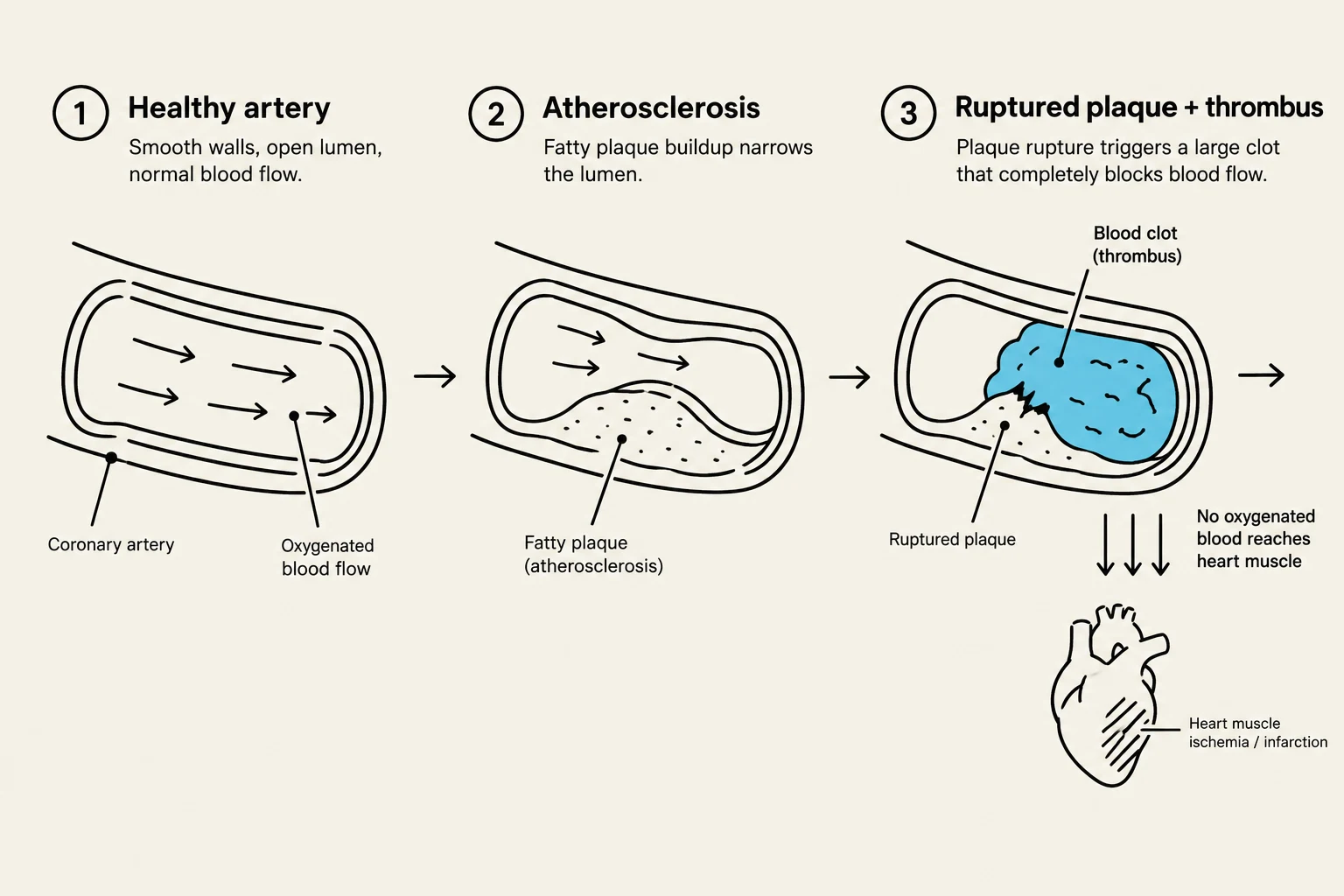
A Myocardial Infarction (MI), commonly known as a heart attack, occurs when blood flow to a part of the heart muscle is blocked, leading to tissue destruction due to a lack of oxygenated blood (hypoperfusion). This is often caused by atherosclerosis, where fatty plaques build up in the arteries and eventually rupture, forming a blood clot (thrombus) that obstructs the vessel.
Diagram illustrating the progression of atherosclerosis, from a healthy artery to a ruptured plaque causing a thrombus and blocking blood flow, leading to heart muscle ischemia or infarction.
Because cardiovascular disease is the leading cause of death for both men and women in the United States, patient education is a critical component of recovery. Effective education focuses on three pillars: recognizing emergency symptoms, adhering to complex medication regimens, and implementing long-term lifestyle changes to prevent a secondary event.
Symptom Recognition and Emergency Response
Recognizing the signs of an MI early can be the difference between life and death. While many patients experience "classic" symptoms, it is vital to understand that these can vary significantly between individuals.
Classic vs. Atypical Symptoms
Classic Symptoms: Sudden onset of substernal chest pain (angina), shortness of breath, diaphoresis (heavy sweating), nausea, vomiting, and extreme fatigue.
Atypical Symptoms: Women and geriatric patients are more likely to present with "atypical" signs. These may include indigestion, jaw, neck, or upper back pain, and generalized weakness.
The "Silent" MI: Patients with diabetes may experience "silent" symptoms, where they lack the typical sensation of chest pain, making regular monitoring even more essential.
Exam Tip: Always take chest pain seriously. Even if a patient has a history of non-cardiac pain, you must treat every instance of new or worsening chest pain as a potential MI until proven otherwise.
Emergency Protocol: Nitroglycerine
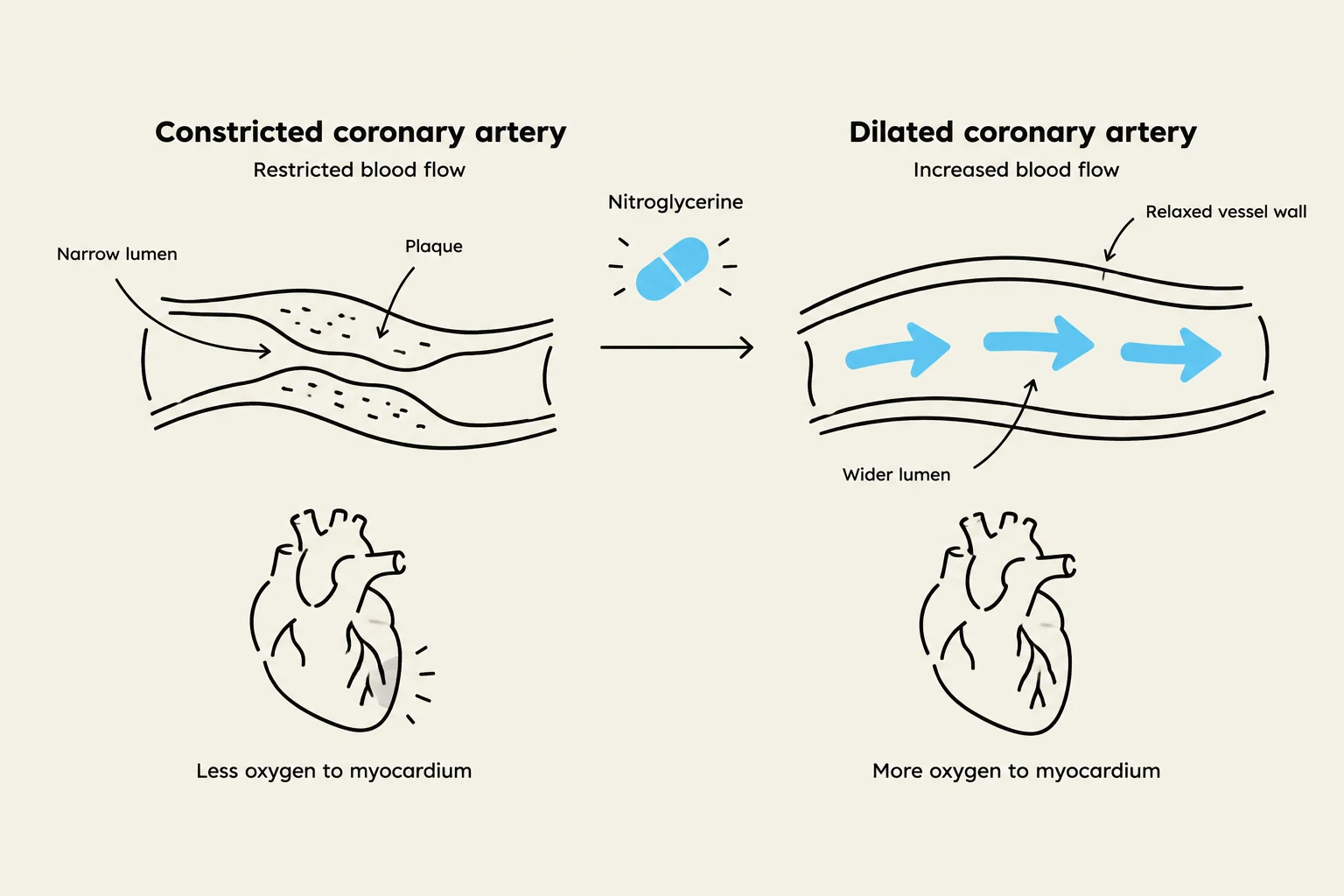
Diagram illustrating how nitroglycerin dilates a constricted coronary artery, improving blood flow and oxygen supply to the myocardium.
Nitroglycerine is a vasodilator used to increase blood flow to the heart muscle. Patients must be educated on the specific administration protocol:
Take one dose as directed.
If pain persists, doses can be taken every 5 minutes.
Maximum Dose: Do not exceed 3 doses.
Critical Instruction: If the pain does not subside after the 3rd dose (within approximately 15 minutes), the patient must call 911 immediately.
Patients should also be encouraged to monitor their blood pressure and pulses at home, as nitroglycerine can cause a drop in blood pressure due to its vasodilatory effects.
Medication Education and Adherence
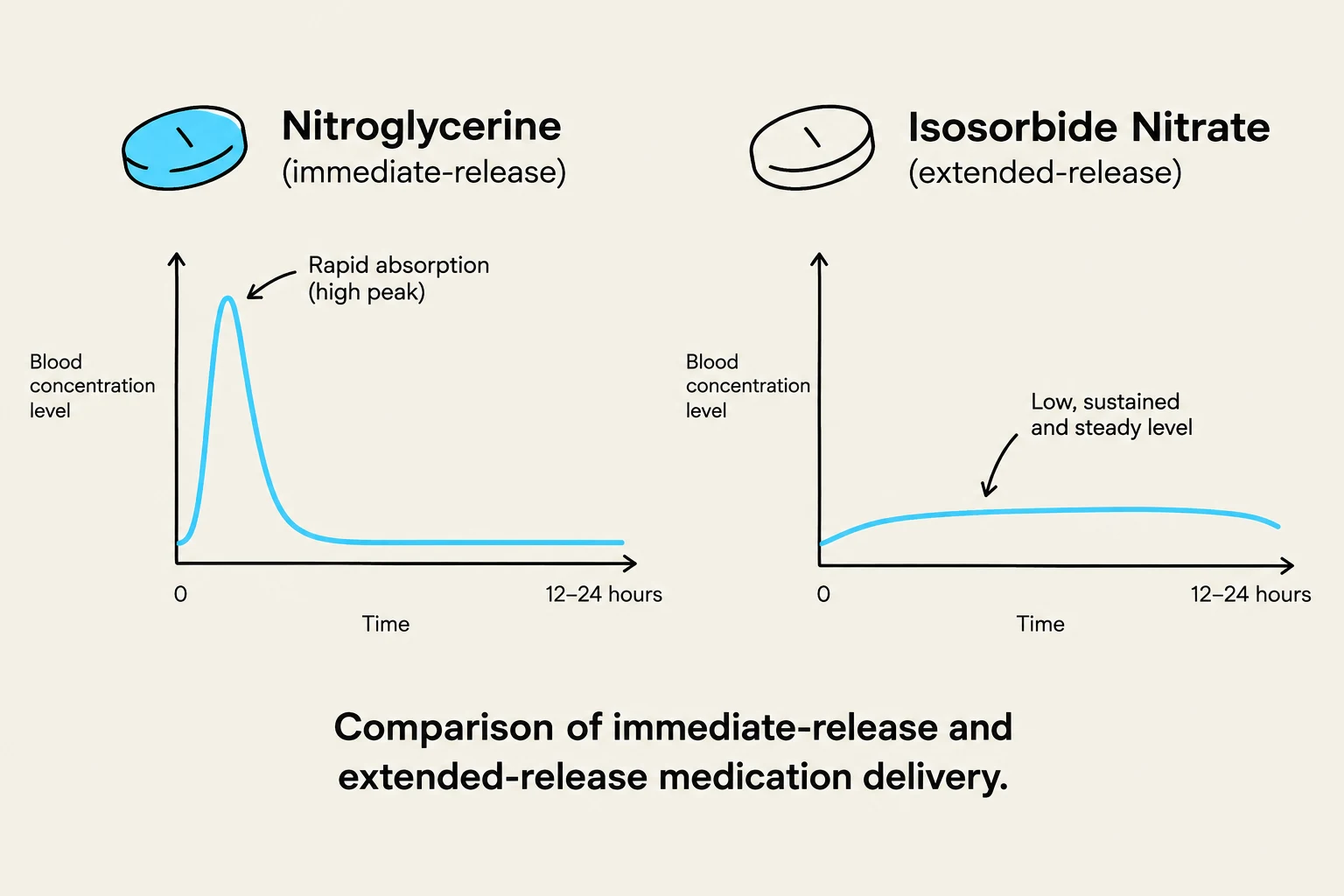
Comparison of immediate-release and extended-release medication delivery, illustrating blood concentration levels over time for Nitroglycerine and Isosorbide Nitrate.
Following an MI, patients are often prescribed a variety of medications to prevent further clotting and manage blood pressure. High levels of medication adherence are required to prevent mortality.
Key Medications
Nitroglycerine: Patients should be aware that these tablets are sensitive to light and should be stored properly to maintain potency.
Isosorbide Nitrate (Extended Release): Unlike immediate-release nitroglycerine, these tablets are designed to provide long-term management. They should be swallowed whole and taken consistently, typically every 12 to 24 hours.
Antiplatelets (e.g., Aspirin): Aspirin is often used to prevent further platelet aggregation (clotting). Patients may be instructed to chew aspirin to allow for faster absorption into the bloodstream.
Addressing Barriers to Adherence
Clinicians must look beyond "compliance" and assess the actual barriers a patient faces. If a patient is not taking their medication, it may not be due to forgetfulness, but rather:
Financial Constraints: The inability to afford expensive prescriptions.
Logistical Issues: Lack of transportation to a pharmacy or physical difficulty in accessing medications.
Patients should be encouraged to communicate these struggles to their healthcare provider rather than simply discontinuing therapy, as non-compliance can lead to life-threatening cardiac events.
Lifestyle Modifications: AHA Life's Simple 7s
To manage cardiovascular health long-term, the American Heart Association (AHA) emphasizes several key lifestyle pillars. Following these guidelines helps manage clinical targets like cholesterol, blood pressure, and glucose levels.
Physical Activity and Weight Management
Tobacco Cessation: Avoiding all forms of smoking and tobacco is paramount.
Weight Management: Patients should aim for incremental weight loss, such as a goal of losing 10% of their total body weight.
Exercise: Aim for at least 150 minutes of moderate-intensity activity or 75 minutes of vigorous-intensity activity per week.
Dietary Habits: The DASH Diet
The DASH diet (Dietary Approaches to Stop Hypertension) is highly recommended for cardiac patients. A primary focus is sodium limitation to prevent resistant hypertension.
Caution: When reducing salt, patients often turn to "salt substitutes." Be aware that many of these substitutes contain high levels of potassium, which can be hazardous for certain patients.
Clinical Targets for Success
Patients should work with their providers to meet the following physiological goals:
Lipid Profile: Total cholesterol should be kept below 200 mg/dL.
Blood Pressure: Aim for a reading of less than 119/79 mmHg.
Fasting Blood Glucose: Should be maintained below 110 mg/dL.
By combining vigilant symptom monitoring, strict medication adherence, and the principles of the "Life's Simple 7s," patients can significantly reduce their risk of future myocardial infarctions and improve their overall quality of life.
Keep reading for free.
Create an account to finish this reading and make it part of your study routine.