


Migraine headache is a complex clinical syndrome characterized by recurrent, episodic attacks of intense, throbbing, and typically unilateral pain. These attacks are not merely "bad headaches"; they are debilitating neurological events that can last anywhere from 4 to 72 hours. Patients often experience significant autonomic and sensory symptoms, including nausea, vomiting, photophobia (sensitivity to light), and phonophobia (sensitivity to sound). Understanding the distinct phases, triggers, and management strategies is essential for providing effective nursing care and improving patient quality of life.
The Phases of a Migraine Attack
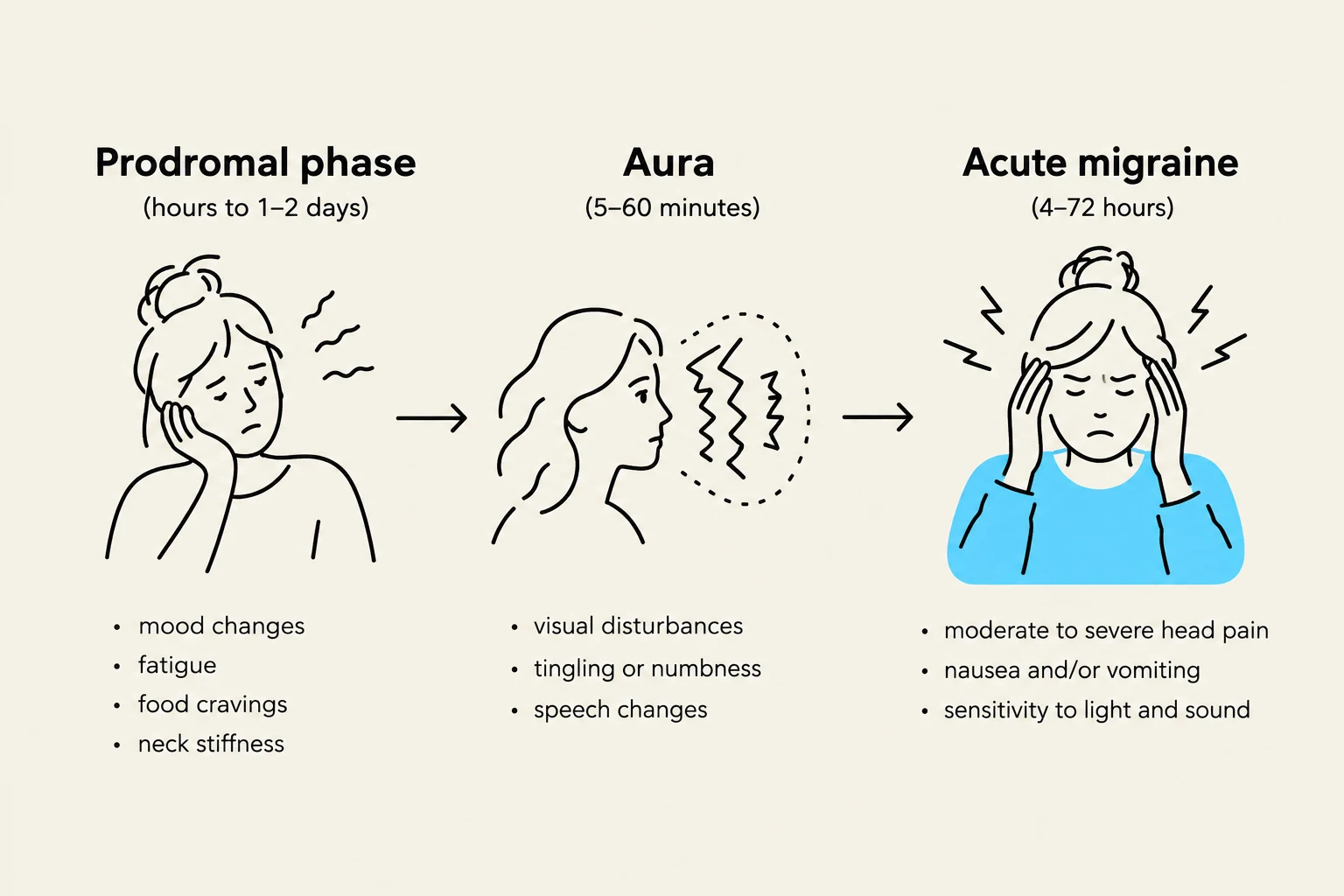
A migraine is often a multi-stage process rather than a single moment of pain. Recognizing these stages helps in both diagnosis and the timing of interventions.
The first stage is the Prodromal Phase, which can occur 1–2 days before the actual headache begins. During this time, patients may report subtle changes such as excessive yawning, constipation, emotional alterations, or specific food cravings.
Following the prodrome, some patients experience the Aura (often referred to as "Classic Migraine"). An aura consists of temporary central nervous system disturbances lasting between 5 and 60 minutes. These neurologic changes can manifest as visual disturbances (flashing lights, shimmering zigzag lines, or spots), sensory changes (numbness or tingling of the lips and tongue), or even more severe symptoms like aphasia (difficulty speaking), vertigo, or unilateral weakness.
Finally, the patient enters the Migraine Phase, where the intense pulsating pain occurs, often accompanied by nausea and vomiting.
Keep reading for free.
Create an account to finish this reading and make it part of your study routine.
Continue reading freeAlready have an account? Log in
Updated