Understanding and Managing Diabetes Mellitus and Glucose Imbalances
This guide explains the critical differences between hyperglycemia and hypoglycemia in diabetes management, detailing symptoms, emergency interventions like the 15-15 Rule, and complications such as the Somogyi effect and Dawn phenomenon. It also covers pharmacological and lifestyle management strategies.
Diabetes mellitus is a chronic multisystem disease characterized by abnormal insulin production, impaired insulin utilization, or both. Because insulin is the body's primary "storage hormone," responsible for promoting glucose transport from the bloodstream into the cells, any disruption in its secretion or action leads to significant fluctuations in blood glucose levels. Effective clinical management requires a deep understanding of how to identify and treat the two primary extremes of glucose dysregulation: hyperglycemia and hypoglycemia.
Hyperglycemia vs. Hypoglycemia
Distinguishing between high and low blood sugar is the most critical skill in diabetes care. While both conditions can sometimes mimic alcohol intoxication, their physiological presentations are distinct.
Hyperglycemia
Hyperglycemia occurs when blood glucose levels are too high. In Type 1 diabetes, this is often due to a total lack of insulin, whereas in Type 2, it results from insulin resistance or insufficient production.
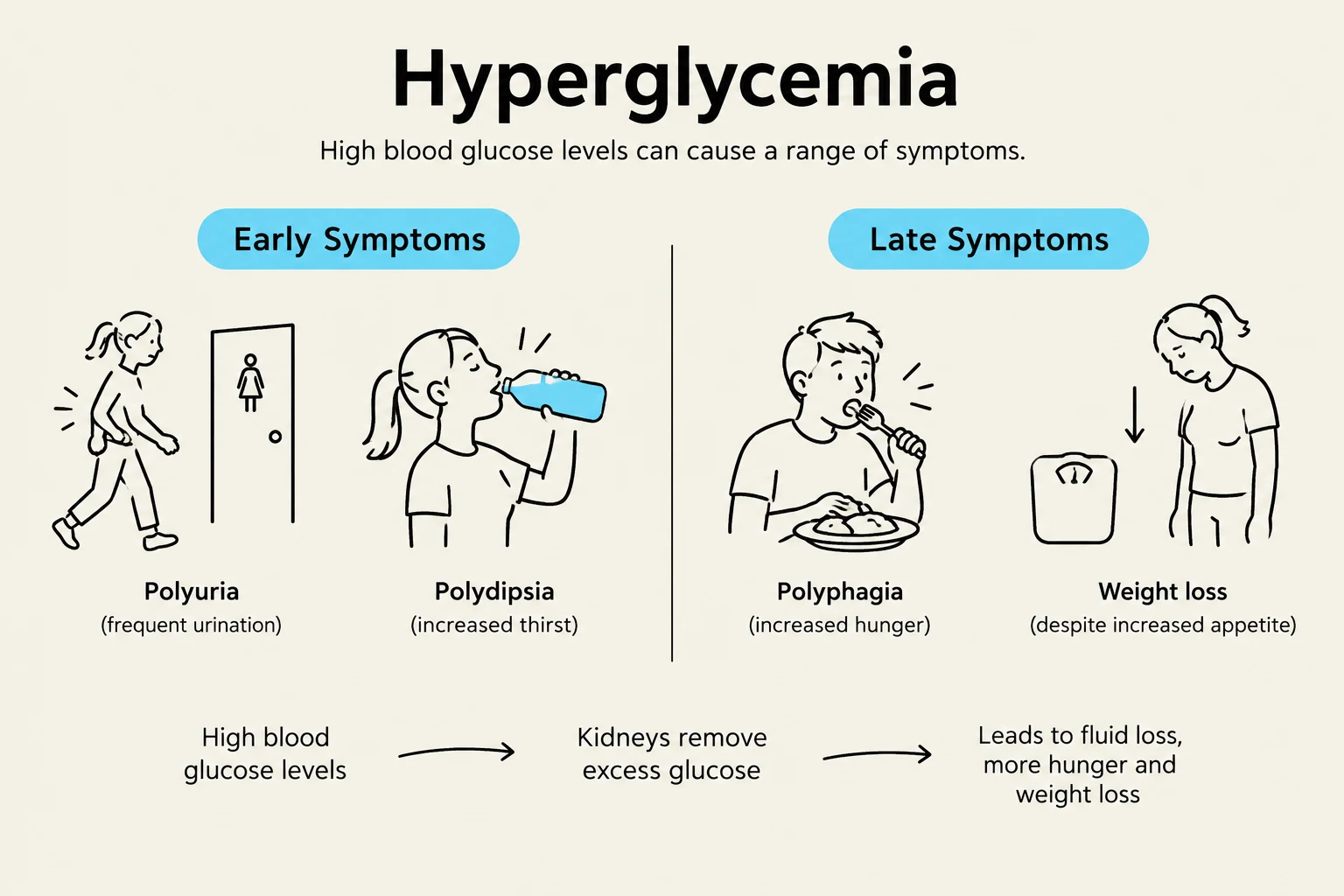
Early symptoms typically include the "classic triad":
Polyuria: Frequent urination
Polydipsia: Excessive thirst
Polyphagia: Excessive hunger
As the condition progresses, patients may experience unexplained weight loss, fatigue, blurred vision, and slow-healing wounds. If left untreated, severe hyperglycemia can lead to life-threatening emergencies like Diabetic Ketoacidosis (DKA) or Hyperosmolar Hyperglycemic State (HHS).
Hypoglycemia
Hypoglycemia is defined as a blood glucose level of less than 4 mmol/L. This is often caused by a mismatch between insulin action and food intake.
Symptoms include:
Early signs: Hunger, fatigue, weakness, confusion, irritability, and visual disturbances.
Severe signs: Diaphoresis (sweating), tremors, seizures, and potentially coma or death.
Clinical Alert: Hypoglycemic Unawareness
Some patients, particularly the elderly or those with long-standing autonomic neuropathy, may not experience the typical warning signs (like tremors or sweating) before a severe drop in glucose occurs. This increases the risk of sudden loss of consciousness.
Hyperglycemia, or high blood glucose levels, can manifest with early symptoms like polyuria and polydipsia, and late symptoms such as polyphagia and weight loss. This condition occurs when kidneys attempt to remove excess glucose, leading to fluid loss, increased hunger, and weight loss.
Emergency Management of Hypoglycemia
When a patient presents with low blood glucose, the intervention depends heavily on their level of consciousness.
The 15-15 Rule
If the patient is alert enough to swallow, follow the 15-15 Rule:
Ingest 15g of simple carbohydrates: Examples include 175 mL of fruit juice, a regular soft drink, or 6 Life Savers candies. Avoid foods with high fat content, as fat slows the absorption of sugar.
Wait 15 minutes: Recheck the blood glucose level.
Repeat if necessary: If glucose remains <4 mmol/L, repeat the 15g dose and recheck every 15 minutes until the level is stable.
Stabilize: Once glucose is >4 mmol/L, the patient should eat a regular meal or snack to prevent rebound hypoglycemia.
Acute Intervention for Unconscious Patients
If the patient is unable to swallow or is unconscious, simple carbohydrates cannot be used. Instead, medical professionals must use:
Glucagon Administration: 1 mg administered via intramuscular (IM) or subcutaneous injection.
IV Dextrose: In acute care settings, 20 to 50 mL of 50% dextrose is administered via IV push.
Insulin Therapy Complications
Patients using insulin must be aware of two specific phenomena that cause high blood glucose levels upon waking in the morning. While both result in morning hyperglycemia, their causes and treatments are opposites.
The Somogyi Effect
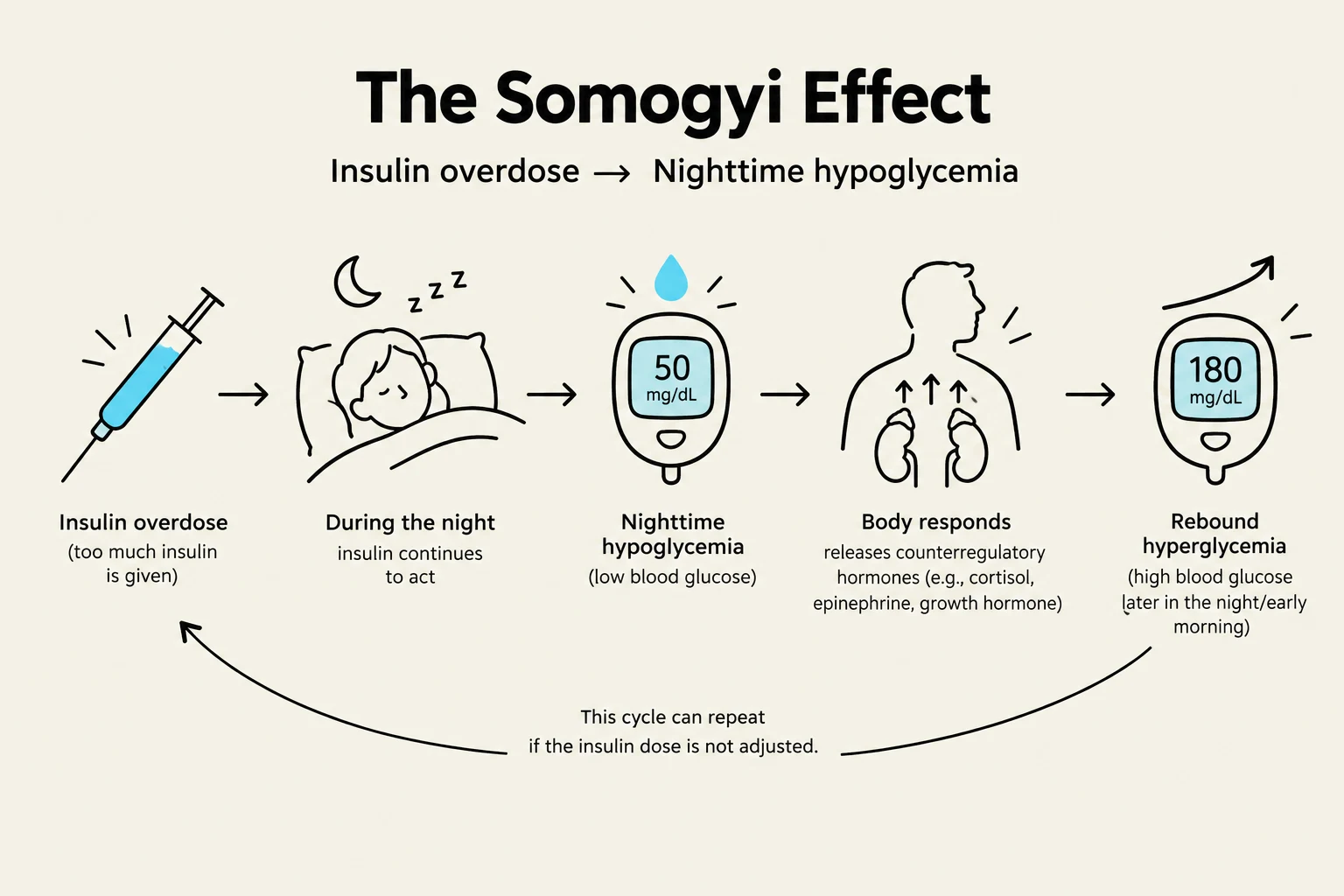
The Somogyi effect is a "rebound" phenomenon. It occurs when an overdose of insulin during the night causes hypoglycemia while the patient is sleeping. In response, the body releases counterregulatory hormones (such as glucagon and epinephrine) to trigger glycogenolysis and raise blood sugar.
Diagnosis: Blood glucose is measured between 2:00 AM and 4:00 AM. If levels are low (<3.3 mmol/L), the Somogyi effect is confirmed.
Treatment: Decrease the evening insulin dosage.
The Dawn Phenomenon
The Dawn phenomenon is caused by the natural, physiological release of counterregulatory hormones—such as growth hormone and cortisol—during the predawn hours. This causes a rise in blood glucose without a preceding hypoglycemic event.
Diagnosis: Blood glucose is measured between 2:00 AM and 4:00 AM. If levels are high, the Dawn phenomenon is confirmed.
Treatment: Increase the insulin dosage or adjust the timing of administration.
The Somogyi Effect describes a phenomenon where an excessive insulin dose leads to nighttime hypoglycemia, triggering the body to release counterregulatory hormones, resulting in rebound hyperglycemia later in the night or early morning. This cycle can repeat if the insulin dose is not adjusted.
Pharmacological and Lifestyle Management
Oral Antihyperglycemic Agents (OHAs)
For patients with Type 2 diabetes, OHAs are used to improve the body's ability to use insulin or manage glucose production. Unlike insulin, OHAs require the patient to have some level of endogenous (naturally produced) insulin. They target three primary defects:
Insulin resistance
Decreased insulin production
Increased hepatic (liver) glucose production
Common classes include biguanides, sulphonylureas, and thiazolidinediones.
Exercise and Stress
Exercise is a cornerstone of management because it increases insulin receptor sites and lowers blood glucose. However, patients must monitor glucose before, during, and after activity and may need carbohydrate snacks every 30 minutes to prevent hypoglycemia.
Physical or emotional stress (such as surgery or illness) can also trigger hyperglycemia. This is due to the body's stress response, which releases counterregulatory hormones to provide energy, inadvertently raising blood sugar.
Nursing Tip: Managing Illness
Patients should never withhold insulin or OHAs during illness, even if they cannot eat much. Instead, they should:
Increase intake of non-carbohydrate fluids.
Monitor glucose frequently (every 4 hours).
Test urine for ketones if blood glucose exceeds 14 mmol/L.
This diagram illustrates the management of illness for individuals managing diabetes, emphasizing the continuation of insulin/OHA therapy and frequent glucose monitoring to prevent complications like hyperglycemia and DKA/HHS.
Summary of Counterregulatory Hormones
To manage diabetes effectively, one must understand the "tug-of-war" between insulin and counterregulatory hormones. While insulin acts as the "storage hormone" to lower glucose, the following hormones act to increase it:
\text{Counterregulatory Hormones} &= \text{Glucagon} \\
&\text{+ Epinephrine} \\
&\text{+ Growth Hormone} \\
&\text{+ Cortisol}
\end{aligned}$$
These hormones are essential for preventing hypoglycemia during fasting, but in diabetic patients, their overactivity can lead to the Somogyi effect or hyperglycemia during periods of physiological stress.
$$$
$$$
Keep reading for free.
Create an account to finish this reading and make it part of your study routine.