Understanding and Managing Anxiety, Obsessive-Compulsive, and Related Disorders
This guide provides an overview of anxiety and obsessive-compulsive disorders, differentiating between stress, fear, and anxiety. It covers normal vs. clinically significant anxiety, key disorder classifications (GAD, Panic Disorder, Phobias, OCD), and the nursing process and adaptation model for patient care. It also
Anxiety and obsessive-compulsive disorders represent a significant spectrum of mental health challenges that impact a patient's ability to function in daily life. For nursing professionals, the goal is not merely to manage symptoms but to facilitate adaptation through a structured clinical approach. By understanding the nuances between physiological stress and clinical pathology, nurses can provide targeted interventions that promote stability and long-term coping.
Understanding the Spectrum: Stress, Fear, and Anxiety
Before assessing a patient, a nurse must be able to differentiate between three often-confused concepts: stress, fear, and anxiety.
Stress is a response to an external stimulus (a stressor) that threatens or challenges an individual. It is often a reaction to a specific, identifiable event, such as a job interview or a financial burden.
Fear is a response to a known, identifiable threat. It is an emotional response to an immediate danger (e.g., seeing a snake).
Anxiety is a vague, uneasy feeling of discomfort or dread accompanied by an autonomic response. Unlike fear, anxiety is often often non-specific and may not have a clearly identifiable external trigger.
Clinical Pearl: When documenting, distinguish between a patient's reaction to a specific event (stress/fear) and a pervasive, generalized sense of dread (anxiety).
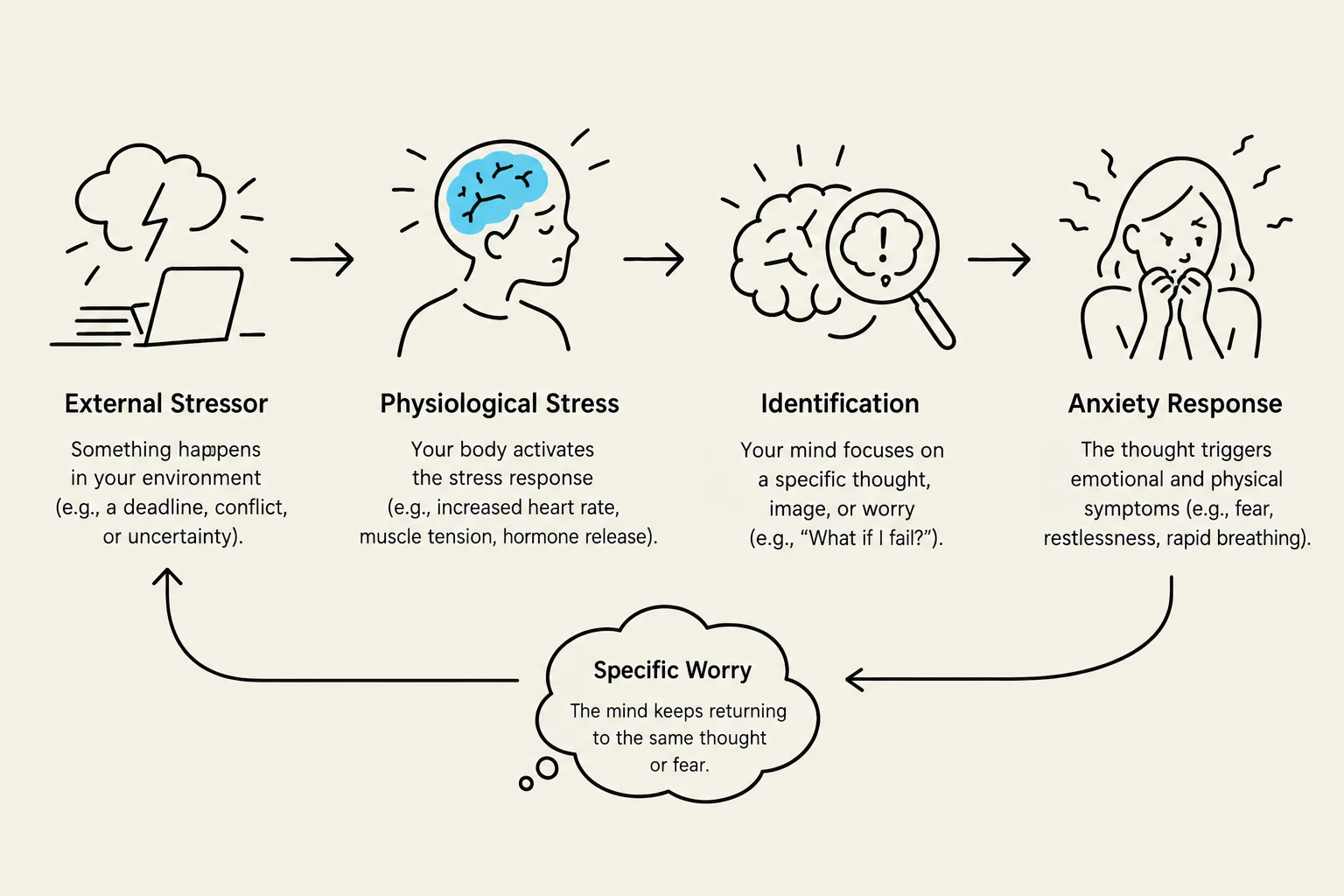
This diagram illustrates the process of anxiety, starting with an external stressor, leading to physiological stress, identification of a specific worry, and culminating in an anxiety response.
Normal vs. Clinically Significant Anxiety
Not all anxiety is pathological. Normal anxiety can actually be adaptive; it can motivate a person to prepare for an exam or stay alert in a dangerous situation.
Clinically significant anxiety, however, is characterized by its intensity and its impact on functioning. It becomes a disorder when it is disproportionate to the stimulus, persists for extended periods, and impairs the individual's ability to perform social, occupational, or personal roles.
Epidemiology and Symptomatology
Anxiety and obsessive-compulsive disorders are among the most common mental health conditions globally. Various predisposing factors, including genetics, neurobiology, and environmental stressors, contribute to their development.
Key Disorder Classifications
Nurses must assess for specific symptomatology associated with various DSM-V classifications:
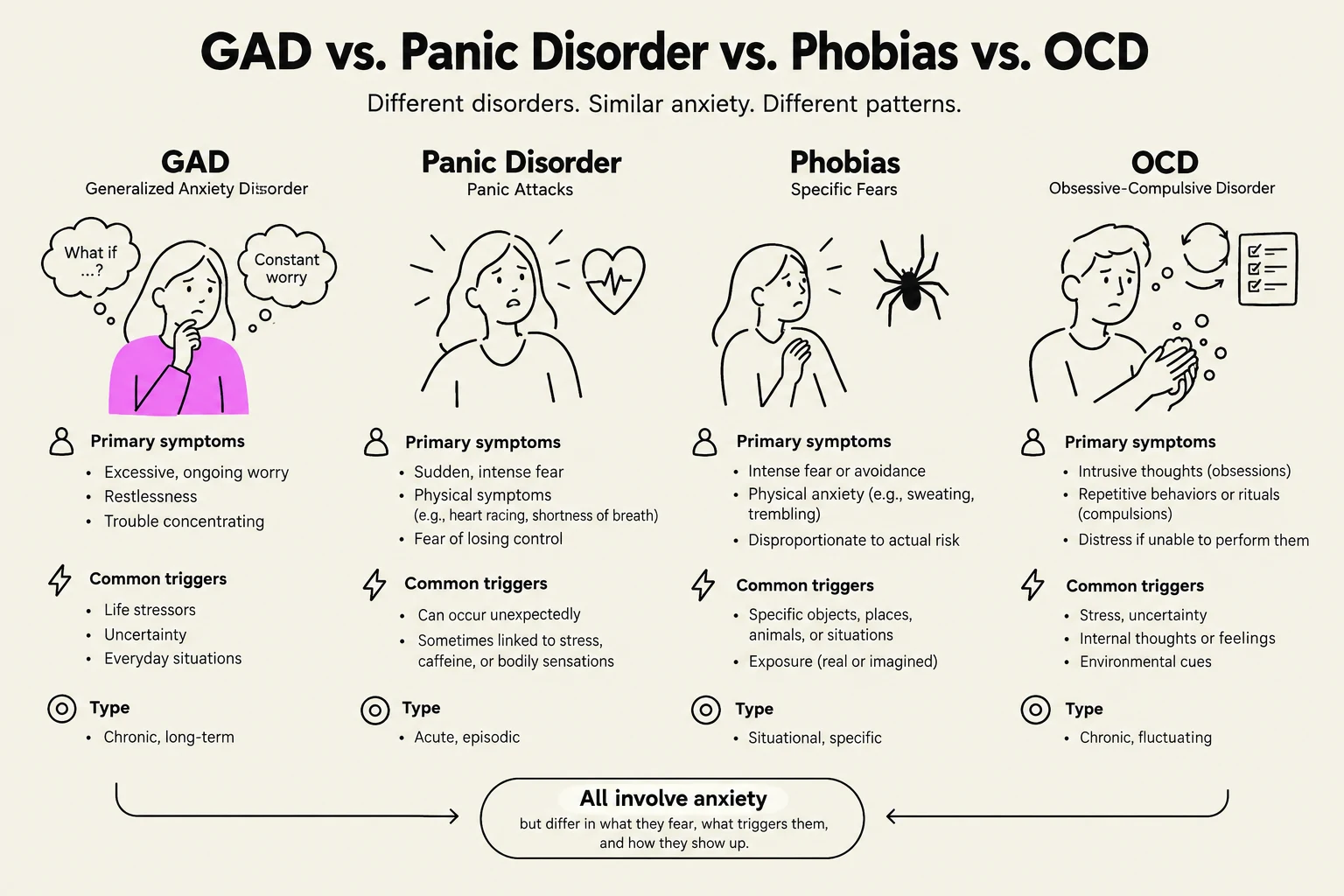
Generalized Anxiety Disorder (GAD): Characterized by excessive, uncontrollable worry about various aspects of life (health, work, finances) occurring most days for at least six months.
Panic Disorder: Sudden, intense episodes of terror (panic attacks) accompanied by physical symptoms like palpitations, shortness of breath, and a fear of dying.
Phobias: Intense, irrational fear of specific objects or situations (e.g., heights, spiders, flying).
Obsessive-Compulsive Disorder (OCD): Involves obsessions (persistent, intrusive thoughts or urges) and compulsions (repetitive behaviors performed to reduce the anxiety caused by the obsession).
This infographic compares Generalized Anxiety Disorder (GAD), Panic Disorder, Phobias, and Obsessive-Compulsive Disorder (OCD), highlighting their distinct symptoms, triggers, and types, while noting that all involve anxiety.
The Nursing Approach: Process and Adaptation
To provide high-quality care, nurses utilize the Nursing Process (Assessment, Diagnosis, Planning, Implementation, and Evaluation) in conjunction with the Roy Adaptation Model.
The Roy Adaptation Model views the patient as an adaptive system. The nurse's role is to manage stimuli to help the patient adapt in four modes: physiological, self-concept, role function, and interdependence.
Nursing Diagnosis and Outcomes
Using DSM-V classifications as a guide, nurses formulate specific diagnoses. Common diagnoses include Anxiety related to situational crisis or Ineffective coping related to obsessive thoughts.
Outcome Criteria must be measurable and time-bound. For example: "The patient will demonstrate two new coping mechanisms to manage panic symptoms by the end of the shift".
Nursing Interventions and Patient Teaching
Interventions focus on creating a safe environment and utilizing therapeutic communication:
Safety First: For patients in acute panic, provide a calm, low-stimulus environment.
Communication: Use short, simple sentences during high anxiety. Use non-verbal cues (calm posture, eye contact) to convey stability.
Interdisciplinary Collaboration: Work with social workers and community resources to ensure long-term support.
Teaching: Educate the patient and family on the nature of the disorder, the importance of medication adherence, and how to recognize early warning signs of an anxiety spike.
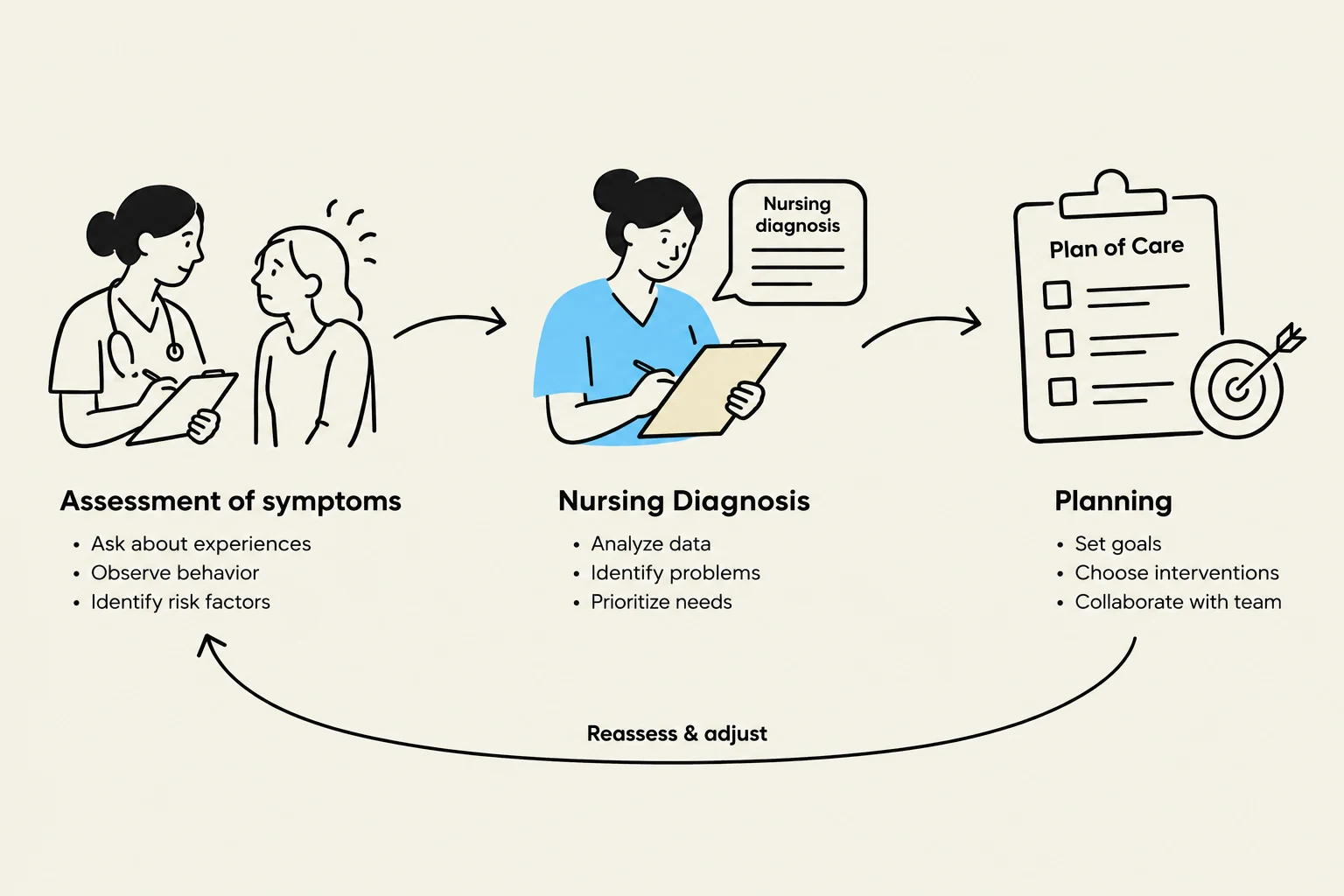
This diagram illustrates the nursing process, which includes assessment of symptoms, nursing diagnosis, planning, and reassessment.
Pharmacologic and Nutritional Management
Pharmacologic Management
Medication is a cornerstone of treatment for many anxiety-related disorders. Nurses must monitor for efficacy and adverse effects:
Medication Class
Primary Use
Mechanism/Notes
Antidepressants (e.g., SSRIs)
Long-term management
Used for various anxiety and OCD disorders; may take weeks to reach full effect.
Benzodiazepines
Acute symptom relief
Provides rapid relief for panic or severe anxiety; carries a high risk for dependence and sedation.
Safety Alert: When administering benzodiazepines, monitor for respiratory depression and assess for potential drug interactions, especially with alcohol or other CNS depressants.
Nutritional Management
Nutrition plays a holistic role in managing anxiety. Nurses should assess dietary patterns, as excessive caffeine or sugar intake can mimic or exacerbate physiological symptoms of anxiety, such as palpitations and tremors.
Summary for Clinical Practice
Effective management of anxiety and obsessive-compulsive disorders requires a multidimensional approach. By combining rigorous assessment, the structured application of the Roy Adaptation Model, and vigilant pharmacologic monitoring, nurses can help patients move from a state of dysfunction toward successful adaptation and community reintegration.
Keep reading for free.
Create an account to finish this reading and make it part of your study routine.