


In the Nutrition Care Process (NCP), the ability to write a precise nutrition diagnosis is a fundamental skill for any dietitian. A well-constructed PES statement—comprising the Problem, Etiology, and Signs/Symptoms—serves as the bridge between your assessment and your planned nutrition intervention. However, writing a statement that looks correct on paper is not the same as writing one that is clinically useful. To ensure your documentation leads to effective care, you must evaluate your PES statements using Nutrition Care Process Terminology (NCPT) to ensure you have identified the true root cause and measurable indicators of change.
Understanding the Components of a PES Statement
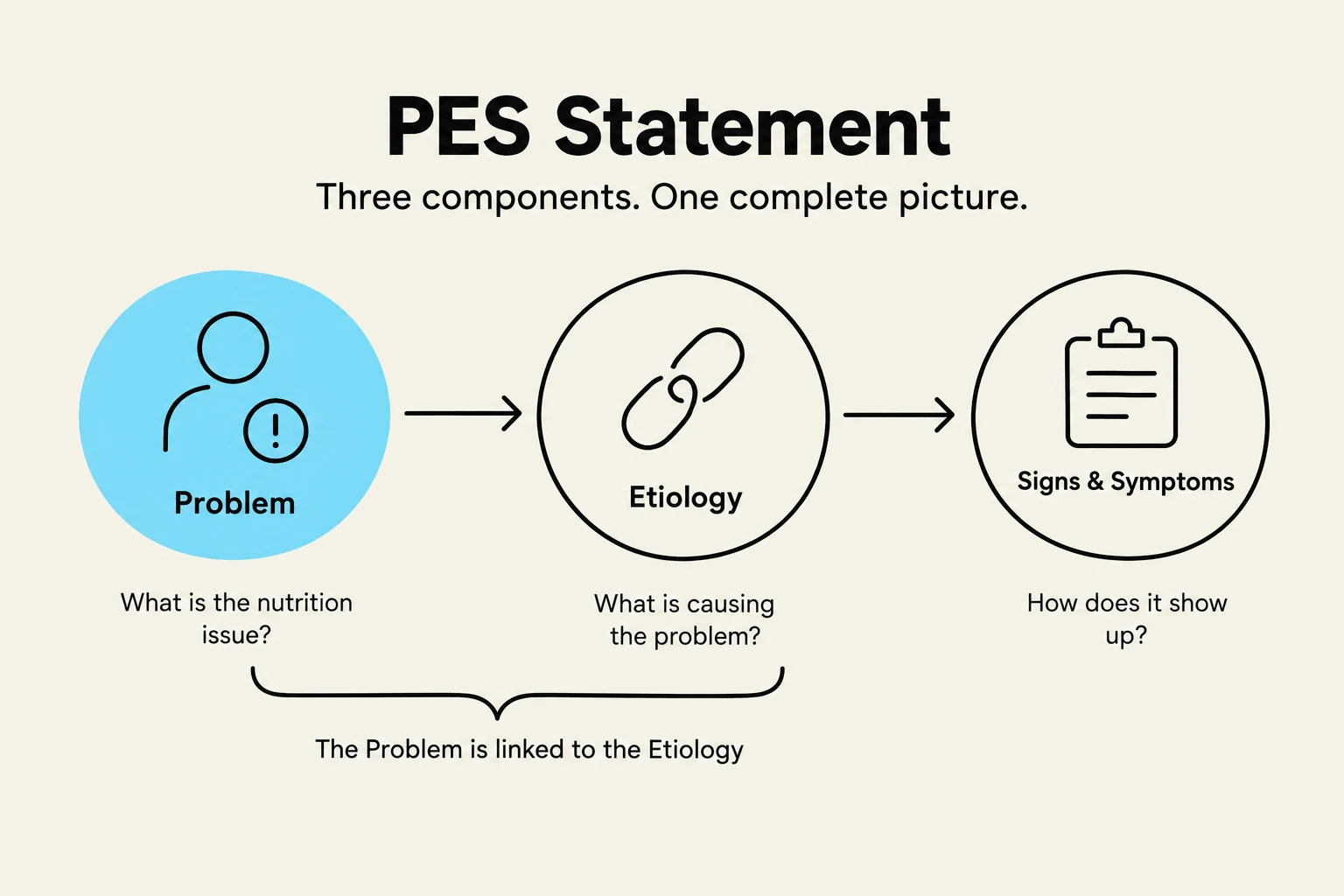
A nutrition diagnosis is not a medical diagnosis; rather, it is a judgment about a patient's nutritional status that a dietitian is responsible for treating. To standardize this process, we use the PES format:
- Problem (P): The nutrition diagnosis label (e.g., Excessive carbohydrate intake).
- Etiology (E): The cause or contributing factors (the "why" behind the problem).
- Signs and Symptoms (S): The evidence that confirms the problem exists (the "how do I know").
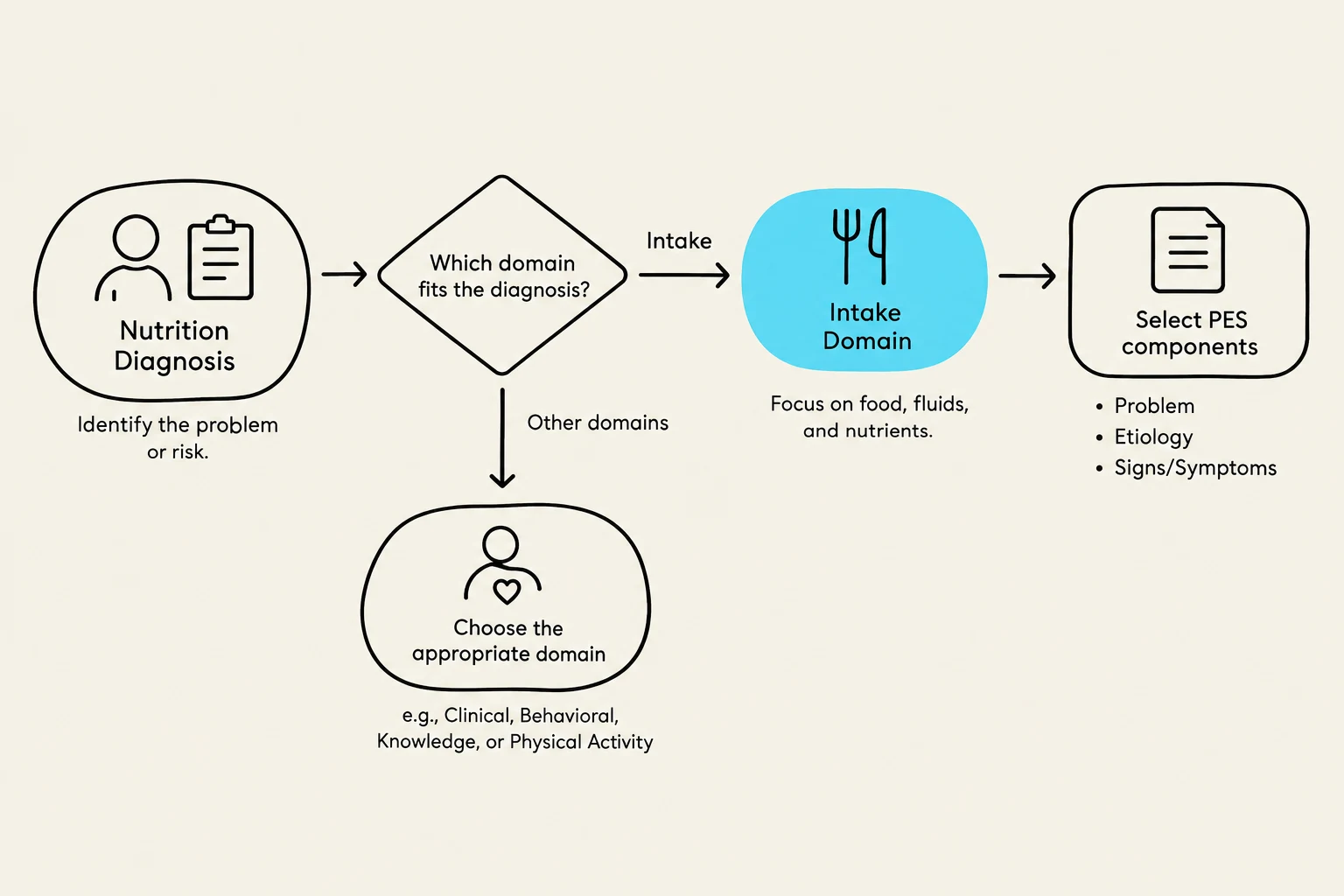
When choosing a diagnosis, if you are faced with two potential labels in different domains, it is generally recommended to select the Intake domain first, as these are often the most directly actionable by a dietitian.
Identifying the Root Cause (Etiology)
The most critical part of a PES statement for clinical practice is the etiology. If the etiology is incorrect, the resulting nutrition intervention will likely fail because it is targeting the wrong issue.

Keep reading for free.
Create an account to finish this reading and make it part of your study routine.
Continue reading freeAlready have an account? Log in
Updated