This guide explains the six links of the chain of infection: infectious agent, reservoir, portal of exit, mode of transmission, portal of entry, and susceptible host. It details how healthcare professionals can intervene at each stage to prevent the spread of disease, including standard and transmission-based precautio
In the healthcare environment, infection control is a fundamental pillar of patient safety. To prevent the spread of disease, nurses must move beyond simply "cleaning up" and instead understand the biological mechanism that allows a pathogen to move from one person to another. This mechanism is known as the Chain of Infection. By identifying each of the six links in this chain, healthcare providers can implement specific interventions to "break" the link, effectively stopping the spread of illness before it reaches a new host.
The Six Links of the Chain
The chain of infection is a continuous cycle. If any single link is interrupted, the entire process of infection is halted.
1. The Infectious Agent
The chain begins with the pathogen—the microorganism capable of causing disease. This includes bacteria, viruses, fungi, or parasites.
How to break the link: Use appropriate cleaning, disinfection, or sterilization techniques, and ensure the client receives prescribed antimicrobial treatments.
2. The Reservoir
The reservoir is the natural habitat where the infectious agent lives, grows, and multiplies. Reservoirs can be humans, animals, water sources, medical equipment, or the general environment.
How to break the link: Practice rigorous environmental cleaning, maintain equipment care, and identify/manage specific sources of contamination.
3. The Portal of Exit
For an infection to spread, the agent must leave its reservoir. Common portals of exit include respiratory secretions (coughing/sneezing), blood, stool, urine, or wound drainage.
How to break the link: Cover coughs, contain drainage with appropriate dressings, and utilize safe specimen handling procedures.
The chain of infection illustrates the six links in a cycle: infectious agent, reservoir, portal of exit, mode of transmission, portal of entry, and susceptible host.
4. Mode of Transmission
This is the method by which the pathogen moves from the reservoir to a new host. Transmission can occur via:
Contact: Direct touch or contaminated surfaces.
Droplet: Larger respiratory particles traveling short distances.
Airborne: Small particles that remain suspended in the air.
Vehicle/Vector: Contaminated food, water, or insects.
How to break the link: Consistent hand hygiene, the use of Personal Protective Equipment (PPE), isolation precautions, and safe sharps/food handling.
5. The Portal of Entry
The pathogen must find a way into the new host. Common entry points include mucous membranes, the respiratory tract, broken skin, or vascular access sites (such as IV lines).
How to break the link: Employ strict aseptic techniques, provide meticulous wound care, and maintain device/catheter care.
6. The Susceptible Host
The final link is the person at risk for infection. A host becomes susceptible when their defenses are reduced. Risk factors include advanced age, malnutrition, chronic illness (like diabetes), or being immunocompromised.
How to break the link: Promote health through vaccination, adequate nutrition, rest, and managing underlying risk factors.
Clinical Application: Precautions and Asepsis
Understanding the chain allows nurses to select the correct level of protection based on the suspected mode of transmission.
Standard vs. Transmission-Based Precautions
Standard Precautions are used for every client, regardless of their infection status. This is based on the assumption that blood and body fluids (except sweat) may contain infectious agents. Key components include hand hygiene and the use of PPE (gloves, gowns, masks) based on anticipated exposure.
When a specific pathogen is identified, Transmission-Based Precautions are added:
Contact Precautions: Used for organisms like C. difficile or norovirus. Requires gowns and gloves upon entry.
Droplet Precautions: Used for influenza or pertussis. Requires a surgical mask for close contact.
Airborne Precautions: Used for tuberculosis or measles. Requires a fit-tested N95 respirator and an airborne infection isolation room (negative pressure).
Exam Tip: If a question asks for the "first" or "priority" action regarding infection, always look for immediate threats to safety or the most effective way to prevent transmission, such as hand hygiene or appropriate PPE.
Medical vs. Surgical Asepsis
Nurses must distinguish between "clean" and "sterile" techniques to prevent breaking the chain.
Term
Goal
Examples
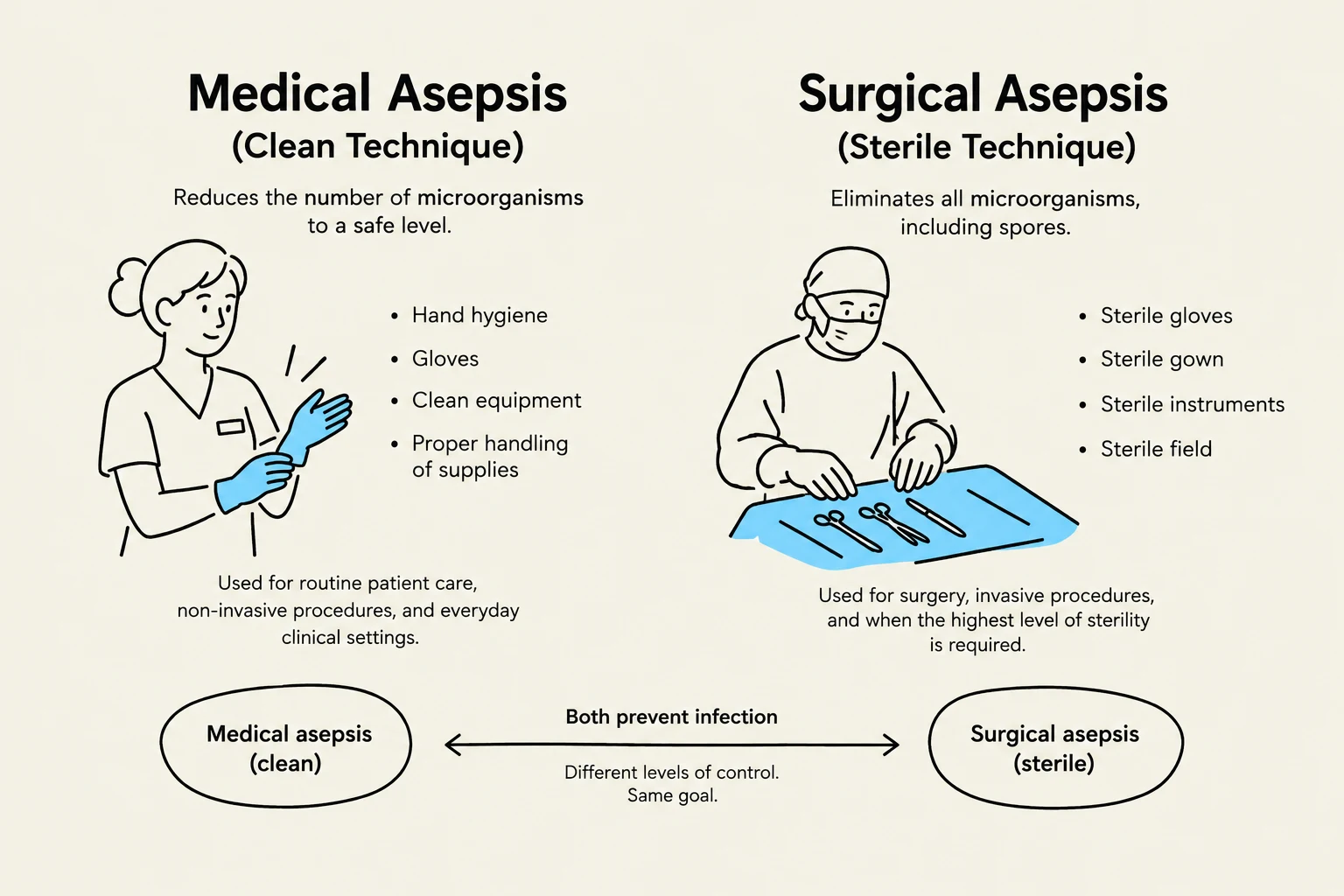
Medical Asepsis (Clean Technique)
Reduce the number and spread of microorganisms.
Hand hygiene, routine environmental cleaning, clean gloves.
Surgical Asepsis (Sterile Technique)
Keep an area or item free of all microorganisms, including spores.
This illustration compares medical asepsis (clean technique) and surgical asepsis (sterile technique), highlighting their definitions, key practices, and applications in healthcare settings.
Critical Safety Rule: A sterile object is considered contaminated if it touches a non-sterile surface, falls below waist level, or becomes wet through "strike-through". If sterility is ever in doubt, consider it contaminated and replace the item; do not attempt to "fix" it.
Monitoring for Infection
Breaking the chain is a proactive measure, but nurses must also be vigilant in recognizing when a link has already been successful and an infection has taken hold.
Infection Cues
Nurses should monitor for both localized and systemic signs of infection:
Localized: Redness, warmth, swelling, pain, or purulent drainage at a specific site (e.g., a wound).
Systemic: Fever, chills, new confusion (especially in older adults), or changes in vital signs.
Note on Older Adults: Immunocompromised clients and older adults may present with subtle or atypical signs. The absence of a high fever does not rule out the presence of an infection.
Stages of Infection
An infection progresses through several distinct stages:
Incubation: The pathogen enters the host and begins to multiply.
Prodromal: The client begins to experience non-specific symptoms.
Acute Illness: The specific manifestations of the disease become obvious and may be severe.
Decline: Manifestations begin to wane.
Convalescence: The client returns to a state of health or a "new normal".
Keep reading for free.
Create an account to finish this reading and make it part of your study routine.