Understanding Altered Mental Status: Causes and Patient Care
This guide explains altered mental status (AMS), a critical sign of brain dysfunction. It covers common causes like stroke, TIA, dizziness, syncope, hypoglycemia, and seizures, along with essential patient care principles including airway management, circulation, safety, and glucose monitoring.
Altered mental status (AMS) is a critical clinical sign indicating that the brain is not functioning normally. Normal consciousness is regulated by the Reticular Activating System (RAS), which requires a constant supply of oxygen, glucose, and water to maintain wakefulness and attention. When these requirements are not met—due to trauma, infection, toxins, or metabolic imbalances—the patient's mental state can shift rapidly. For healthcare providers, recognizing the underlying cause is essential, as many forms of AMS are rapidly correctable if the primary trigger is identified and treated promptly.
Stroke and Transient Ischemic Attack (TIA)
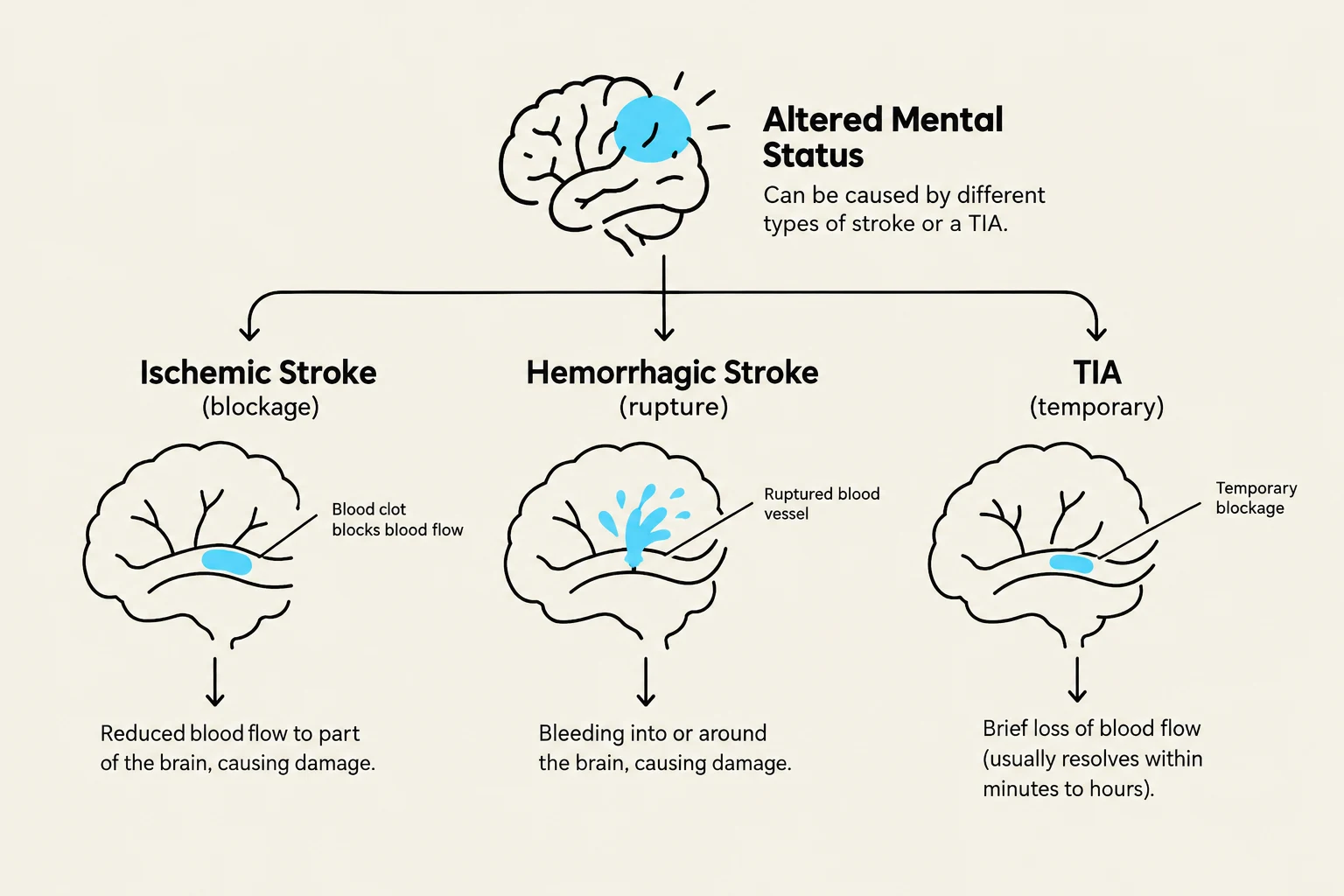
A stroke is defined as the injury or death of brain tissue resulting from oxygen deprivation. There are two primary classifications of stroke that clinicians must distinguish between:
Ischemic Stroke: This occurs when a blockage, such as a blood clot or an embolism, obstructs an artery supplying blood to the brain.
Hemorrhagic Stroke: This is caused by bleeding from a ruptured blood vessel within the brain. This is often the result of long-standing high blood pressure or the rupture of an aneurysm.
A Transient Ischemic Attack (TIA) is a temporary blockage where stroke-like symptoms appear but resolve completely within 24 hours. While a TIA does not cause permanent brain damage because the period of hypoxia is short, it serves as a major warning sign that the patient is at high risk for a full-blown stroke in the near future.
Clinical signs of a stroke can vary depending on the location of the blockage, but common indicators include hemiparesis (one-sided weakness or paralysis), facial asymmetry, and aphasia. Aphasia refers to difficulty communicating; this may manifest as expressive aphasia (knowing what to say but using the wrong words) or receptive aphasia (an inability to understand speech).
This diagram illustrates the different types of strokes, including ischemic stroke (blockage), hemorrhagic stroke (rupture), and transient ischemic attack (TIA), and their effects on the brain.
To assess for a stroke in the field, clinicians often use the Cincinnati Prehospital Stroke Scale. This scale evaluates three specific signs:
Facial Grimacing: Asking the patient to smile to check for unequal movement.
Arm Drift: Asking the patient to close their eyes and extend their arms for 10 seconds; an abnormal response is when one arm drifts downward or rotates.
Abnormal Speech: Asking the patient to repeat a phrase to check for slurring or inappropriate word use.
Exam Tip: When managing a suspected stroke, the most critical piece of information to document is the exact time of symptom onset. This timing is vital for determining if the patient is a candidate for time-sensitive, "clot-busting" medications at the hospital.
Dizziness and Syncope
Dizziness is a broad, subjective term that patients use to describe sensations such as vertigo, lightheadedness, or general weakness. Syncope, on the other hand, is a more specific event: a brief, spontaneous loss of consciousness followed by a spontaneous recovery.
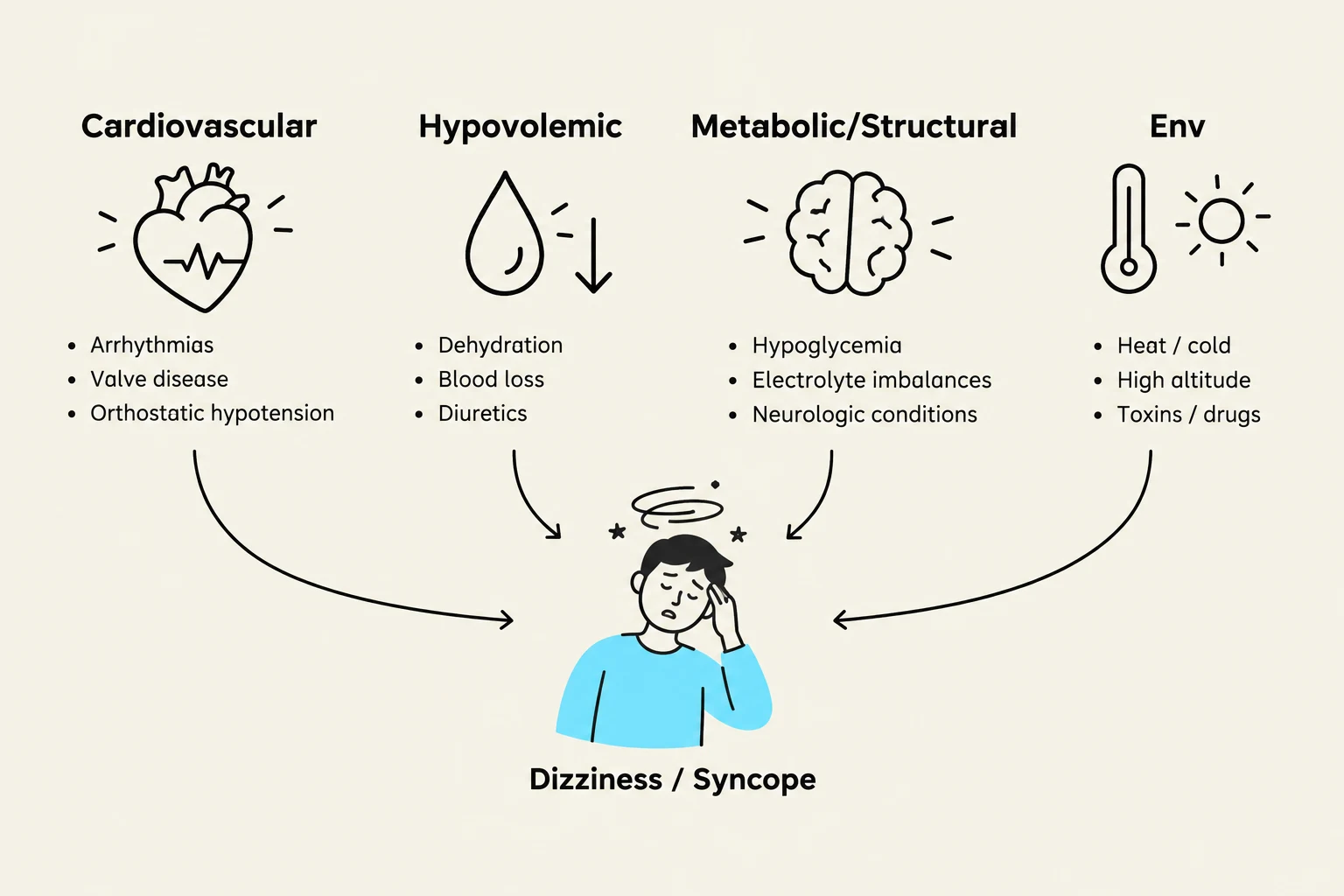
The causes of these symptoms are diverse and can be categorized into several groups:
Cardiovascular: Includes bradycardia, tachycardia, myocardial infarction, or vasovagal syncope (stimulation of the vagus nerve).
Hypovolemic: Caused by low fluid or blood volume, such as dehydration, internal bleeding, or trauma.
Metabolic/Structural: Includes hypoglycemia, seizures, or inner ear issues.
Environmental/Toxicological: Such as alcohol, drugs that depress the central nervous system, or carbon monoxide poisoning.
This diagram illustrates various causes of dizziness and syncope, categorized into cardiovascular, hypovolemic, metabolic/structural, and environmental factors.
The primary danger for a patient experiencing syncope is the risk of injury from falling. Care should focus on placing the patient in a safe position, such as lying them flat on the floor, and treating any injuries sustained during the episode.
Metabolic Emergencies: Hypoglycemia
In patients with diabetes, the most common cause of altered mental status is hypoglycemia (low blood sugar). Glucose is the body's primary energy source, and the brain is particularly sensitive to its levels. When blood sugar drops—due to too much insulin, insufficient food intake, or excessive exercise—the brain and body cells begin to starve.
Hypoglycemia typically has a rapid onset and may present with:
Abnormal behavior (mimicking intoxication).
Pale, cold, and clammy skin.
Tachycardia and rapid breathing.
Seizures.
If a patient is suspected of having hypoglycemia, clinicians must determine if the patient is conscious and able to swallow safely. If the patient can protect their airway and swallow, oral glucose should be administered to replenish blood sugar levels.
Warning: Never administer oral glucose to a patient who is unable to swallow or cannot protect their airway, as this poses a significant risk of aspiration.
Seizure Disorders
A seizure is a sudden change in sensation, behavior, or movement caused by irregular electrical activity in the brain. Seizures can be triggered by various factors, including hypoxia, stroke, traumatic brain injury, or hypoglycemia.
Seizures are generally classified into two types:
Partial Seizures: These affect only one part of the brain. They may involve uncontrolled convulsions while the patient remains alert, or they may involve complex behaviors like lip-smacking or a "glassy stare" without a loss of consciousness.
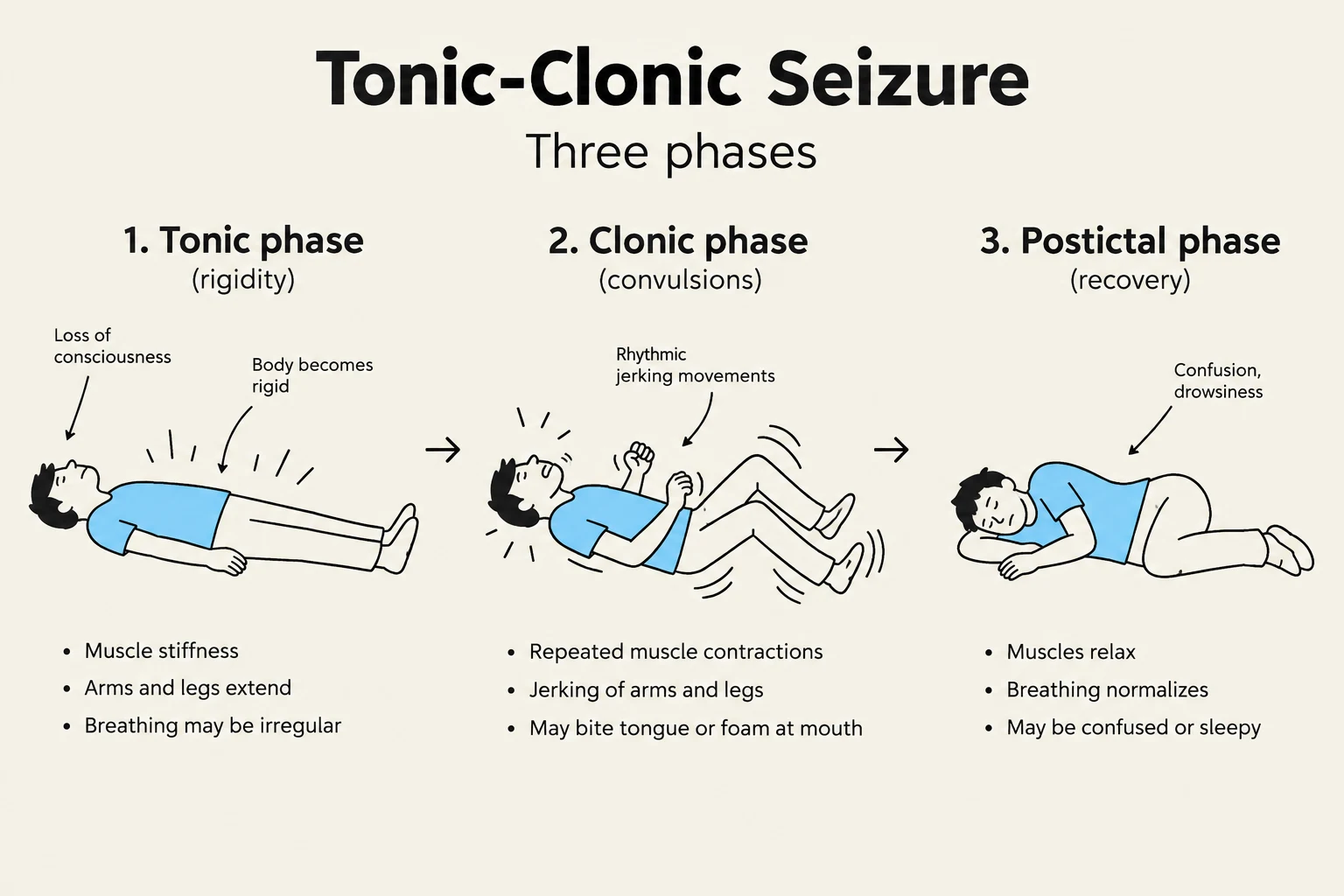
Generalized Seizures: These affect the entire brain and involve a loss of consciousness. The most common is the tonic-clonic seizure, which consists of a tonic phase (body becomes rigid) and a clonic phase (body jerks violently).
Diagram illustrating the three phases of a tonic-clonic seizure: tonic phase (rigidity), clonic phase (convulsions), and postictal phase (recovery).
Summary of Patient Care
Regardless of the specific cause, the management of altered mental status follows a prioritized hierarchy of care:
Airway and Breathing: Always assess for airway obstruction and adequate breathing. If the patient shows signs of hypoxia (insufficient oxygen) or if their SpO2 is below 94%, administer high-concentration oxygen.
Circulation: Monitor for signs of hypoperfusion or shock.
Safety and Positioning: For syncope, prevent falls by laying the patient flat. For seizures, protect the patient from injury by removing nearby objects, but never attempt to restrain them or place anything in their mouth.
Glucose Management: In diabetic emergencies, prioritize determining the patient's ability to swallow before administering oral glucose.
By systematically addressing these physiological needs, clinicians can stabilize the patient while working to identify and treat the underlying emergency.
Keep reading for free.
Create an account to finish this reading and make it part of your study routine.