Understanding Albuterol and Beta-2 Agonists for Respiratory Conditions
This guide explains the mechanism of action, clinical applications, administration routes, side effects, and client teaching for Albuterol, a short-acting beta-2 agonist used to treat asthma and COPD. It also differentiates between SABAs and LABAs.
Managing lower respiratory tract disorders like asthma and Chronic Obstructive Pulmonary Disease (COPD) requires a nuanced understanding of different medication classes. While many drugs aim to improve airflow, they differ significantly in their onset of action, duration, and primary therapeutic goals. One of the most critical medications in acute respiratory care is Albuterol (Proventil), a fast-acting bronchodilator used to provide rapid relief during respiratory distress.
Understanding Beta-2 Agonists
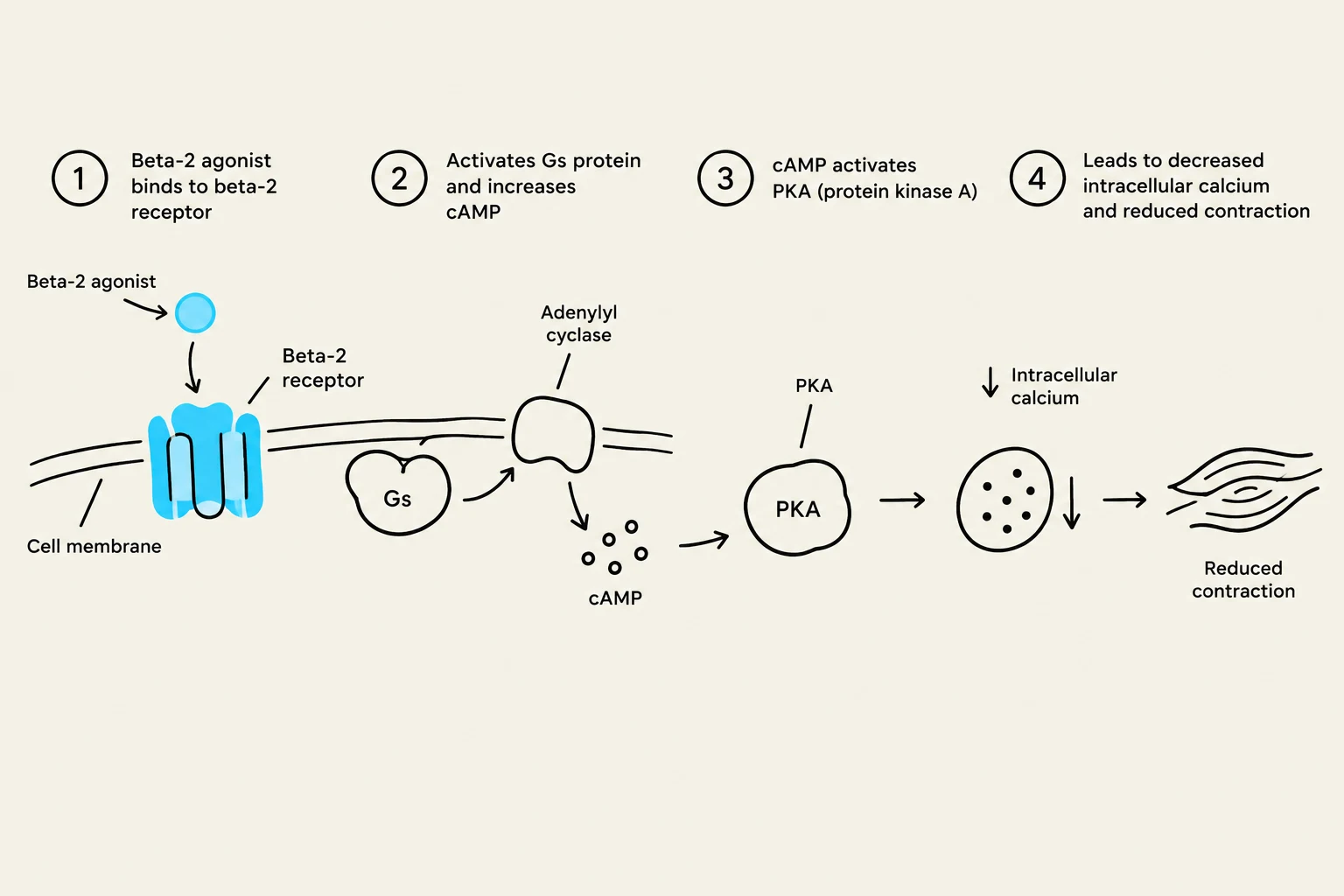
Beta-2 agonists are a cornerstone of respiratory pharmacology. These drugs work by mimicking the body's natural catecholamines. When these medications bind to the beta-2 adrenergic receptors located in the smooth muscle of the airways, they trigger a biochemical cascade that increases the levels of cyclic adenosine monophosphate (cAMP).
The increase in cAMP leads to a decrease in intracellular calcium levels, which prevents the smooth muscle from contracting. The physiological result is bronchodilation—the widening of the airways—which increases airflow and promotes better gas exchange.
This diagram illustrates the mechanism of action of a Beta-2 agonist, showing how it binds to a receptor on the cell membrane, leading to a cascade of events that ultimately result in reduced muscle contraction due to decreased intracellular calcium.
SABA vs. LABA: The "Rescue" vs. "Maintenance" Distinction
It is vital for clinicians to distinguish between Short-Acting Beta-2 Agonists (SABAs) and Long-Acting Beta-2 Agonists (LABAs).
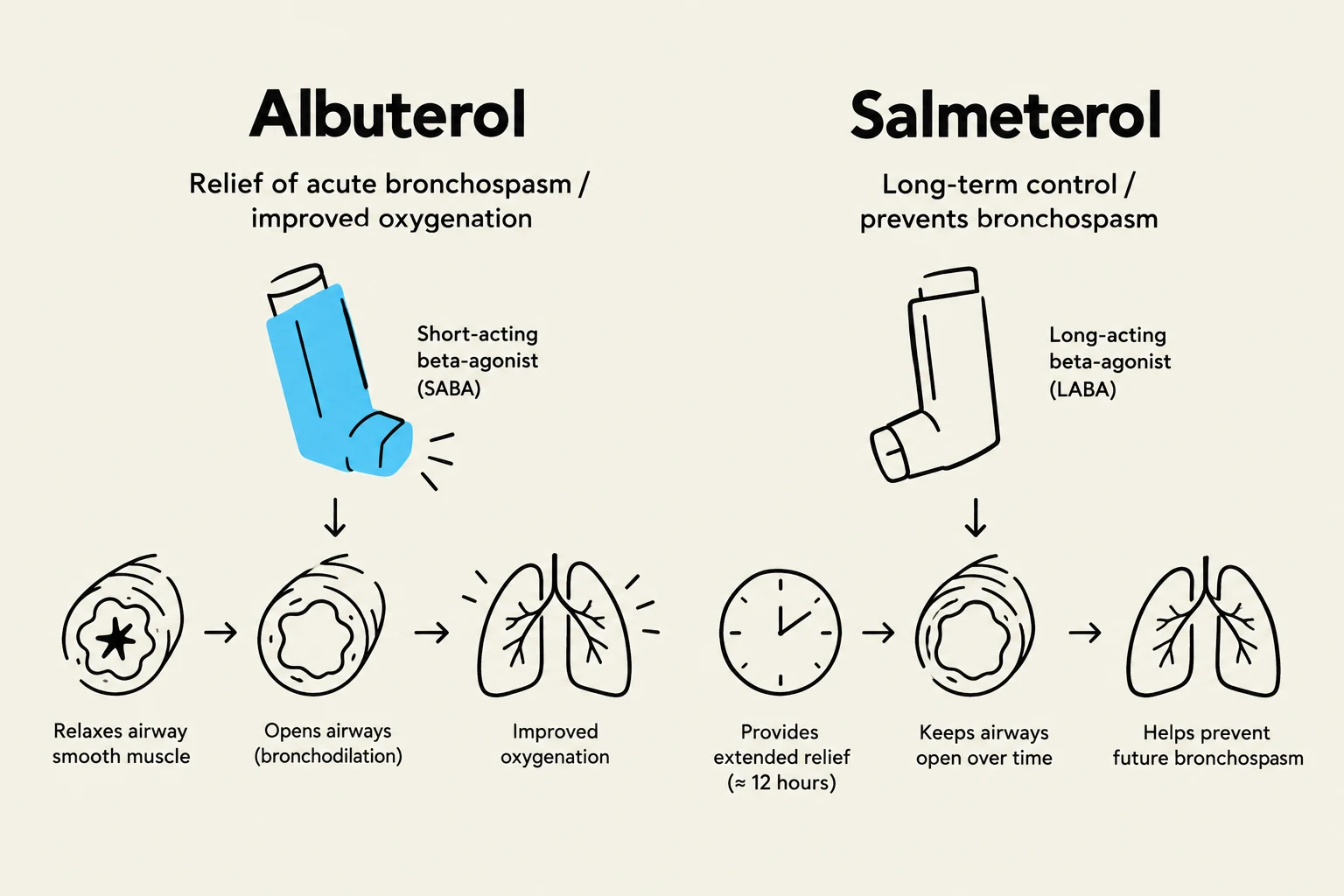
Short-Acting Beta-2 Agonists (SABAs): Albuterol is the classic example. These are "rescue" medications because they have a rapid onset of action and a short half-life (approximately 4 to 6 hours). They are used for the immediate relief of acute asthma or COPD exacerbations.
Long-Acting Beta-2 Agonists (LABAs): Salmeterol (Serevent Diskus) is a primary example. These provide sustained bronchodilation for 12 to 24 hours and are used for maintenance therapy to prevent exacerbations.
CRITICAL SAFETY NOTE: LABAs should not be used as rescue medications for acute attacks. Furthermore, using a LABA alone for asthma management without an inhaled corticosteroid (ICS) increases the risk of severe, life-threatening asthma complications.
Clinical Application: Albuterol (Proventil)
Albuterol is classified as an adrenergic, short-acting beta-2 agonist (SABA). Its primary therapeutic use is the treatment and prevention of bronchospasm in clients with asthma and COPD.
Nursing Assessment and Monitoring
Before and after administering Albuterol, the nurse must perform a comprehensive respiratory and cardiovascular assessment. Key assessment parameters include:
Respiratory Status: Assess lung sounds, respiratory rate, and oxygen saturation (SpO2) to measure the medication's effectiveness.
Cardiovascular Status: Monitor pulse, heart rate, and blood pressure. Because beta-agonists can have systemic effects, they may cause tachycardia or hypertension.
Sputum Assessment: Note the color, quantity, and consistency of sputum.
Laboratory Values: Monitor serum potassium levels, as Albuterol can cause a transient decrease in potassium (hypokalemia).
Efficacy Testing: For long-term management, the effectiveness of beta-agonists is often assessed via spirometry.
WARNING: Paradoxical Bronchospasm
If a client experiences increased wheezing or worsening respiratory distress immediately after administration (paradoxical bronchospasm), the nurse must hold the medication and notify the healthcare provider immediately.
Diagram illustrating the nursing process for administering Albuterol, including assessing baseline lung sounds, heart rate, blood pressure, and oxygen saturation before administration.
Administration Routes
Inhaler (MDI): Shake the inhaler well before use. Allow at least 1 minute between puffs. For children younger than 8 years old, a spacer should be used to ensure proper delivery.
Nebulizer: Can be administered every 20 minutes for up to 3 doses, or as continuous therapy. Oxygen or compressed air flow should be maintained at 6 to 10 L/min.
Oral: Available in liquid or tablet forms, typically given with meals 3 to 4 times a day.
Side Effects, Contraindications, and Interactions
Side Effects and Adverse Effects
While Albuterol is effective, it can cause several systemic side effects due to its adrenergic nature:
Common Side Effects: Nervousness, restlessness, tremors, headache, nausea, and insomnia. In children, hyperactivity is a common concern.
Adverse Effects: Tachycardia, palpitations, angina, arrhythmias, hypertension, hyperglycemia, and hypokalemia.
Contraindications and Precautions
Contraindications: Clients with a known allergy to adrenergic amines or children younger than 2 years old.
Precautions: Use with caution in clients with a history of cardiovascular disease (including hypertension), hyperthyroidism, diabetes, seizures, or glaucoma. Older adults may experience more pronounced side effects and might require dose reductions.
Drug Interactions
MAOIs: Can cause a hypertensive crisis.
Beta-blockers: May decrease the therapeutic effect of Albuterol.
Tricyclic Antidepressants: May increase cardiac effects.
Potassium-losing Diuretics: Increases the risk of hypokalemia.
Caffeine: Can increase central nervous system (CNS) stimulating effects.
Client Teaching and Medication Outcomes
The ultimate goal of Albuterol therapy is to improve oxygenation by preventing or relieving bronchospasm. To ensure safety and efficacy, clients should be taught the following:
Dosing Discipline: Take the medication exactly as directed. If a dose is missed, take it as soon as realized, but do not double-dose or increase frequency without orders.
Inhaler Technique: If using multiple inhalers, use the Albuterol (rescue) inhaler first. Rinse the mouth after use to manage dry mouth and wipe the mouthpiece weekly with water.
When to Notify the Provider:
If shortness of breath is not relieved by the medication.
If the inhaler is empty within 2 weeks (for PRN orders).
If changes in the medication's efficacy occur.
If becoming pregnant while on the medication.
Supplements: Inform the provider of all herbal preparations or supplements being taken before starting therapy.
This diagram illustrates the mechanisms of action for Albuterol, a short-acting beta-agonist for acute relief of bronchospasm, and Salmeterol, a long-acting beta-agonist for long-term control and prevention of bronchospasm. It shows how these medications affect airway smooth muscle and improve oxygenation.
Keep reading for free.
Create an account to finish this reading and make it part of your study routine.