


Acne vulgaris is one of the most common dermatologic conditions encountered in clinical practice. While often dismissed as a mere cosmetic concern, its pathogenesis is a complex, multi-step biological process involving hormonal influences, structural changes in the pilosebaceous unit, and microbial activity. Understanding how these factors converge is essential for distinguishing between non-inflammatory lesions, such as comedones, and inflammatory lesions, such as pustules and nodules.
The Pilosebaceous Unit and the Role of Sebum
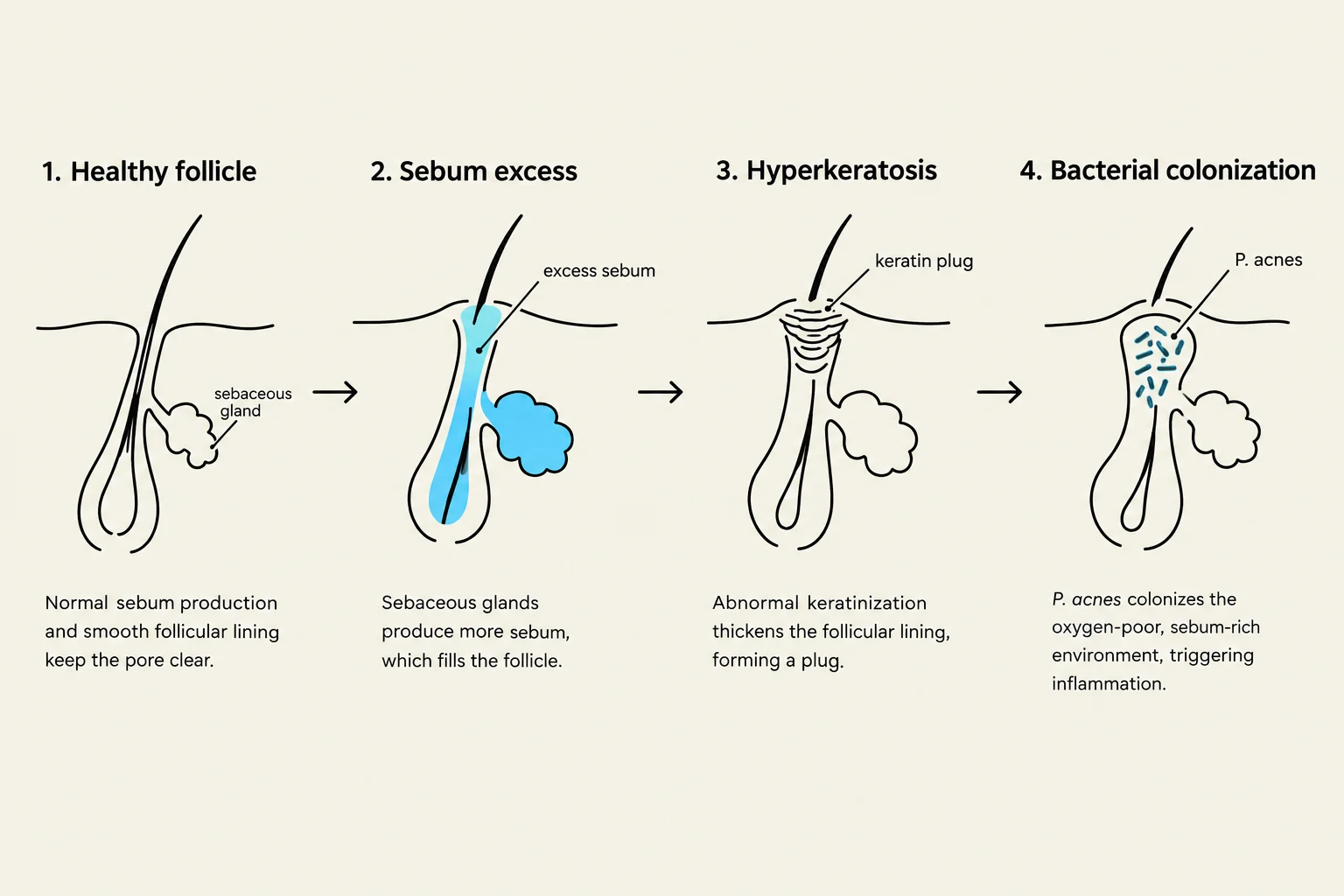
At the heart of acne development is the pilosebaceous unit, which consists of a hair follicle and its associated sebaceous gland. The primary driver in the early stages of acne is the overproduction of sebum, a lipid-rich substance produced by the sebaceous glands.
Sebum production is heavily influenced by androgens. During puberty, increased levels of circulating hormones stimulate the sebaceous glands to increase their lipid output. While sebum is necessary for skin lubrication and barrier function, an excess of sebum creates a nutrient-rich environment that sets the stage for further complications.
Follicular Hyperkeratosis and Comedogenesis
The second critical step in acne formation is follicular hyperkeratosis. Under normal physiological conditions, skin cells (keratinocytes) are shed from the follicle as they migrate toward the surface. However, in acne-prone skin, these cells become "sticky" and fail to shed properly.
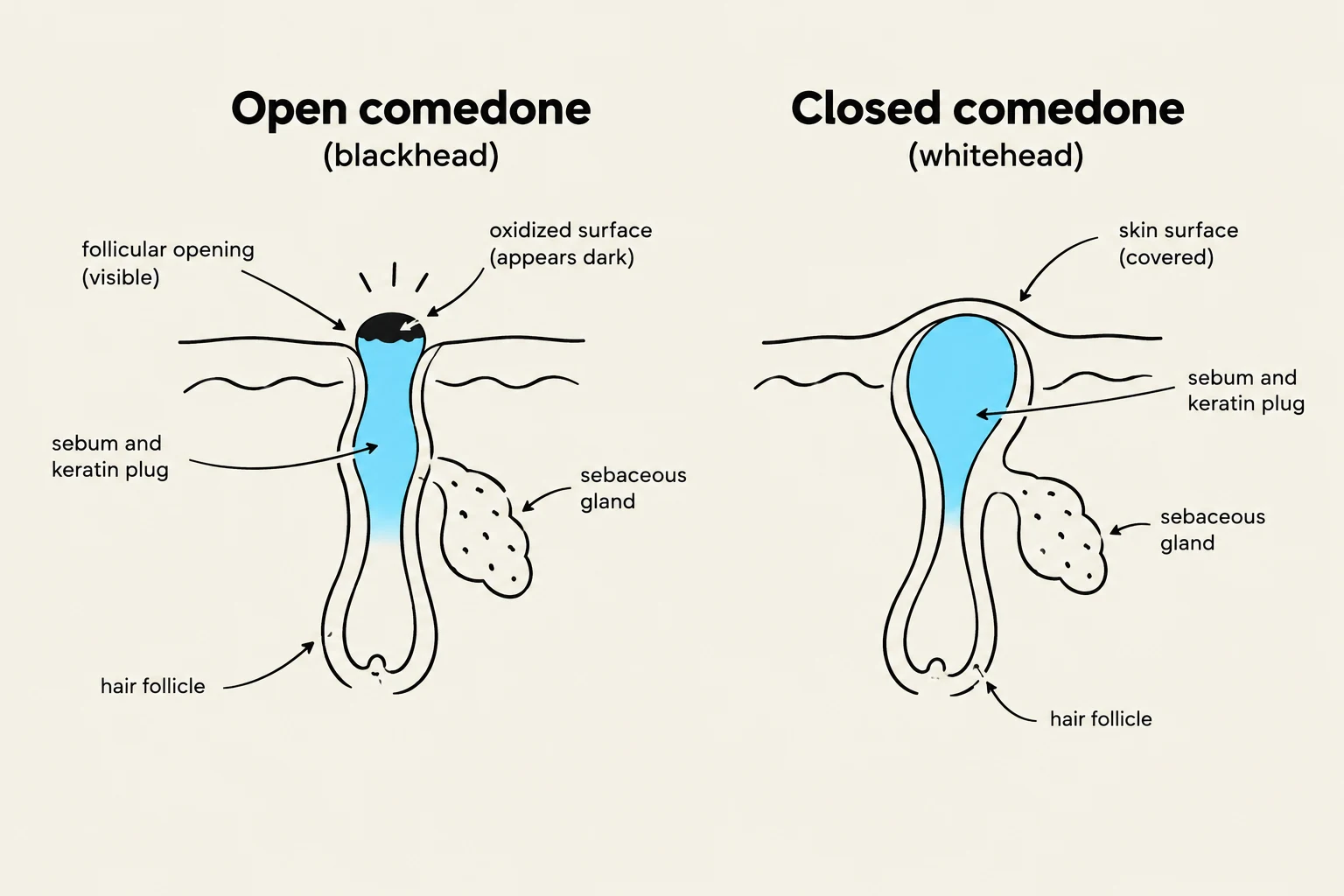
When these excess keratinocytes mix with the increased volume of sebum, they form a thick, semi-solid plug within the follicle. This process is known as comedogenesis. Depending on the orientation of the follicle and the presence of oxygen, two distinct types of comedones form:
Keep reading for free.
Create an account to finish this reading and make it part of your study routine.
Continue reading freeAlready have an account? Log in
Updated